
When it was announced that there would be two versions of the Candy Montgomery story, which had already been told in the past, we were all confused as to why. There was no new revelation, it was not a “round date” of the case and the only thing that brought “newness” would be to compare the performances between Elizabeth Olsen (HBO) and Jessica Biel (Hulu/Starplus). Now that we’ve seen both versions, we still don’t understand.

Candy, with Jessica Biel, took the lead. The period reenactment was accurate, with actors eerily resembling real people. Starplus‘ version follows the skepticism of people who suspect that there was nothing impulsive about the murder of Betty Gore. The housewife was killed with 41 axes by Candy, but the defense’s argument was that it was an act of self-defense, after Betty would have threatened Candy first. The trigger for the crime’s frightening violence would have been a “shh” that roused a repressed childhood trauma, prompting Candy to lash out when she managed to get Betty’s weapon away. Her reaction, of taking a shower in the house before going out to clean up the blood and going about her day without calling the police or confessing to anyone, officially out of fear, has been suggested as a possibility of premeditation, and Jessica gave a great performance showing it.
Love and Death was already in production when Candy was released, and it didn’t make it to the HBO platform until almost a year later. The entire cast bears no physical resemblance to the actual people in the story and what heavily marked the period of the 1970s and 1980s, when the story took place, was the soundtrack. With the story “stuck” to what happened, the “novelty” was to give the narrative a sympathetic version of Candy, something easy for Elizabeth Olsen.
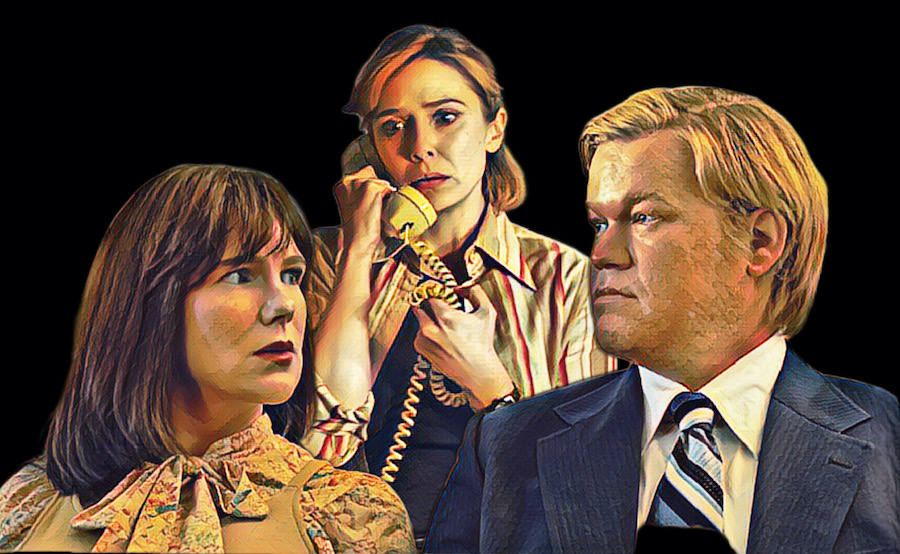

In real life, Betty was in fact seen as unfriendly and Candy was the popular person, hence the great surprise of such a brutal crime. The HBO series reports this better than Candy, who judged the character always putting her as dubious. In Love and Death, Candy was practical because she was trained to be the perfect, applied one and it was precisely the frustration of this emptiness that drove her to an extramarital affair and, eventually, to the murder of Betty, Alan’s wife, Candy’s lover.
The trap of innovating this narrative, following the version that convinced the Jury in 1980, the series seemed anesthetized like Candy at the trial. The justification offered by Candy for having a violent outbreak when she was threatened does not explain her actions after the crime, much less her view that she “did not kill Betty”. The brilliance was really in the way his Defense managed to put together such an unlikely narrative. But none of that is on the HBO series. It looked like a lack of energy, inspiration and just wanting to get to the end of a production that he felt had been pierced by the competition.

It is a shame. The result was to make clear the intention to surf the wave of true crimes. The cast and platform know how to deliver better. Entertain, just don’t impress us.
Descubra mais sobre
Assine para receber nossas notícias mais recentes por e-mail.
 miscelana.com