
The Billy Milligan case fascinates many true crime lovers because the first person in US history acquitted of a serious crime on the grounds of dissociative identity disorder, in other words, multiple personalities. His story was first told in 1981, shortly after his trial, in The Minds of Billy Milligan, a non-fiction novel written by Daniel Keyes. A sequel, The Milligan Wars was published in 1994 which is the basis of The Crowded Room series.
The series, starring Tom Holland, has a long history before arriving on Apple TV Plus, with several adaptation attempts since the 1990s. First by James Cameron, who didn’t get to film because he was sued for copyright issues. Already baptized with its current name, The Crowded Room was led by Joel Schumacher and later by David Fincher (who used the idea for Fight Club), and the role of Billy was considered by actors such as Matthew McConaughey, Johnny Depp, Brad Pitt, Sean Penn, and John Cusack, and then Leonardo DiCaprio as a possible star. In 2016, director M. Night Shyamalan was inspired by Billy’s story to create Split and in 2021, Netflix presented the documentary Monsters Inside: The 24 Faces of Billy Milligan, which is also full of spoilers for the Apple TV Plus series.
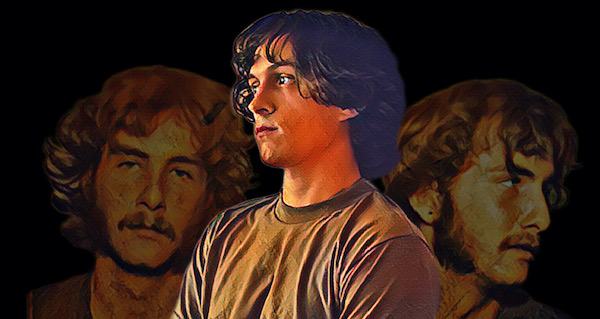
In The Crowded Room, Billy is Danny Sullivan (Tom Holland), a man who is arrested after his involvement in a shooting in New York City in 1979 and is approached by Rya Goodwin (Amanda Seyfried), who interviews him to understand his history and involvement with the crime of which he is accused. In real life, Billy was a rapist who escaped justice when he was diagnosed as having multiple personalities.
According to studies at the time, the psychological disorder may have started when Billy was just 8 years old and was sexually abused by his stepfather, Chalmer Milligan. The sexual violence continued over the years and, added to the trauma of his biological father’s suicide, would have caused the “personality split”, which would develop different profiles “fighting for control” of Billy’s body. According to him, his mind worked “like a dark room with a light in the center where the personalities would stay to gain control”, interacting with each other like a big family. With controversy, they even listed up to 24 different personalities, who “led Billy to commit the crimes”.
As a troubled youth, in 1977 Billy was arrested in a juvenile detention center and attempted suicide, but, after he gained freedom, he was arrested again about six months later, when he was indicted on three counts of kidnapping, three counts of aggravated robbery and four counts of rape of women on the Ohio State University campus. Billy claimed, and convinced a lot of people, that he didn’t remember anything. During the court case, he was subjected to psychiatric evaluation where he was a completely different person in a matter of seconds. According to him, his alter Regan committed the robberies, and Adalana, a melancholic lesbian, the rapes.

Faced with the complexity of the condition, psychiatrist George T. Harding and psychoanalyst Cornelia Wilbur were called in for a more accurate assessment of the case. Together they claim that Billy had up to 24 personalities, 10 of which (8 men and 2 women) were identified right away. As they explained, Billy would be “sleeping” for the last seven years, being dominated by these personalities. In legal terms, it established arguments of insanity and the suggestion that the real Billy would not have committed the crimes. Although there was a current that believed in the criminal’s pretense, he was found innocent in December 1978. One detail, the film Primal Fear, used the argument of pretense for the role of Edward Norton.
Though “innocent,” the court ordered Billy to commit, and he spent the next 11 years at Central Ohio Psychiatric Hospital, where Daniel Keyes worked with him to write The Minds of Billy Milligan. It was in 1986, when Billy escaped from the asylum, that he made the news again. He was rehospitalized and discharged two years later, and in 1991 he was completely free. His last years of life were spent in a house bought by his sister, until he died of cancer in 2014, aged 59.
Apple TV Plus’ The Crowded Room features great Tom Holland, but a slow and muddled narrative in the first two episodes. For those who don’t know Billy’s story – or have seen Fight Club – there will be a big turning point in the story when what’s really going on is revealed, but for those who know the origin, it lacks rhythm and logic. A feather!
Descubra mais sobre
Assine para receber nossas notícias mais recentes por e-mail.
 miscelana.com