
The fun series The Great is about to embark on its third season and is, as the name implies, about the youth of Empress Catherine, who became known as the Great. “Occasionally Telling the Truth”, the series is a smart satire on a historical period explored in various miniseries and films, from Pola Negri to Marlene Dietrich, Tallulah Bankhead, Julia Ormond, Catherine Zeta-Jones, Jeane Moreau, and more, and recently, Helen Mirren and Elle Fanning. Crazier than Queen Charlotte, and farther from reality, unlike the Netflix series that portrayed a genuinely happy marriage between Charlotte and George III, which is what historians confirm, in fact, Catherine and Tsar Peter III did not tolerate each other, there were no attempts to make it work. In other words, their tortuous romance isn’t the “occasionally real” part. Worth reviewing.
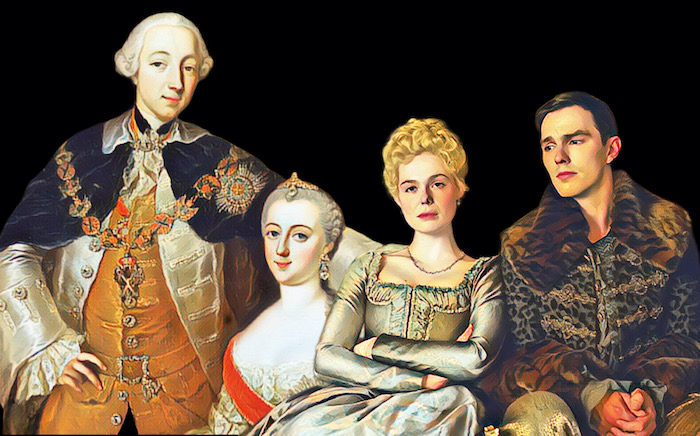
Peter III was born Karl Peter Ulrich, in Germany, the only child of Anna Petrovna and Charles Frederick, Duke of Holstein-Gottorp, and lost his parents as a child, his mother at 3 and his father at 11. being descended from two sworn enemies – on his mother’s side, he was the grandson of Peter the Great and, on his father’s side, a great-nephew of the Swedish king Charles XII – that is, he had rights to the Russian and Swedish thrones. When he became an orphan, he began to be educated by tutors who psychologically and physically abused the boy, especially Count Otto von Brummer, who beat Peter, let him starve, constantly threatened him, and served him only alcoholic beverages, creating dependence on the prince. before reaching adolescence. Unsurprisingly, Peter grew up a “weak-minded” man, and when given freedom he displayed a stubborn, irascible, and anxious temper.
At the age of 14, he was taken to Russia by his aunt Elizabeth, who was the Empress and had no children. She proclaimed him heir to the throne after renaming him Peter in the Orthodox faith, which eliminated his chance of ever reigning in Sweden. The series explores this controversial aunt-nephew relationship but omits that he only became Tsar with Elizabeth’s death. Even so, it was she who chose Sophia Augusta Frederica – renamed Catherine – as a wife for her nephew, a mistake as Catherine proved to be a shrewd and implacable enemy.

Aside from historians, the version we have of Peter’s weakness of character and head comes from Catherine’s narrative, which everyone agrees was a young woman of prodigious intellect, so it’s difficult to clarify how much she exaggerated the resentment. Be that as it may, the young empress took advantage of her husband’s unpopularity to gain political control, something facilitated by Peter’s poor strategic decisions. One of them was to go to war against Denmark to help his Swedish cousin (part of the plot of the third season), among other mistakes. Peter and Catherine had two children, Paul and Anna, but only the boy survived. The couple avoided each other and each had a lover. In her case, one of them was Grigory Grigoryevich Orlov, who in The Great is just and co-conspirator.
The Great is occasionally accurate when it shows the instability of Peter’s temper and the effect it had on the courtiers, who were living under strain in the palace. An example that Catherine shared years later, is that she found a rat in her husband’s room that he would have “arrested and judged”, condemning the animal to execution by hanging. Your crime? Having infiltrated your paper fortress and eaten two starched soldiers. On the other hand, historians defend some of the Tsar’s initiatives, such as proclaiming religious freedom, abolishing the secret police, and prohibiting the killing of serfs by their landowners (in the series credited to Catherine). It was also Peter who established the first state bank in Russia and encouraged mercantilism by increasing grain exports and imposing embargoes on materials that could be found in Russia.
One of the secrets of the series will be solving the suspicious death of Peter III. One version says that the Orthodox Church and a large part of the nobility asked Catherine for help in the face of the Tsar’s ‘oddities’. Another, more accepted, is that the Empress decided to act when she suspected that he was going to divorce her, anticipating her death in order to stay in power. Anyway, although it is different in The Great, Peter was arrested and forced to abdicate. Orlov died when transferring him out of St. Petersburg and the Tsar was assassinated, even if some suggest suicide, the most likely was even commissioned death.
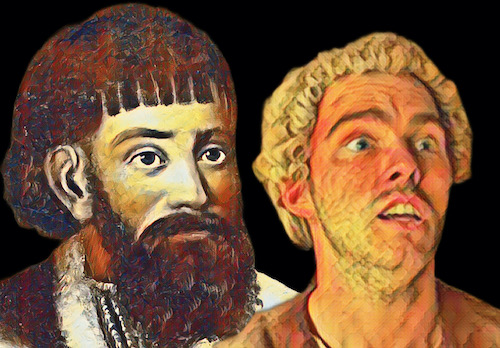
Now the fun part. Do you know Peter’s ‘doppelganger’ Yemelyan Pugachev? He existed, but not as the series shows. It is said that the ‘ghost of Pugachev’ was the one who incited the Russian Revolution of 1917 years later. He was a brave soldier who deserted and was extremely skilled at escaping the authorities. Many years after the death of Peter III, Pugachev led a revolt, declaring himself to be the dead Tsar and the population supported him. The movement started timidly, but a year and a half later, it forced Catherine’s government to engage in combat. Eventually, Pugachev was arrested and taken to Moscow in a wooden cage after being betrayed. His execution was having his head cut off, something he calmly accepted.
Part of this story should happen in the third season, and of course, with the famous ‘occasional’ pinches of truth.
Descubra mais sobre
Assine para receber nossas notícias mais recentes por e-mail.
 miscelana.com