
Like the writer Elizabeth Fremantle, she deeply appreciates the story of strong people – especially women – who managed to stand out in even more arid times than the current ones, facing patriarchy. As a result, I am a frequent reader of her books, such as the incredible trilogy about Tudor women. However, I am anxiously awaiting your look at the incredible story of the Italian painter Artemisia Gentileschi, perfectly titled Disobedient and which will be released at the end of July 2023. Do you know the trajectory and importance of this unique artist?
Artemisia is one of the leading painters of the 17th century, a contemporary of Caravaggio, Rubens, and El Greco, although for many years it was details of her personal life that gained prominence in her narrative. We will get there.
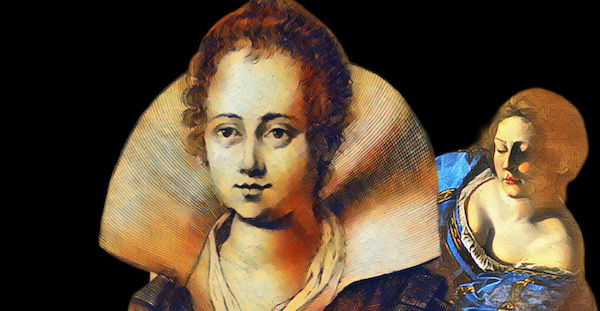
Without exaggeration, we can say that painting was in Artemisia’s DNA, as the eldest daughter of the painter Orazio Gentileschi, she was born in Rome 430 years ago, on July 8, 1593. She lost her mother when she was only 12 years old and therefore began to care for his three brothers and his father, rehearsing his first steps in painting as a teenager and under his father’s guidance. It was through him that she would have met a great friend of his, Caravaggio, to whom paintings of her are sometimes compared.
It was when she turned 18 that the biggest trauma in her life came when her tutor, Agostino Tassi, who worked with Orazio, raped her. Imagine if today rape is still a common form of violence against women that encounters still insurmountable sexist barriers, as seen in the 17th century? It was all like an “offense” to the girl’s family. Terrified and traumatized, Artemisia took almost a year to work up the courage to reveal the rape, and there are also versions that he first suggested marriage as an alternative for reparation, but, as he never kept his word, the young woman denounced him. What was “against her” was precisely the time between the fact and the complaint, leading the men to question her version. Still, Tassi was dragged into a lengthy trial that lasted about seven months.
As if the aggression and shame she felt were not enough, Artemisia had to tell her story in detail more than once, and when she met with skepticism from the side of Justice, she was subjected to torture sessions so that she would “speak the truth”. She was called a whore and other slurs, but she stood her ground. Agostino Tassi was convicted and given two options: a five-year prison sentence or lifelong exile from Rome. Historians say he chose exile, of course, but others say the sentence was never carried out and he neither left the capital nor went behind bars. The one who left Rome was Artemisia, who was “bad-spoken” and had to move to Florence when she married the painter Pierantonio Stiattesi to “alleviate” the gossip. The union lasted 10 years.
Once in the richest art capital of that time, the artist was quickly introduced to the Medici court, great supporters and collectors of Italian painting. Only there, at the age of almost 20, did she become literate and made history by becoming the first woman to enter the Academy of Fine Arts in Florence, in 1616. Prestigious and sought after, her paintings followed the Baroque style and she became famous. There was a clear differential in her paintings that was partly a reflection of her personal trauma: women in general were the center of the painting, heroines and protagonists (in which in some cases she inserted her own face), recording scenes of abuse and violence. In paintings, women have a voice and, in some cases, an expression of pleasure and revenge when defending themselves against men, such as the famous Judite and Holofernes.
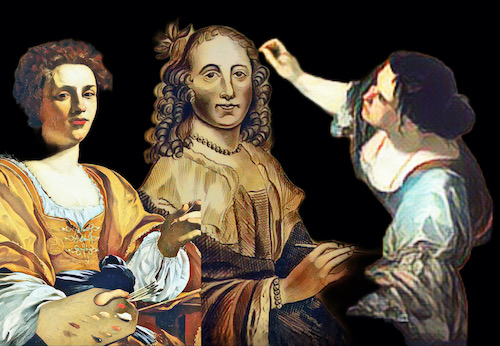
Although she painted until she was 61, Artemisia Gentileschi‘s art ended up losing prominence over the centuries and her work came to be considered an exception in an environment dominated by men. Everything changed in the 20th century when it was embraced by the feminist movement and critics and scholars recognized its value. Her story has already been told in documentaries, films, and books and is currently being worked on as a miniseries by showrunner Vanessa Alexander, who signs scripts in series like Vikings: Valhalla and The Great. The basis of the series is the biography written by Mary Garrard which promises to give the story a contemporary feel. Along with Elizabeth Fremantle‘s book, Artemisia Gentileschi‘s pain and story will finally be heard as they should be heard more than four centuries later.
Descubra mais sobre
Assine para receber nossas notícias mais recentes por e-mail.
 miscelana.com