
If today Tom Cruise has in his hands one of the most lucrative franchises of all time in cinema, leaving for the seventh edition, many remember that he took a ride on an already popular and even iconic brand, the TV series, Mission: Impossible. The series ran from 1966 to 1973, briefly returning to life in a quick revival attempt in the late 1980s, with two seasons between 1988 and 1989. It took a star of Cruise caliber to make it legendary.
In the post-war period, where ideology divided the planet between “communists” and “capitalists”, the threat of a Nuclear War impacted all stories and with that, the espionage genre gained momentum. In England, James Bond went straight to the cinema, becoming a cultural rage, but for the most part, linear TV was the preferred platform. In this scenario, Bruce Geller took to CBS his proposal to follow the adventure of spies so incredible that they were from an even more secret agency than the CIA, the IMF, or the Impossible Missions Force. In it, the team had the option of rejecting the proposal, which was always extremely risky and, if they were caught, they would be alone. They never turned down a single challenge.
In Mission: Impossible the small team and secret government agents used sophisticated methods to deceive, manipulate and achieve their objective, often having something to do with preventing hostile Iron Curtain governments, dictators, or bandits from taking over the world. Gradually, fans identified and adored each of the FMI members.
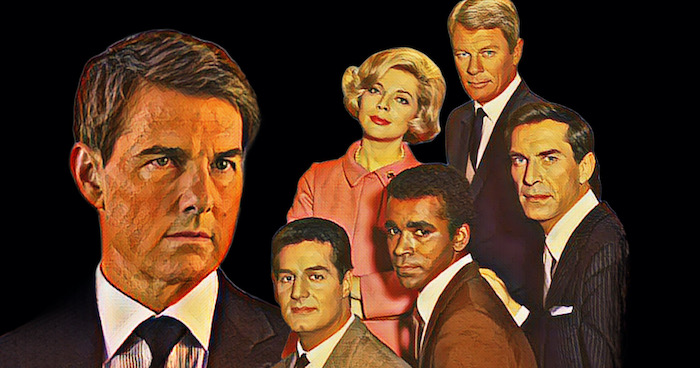
In the first season, Dan Briggs (Steven Hill) led the team, but, in the second phase, the most famous boss of all enters, Jim Phelps (Peter Graves), who takes charge for the remaining six seasons and becomes the big star of the team. series. For each mission, they hire many independent agents who would be better suited for the job, but both Briggs and Phelps often call on the same specialists, making an exceptional team. Almost all have had careers and fame outside of espionage, and the cast includes stars like Martin Landau, who joined in for a cameo and ended up joining the cast in season two.
Landau played Rollin Hand, who would later be the seed for Tom Cruise to turn into Ethan Hunt: he was the team’s actor, disguise specialist, and better known as the “man of a million faces”. Barney Collier, played by Greg Morris, is the origin of Luther Stickwell (Ving Rhames), the genius of electronics. In addition to them, there was also Willy Armitage (Peter Lupus), a world record weight lifter and model and actress Cinnamon Carter, played by Barbara Bain (at the time married to Martin Landau) who earned the actress no less than three Emmys for the role.
Like much content from the 1970s, fueling the mystery in general, the identity of the agency that oversees the Impossible Missions Force (IMF) is never revealed, only suggested as an independent agency of the US government, reinforced in the classic cue of every briefing that repeats ” As always, if you or any member of your IM force is captured or killed, the Secretary will deny any knowledge of your actions”, something that in the film Rogue Nation, agent William Brandt (Jeremy Renner) also uses.
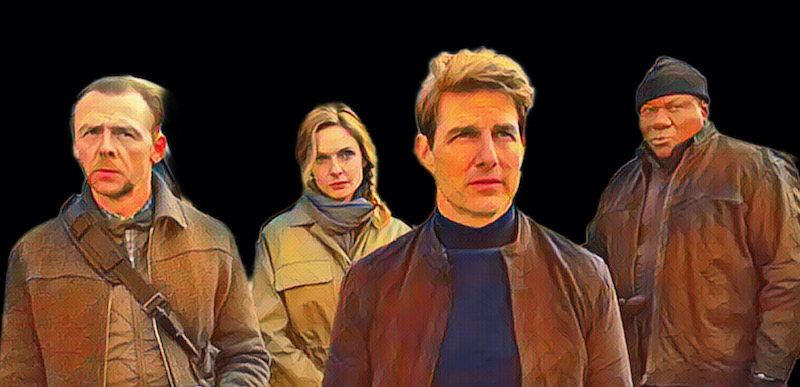
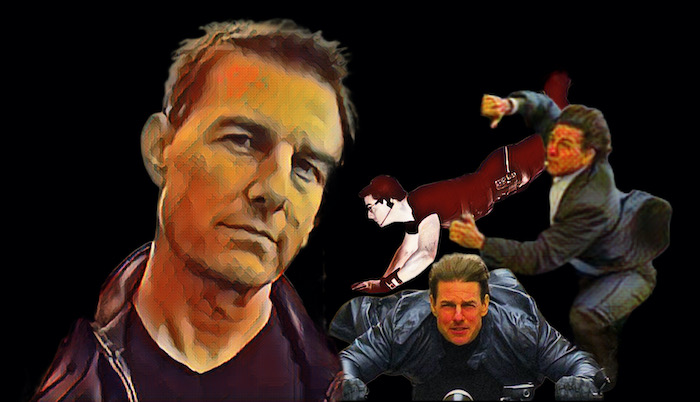
Some of the ‘innovations’ in the Mission: Impossible narrative made the series extremely modern for its time. In Bruce Geller‘s concept, it wasn’t necessary and even more interesting not to follow the personal lives of each one, we just needed to see them in action. That way, we would believe more in the espionage works. Time was always an element of suspense, creating anxiety at the seeming impossibility of what they needed to do. In addition, for each episode, he could form different teams, precisely because of the need to compose different skills, even though in practice Dan Briggs and later Jim Phelps, the only ones who remained full-time for the agency, ended up resorting to the same main group of three or four agents for each mission. In this way, when the cast was being changed, there was no great need for motivation, in addition, guest stars made special appearances as specific agents, and the ‘use of masks’ allowed the ‘disappearance’ of the main characters for complete episodes without much explanation. On the contrary, the moment when it was revealed that it was Rollin Hand taking off another man’s mask was always the most anticipated by fans.
The cast stayed the same for most of the time, with Briggs’ departure being the most surprising because it was never explained in the series. Behind the scenes, the replacement was required by conflicts with the actor. He refused to do physically demanding scenes and disrupted the shooting schedule because, as an Orthodox Jew, he had to leave on Fridays at 4 pm and be home before sunset, unable to be available again until after dark of the following day. Thus, Dan Briggs appeared less and less in the first season and in the second Special Forces he was already under the command of Jim Phelps.


When Martin Landau and Barbara Bain left after the third season, they were replaced by Leonard Nimoy and Lee Meriwether, then a young Lesley Ann Warren. Apparently, the problem of machismo in the espionage universe is rooted. Even with Barbara being the only one to win the Emmys for three consecutive years, the female cast never gained prominence. For the last two seasons, Lynda Day George was the female representative on the spy team (replaced when Barbara Anderson went on maternity leave) and Sam Elliott joined as Dr. Doug Robert. Of the original cast, only Greg Morris and Peter Lupus made it to the end. In the late 1980s, there was an attempt to revive the series, but it only lasted two seasons.
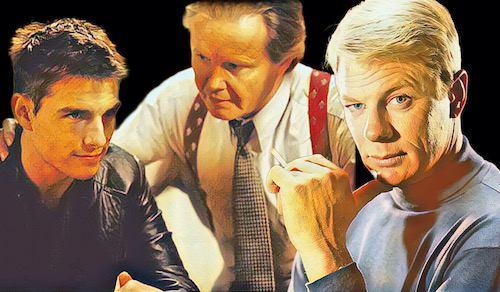
When the cinema ‘recovered’ the mark 30 years after the debut on TV, in 1996, both Brian DePalma and Tom Cruise wanted to distance themselves from the ‘problems’ that spy series suffered at the time, with the end of the Cold War it seemed to have exhausted their functions (James Bond went through the same challenge) and traditionalist fans were offended at not seeing any of the classic agents from the original, but even more offensive was the treatment given to Jim Phelps, transformed into a corrupt villain. The argument that it was calculated to set Mission: Impossible off to a new start only made the reaction worse, but 27 years later, Ethan Hunt’s popularity shadows that of anyone on TV. A curiosity, in the first film we have a quick participation of Emilio Estevez and it is curious to remember that his father, Martin Sheen, had already starred in one of the episodes in the 1970s.

Cleverly Tom Cruise kept some of the most famous elements of the series, starting with the opening theme composed by Lalo Schrifrin. The unusual tempo chosen by the composer is legendary and, as he explained, he was inspired by the Morse code to create the rhythms, for which he deservedly won two Grammy Awards: Best Instrumental Theme and Best Original Soundtrack for a Movie or TV Show. Other elements of the original are the opening credits style, with the match and the fuse lighting a fuse mixed with images of the episode that is about to begin and – of course – how the mission is offered to the team, by unusual means. recordings that “self-destruct”. The phrases that are always on any recording are “Good morning/afternoon/evening, Mr. Briggs/Phelps/Hunt”, followed by “your mission Dan/Jim/Ethan, should you choose to accept it” and the brief explanation of the objective of the mission, ending with “As always, if you or any member of your IM Force is captured or killed, the Secretary will deny any knowledge of your actions”, not forgetting the warning that “This recording will self-destruct in five seconds. Good luck, Dan/Jim/Ethan.”
A nostalgia-fueled by the success of cinema, which in 2023 returns to the screen with more adventures from our favorite spy, Ethan Hunt (Tom Cruise).
Descubra mais sobre
Assine para receber nossas notícias mais recentes por e-mail.
 miscelana.com