
Were it not for the prominence of Alicent Hightower in House of the Dragon, who became Queen Consort, perhaps we would not arouse interest in the female lineage of the House that dominates Oldtown. After all, at the stage of history we know from Game of Thrones, the Hightowers’ prominence was visibly reduced in King’s Landing, with the Lannisters and Baratheons dominating the kingdom. The only – and brief – mention is of Ser Jorah Mormont’s ex-wife, Lynnesse, who was a Hightower, but is only mentioned for bringing him to ruin, but we never see her in the scene. Still, genealogy experts point out that the closest to Alicent on the scene, even if distant, is Margaery Tyrell, another Queen Consort, but one who didn’t last even a year on the throne before dying in the explosion of the Sept in King’s Landing. Shall we remember the female wing of House Hightower a little?

As mentioned, being one of the oldest noble and most powerful houses in Westeros, the headquarters of the Hightowers are in the city of Oldtown. Their motto is powerful, We light the way, and their fortune comes from being natural traders. They are also known for their extreme religiosity (they were one of the first to embrace the Faith of the Seven), and, for many generations, they were directly linked to House Tyrell, in Highgarden, but also to the Targaryens, with a short lineage including on the Iron Throne, as we are currently tracking in House of the Dragon.
At the time of Aegon I Targaryen’s conquest, the Hightowers were one of the first houses to submit to the new King and thus spared destruction. Clever, since the beginning historians find arguments to support the idea that they knelt down, but that they also sought to mix their blood with the Targaryens and ascend to the throne, starting with the marriage of Prince Maegor Targaryen with Ceryse Hightower, a suggestion of the High Septon in the era. Maegor, who would come to be known as the Cruel, took a second bride years later, due to the infertility of the first woman (a Targaryen, of course), and in doing so created the most intimate connection to the House.
The political and religious pressure was great: Ceryse could not get pregnant, but the Hightowers wanted to prevent (unsuccessfully) the King’s new marriage. For a time she was “returned” to her home, but eventually, she was reunited with her husband and returned to King’s Landing. There she, unfortunately, died suddenly of an undisclosed illness, raising suspicion that Maegor would have provided a quicker (and more definitive) alternative to the end of the union. As if to compensate, the King sent his younger sister, Rhaella Targaryen, to Oldtown to be educated as septa, but her life would be short. When her mother, Rhaena, fled Maegor, the King had the princess beheaded as punishment. With the refusal of the Hightowers to follow orders, an important split was born between them, and they had the support of Prince Jaehaerys Targaryen (Viserys I’s grandfather), something significant that explains much of what we are following today in the series.

The first Hightower woman to achieve the dream of her House – Power – was Alicent, who married Viserys I at a young age and had three children with him, including a girl. Before Alicent, a Targaryen princess, Rhaena, had wedded Garmund Hightower, but women (before Rhaenyra) did not inherit the Crown, hence the importance of Alicent’s marriage to Viserys. Her male children could be kings and thus create the Hightower-Targaryen bloodline. The reality was born in the blood of a Civil War and did not surpass even a generation on the throne. Aegon II is killed, just as Aemond. Aegon’s wife-sister, Helaena‘s children are brutally murdered before Aegon II has even adjusted to being King. When she, still traumatized, took her own life without generating new legitimate heirs, the Hightowers lost their blood link with the Throne and it was the period known as The Hour of the Wolf, where the Starks gained influence over the Targaryens.

The plan was not abandoned, and, at different times, the Hightower women were used as a political bargaining chip. In the books, we know that at a certain point, Tywin Lannister wanted Tyrion to marry a Hightower, without success. And even in the face of revolt, in Robert’s Rebellion the House of the Greens – the traditional color of their flag – remained faithful to the Targaryens, supporting Daenerys’s father, King Aerys II. After her defeat, she tried to reconcile with Robert, of course.
With the past closely linked to what became the main antagonist House to the Baratheons, the Hightowers were somewhat a part of Game of Thrones. So it’s thanks to Lord Leyton Hightower’s daughters that we learned how women still had a political role. So we come back to Lynesse Hightower, who accompanied her father to the tourney in Lannisport, where she met and married Jorah Mormont. The union went from bad to worse quickly. According to Jorah, the standard of living she demanded put him in debt to the point of having to get involved in the shady business – and losing everything, including his wife – and she ended her days in Lys. With no legitimate heirs, it was her sister who paved the way for a “new Alicent” to reach the throne in the future. Lady Alerie Hightower married Mace Tyrell, son of Ollenna Tyrell (with whom she obviously had a tumultuous relationship) and together they had four children, among them Margaery Tyrell.

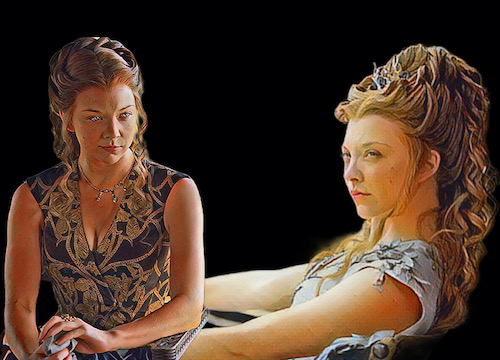
Margaery’s ambitions were clear: she wanted to be THE Queen of Westeros. She married Renly Baratheon, then Joffrey Baratheon, and, widowed a second time, Tommen Baratheon, achieving the feat of Alicent Hightower and becoming Queen Consort. Popular among her subjects, she is recognized for her good fashion taste and low-cut dresses. The book has her at another time, but in the series, we know that her veiled war with Cersei Lannister ends up sealing her literally bombastic and tragic fate.
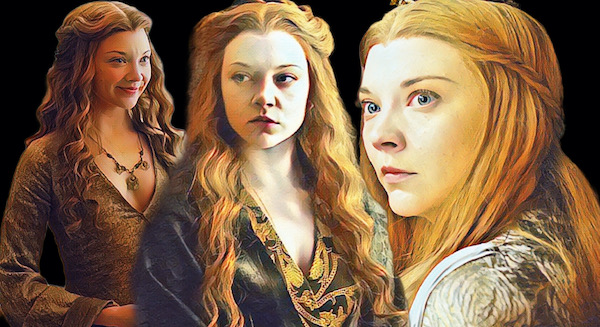
The Hightower bloodline doesn’t end there, however. Houses Redwyne and House Ambrose come from Hightower DNA as well, but they have less plot relevance. So it is with Alicent that we witness the heyday of House Hightower. And its downfall too.

Descubra mais sobre
Assine para receber nossas notícias mais recentes por e-mail.
 miscelana.com
1 comentário Adicione o seu