
Anyone who has read Fire and Blood recognizes that the depiction of the tragic Targaryen Queen is not sympathetic. Rhaenyra is described as petulant, impulsive, insecure, vindictive, overprotective, envious, and even overweight. Troubled would be the way we might have anticipated her stint in House of the Dragon, but the series cleverly subverted our expectations. Having a new Targaryen princess right after the beloved Daenerys (Emilia Clarke) was a challenge that was only heightened by bringing in two (relatively unknown) actresses for the role, Millie Alcock and Emma D’Arcy. While we wait for the second phase of the story, we can already revisit old posts (which were dated) and reassess who really is the ‘realm’s delight’, Queen Rhaenyra Targaryen.


A youth more tumultuous than in the pages
The first image of Rhaenyra in the series (we hear her adult voice-over in the opening narrating the events that brought about the Dance of Dragons) is of her flying over King’s Landing in her dragon, Syrax. We immediately discover that it’s an act of defiance because her mother, Aemma (Sian Brooke), doesn’t like the unnecessary risk her daughter is taking. Then we see her lack of patience with studies and her aversion to the idea of one day becoming a mother. Therefore, in two scenes we have important information about the princess: she does not follow rules, she has a strong personality, and a frustration that, instead of flying, fighting, and ruling, they only expect her to generate heirs for the throne.
Rhaenyra is the fruit of love between her parents, happily married, and affectionate with her. Viserys I (Paddy Considine) has her around, even in council meetings, but doesn’t consider her for succession. He and Aemma are still trying to find the male child who will succeed him. It’s so clear that he doesn’t realize how smaller Rhaenyra feels in front of his eyes, just for being a girl.
As a teenager, Rhaenyra (Alcock) is equally interested in flirting and flirting. Her friendship with Alicent (Emily Carey) is her escape from the two social rules in King’s Landing, but it is a clear hierarchical relationship where the young Hightower keeps company, but cannot contradict her. Alicent acts more like a fan than a peer, and with no real expectation of one day ascending the Iron Throne, we see Rhaenyra respond and do as she pleases, angering nearly every male but her uncle, Daemon Targaryen (Matt Smith).


The attraction between uncle and niece, not at all complex in a family adept at incest as a basic rule, is obvious. The two have a lot in common and would be perfect for each other, but he is already married and has another lover, Mysaria (Sonoya Mizuno), so there is no chance for the princess to consider him as a candidate for her hand.
Fate is cruel to Rhaenyra, as Aemma dies in childbirth, as does her brother, and Viserys retreats into depression and guilt that alienates him from her. In the book, there is a crucial difference in the following facts.
Alicent Hightower was older than Rhaenyra and although her close relationship with the princess is well drawn, it was different in the book. Otto Hightower (Rhys Iphans) was already using her to infiltrate the family. with the girl being the favorite companion of Viserys I’s father, King Jaehaerys (Michael Carter), so much so that there is a suspicion that she was even the elderly monarch’s lover. In the series, this is never even alluded to. The girl’s dubious relationship is introduced with Otto commanding her to keep Viserys company, wearing the prettiest dresses she inherited from her mother and eventually spending the night with the king.
While in the book, when Alicent is chosen as Viserys’s second wife, there is no record of opposition on Rhaenyra’s side, this only appearing a year later, when Aegon II is born. In the series, we see Rhaenyra offended by the betrayal of the friend she didn’t even suspect was so close to her father, to whom she opened her heart and didn’t know any secrets. Rather, they were both groupies of Ser Criston Cole (Fabien Frankel), who leaned more toward the princess than Lady Hightower.
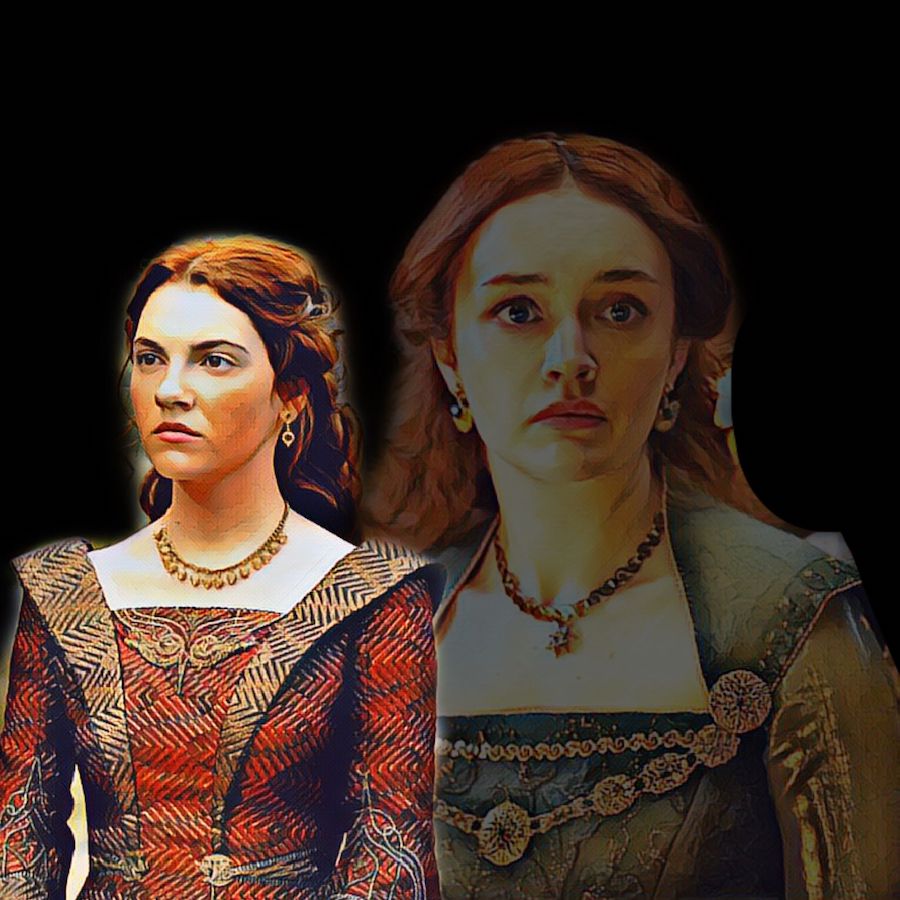

Millie Alcock gave Rhaenyra energy, resentment, insecurity, and arrogance. Isolated after her father became a widower, upset when she married her best friend, and then insecure when her half-brother is born, she convinces us of everything that contributed to the formation of the princess that is in the books. When she is chosen as Viserys’s successor, she has a mix of disbelief and pride that are essential to the character.
Before Rhaenyra, no Targaryen princess was Queen. All were consort Queens, but not Queens. Her cousin Rhaenys (Eve Best) experienced the same problem as her decades before. The heir was her father, but he died and her grandfather, Jaehaerys chose male children in his place.
gar, thus changing the line of succession and arriving at Viserys along deviously patriarchal lines. So with that background, it was unlikely that the men – even if they swore – would live up to their words to support her when the time came. Rhaenyra is aware, and more so, she has direct and pure competition with her half-siblings. Yes, Alicent had three sons and a girl by Viserys, he had official heirs.
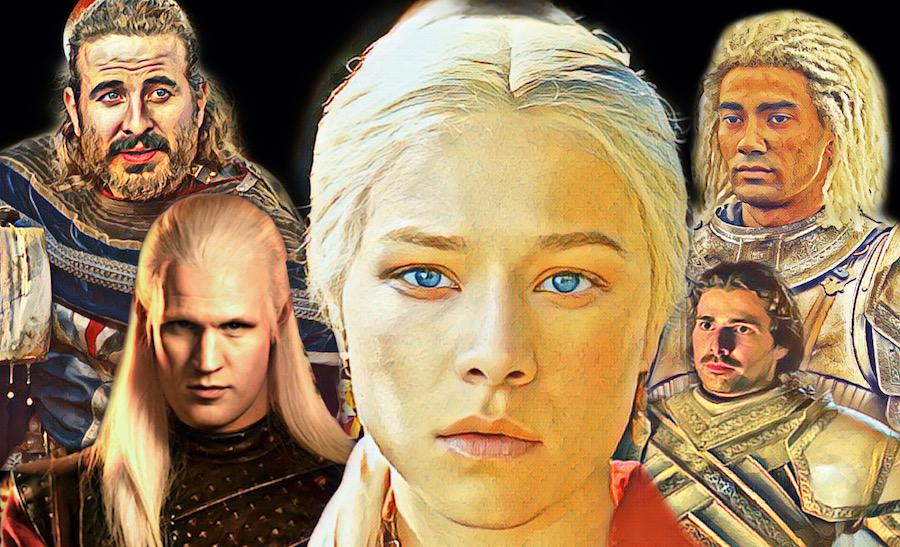
Daemon’s return to the circuit strained Rhaenyra’s relationship with her father, more so in the book than in the series. In House of the Dragon, we see her react to the candidates for husband and the best and most certain opportunity lost when the faithful and honest Ser Lyonel Strong (Gavin Spokes) had the chance to unite her with Ser Harwin Strong (Ryan Corr), but he suggests the one that seems more right: marrying her to her cousin, Laenor Velaryon (Theo Nate), to unite the Velaryons and Targaryens once again, respecting the prince’s mother, Rhaenys and solving all outstanding problems. However, Laenor is homosexual and a young and curious Rhaenyra is then practically condemned to a platonic relationship. This is a problem given that she is more than just curious about sex, she needs to have heirs.
Rhaenyra’s Loves and Maturity
It is Daemon, who acts on an impulse both to create a situation against his brother and out of empathy for Rhaenyra, that the story in the series takes an unexpected turn. He is aware of his attraction to her, he knows that he is inexperienced and that he is in need of friends and attention. More so, he knows exactly the frustration of her being tossed out of her position as heir once there is a male option for the throne. Rhaenyra ‘took’ that place from Daemon, but he loves his niece and as much as Viserys’ decision (coordinated by Otto Hightower), has ‘harmed’ him, he never took it out on his niece or put her in charge. Both were victims of the same cunning action and now he saw before his eyes a girl who would be ‘killed’ in a marriage without love or pleasure. His ‘help’ has the paradox of being both well-intentioned and irresponsible. As Viserys confronts him: Rhaenyra, as a woman, cannot have the freedoms they had as men.
Whether Daemon anticipated what was to come remains as uncertain as in the book. He was no longer with Mysaria, but he was still officially married to Rhea Royce (Rachel Redford), so he wouldn’t technically be free (yet) to propose to his niece. He asks his brother, who ignores him. And then he has the turn.
Rhaenyra flirted with Ser Criston Cole, but her relationship with him was similar to Alicent’s: closeness still maintained the hierarchy. Frustrated and impulsive as a teenager, she seduces him. The secret, for him, is torment. Being Criston is a perfect match for Alicent, but all wrong for Rhaenyra.


Thanks to the scandal with Daemon, which had weather, a kiss, and a makeout, but not a full sexual relationship, the princess’s honor was in jeopardy. Confronted by Alicent, to whom she lies and withholds, she maintains her innocence. Viserys doesn’t believe her and a cup of tea creates chaos. Viserys believes that Daemon did have one night with Rhaenyra, and to avoid an unwanted pregnancy while speeding up the marriage to the Velaryons, he sends his daughter to an abortive tea. He is unaware that she spent the night with Criston Cole and accepts the tea because of it. Somehow, by not rejecting a cup of tea, she admits ‘guilt’. When this information reaches Alicent’s ears, it’s the last straw. More on that ahead.
As a friend of Laenor since childhood, Rhaenyra is aware that he and she will have problems consummating the marriage and makes an agreement with him to just try until they manage to produce two heirs, being able to stop with the first one if it is a boy. Afterward, the two will romance whoever they want always discreetly. Ah, it looked easy!
Ser Criston Cole felt aggrieved at being ‘used’ and having to submit to the role of lover, which Ser Joffrey Lonmouth (Solly McLeod) saw in a single glance. When approaching the Royal Guard, he is insolent and suffers the consequences, being violently killed at the wedding feast. The union is not suspended, rather Rhaenyra and Laenor are wedded still in the blood, weeping from shock, loss, and future.
That night, the enmity that Otto so longed for and could not generate is born: Alicent starts to hate Rhaenyra for everything that she is, that she was, and that she will be. While Alicent submitted to society by marrying an older man without love and only had sex out of obligation, motherhood was a burden and even then she will not see her sacrifice winning the top prize (Viserys refuses to make her children priority over Rhaenyra), Rhaenyra had a life where she did what she wanted and paid for nothing. And yes, having seduced Criston Cole – their crush – was not irrelevant. At this moment, neither. marriage to Laenor Velaryon is punishment as he and the princess are friends. Alicent stays green out of anger (pun intended). It’s a war against the Targaryen Princess.

A princess altered by motherhood
In the advance of time, we find two Alicent and Rhaenyra profoundly altered. Alicent is more than comfortable in her position as Queen Consort, though not yet openly acting against Rhaenyra (as she does in the book). She doesn’t have any particularly affectionate interactions with her children (we never see Daeron, but he will come in Season 2), only with Helaena (Phia Saban, as an adult) who shows some pity but no love.
But the first scene is again relevant to understanding Rhaenyra. We accompany her giving birth to Prince Joffrey. He is alone with the midwives and his grief is immediately overshadowed by a clear and deep love for his baby. It’s the opposite of any interaction Alicent has shown with her children. Protective, she exposes herself by walking still bleeding to Alicent’s room, who ordered the child to be taken to her immediately. Laenor (John Macmillan) arrives next and supports his wife. It would be a perfect marriage, but we soon found out about the drama. Laenor is unable to have sex with Rhaenyra. He just drinks and thinks about battles. The father is clearly Ser Harwin Strong and they already have three children: Jacaerys, Lucerys, and now, Joffrey.
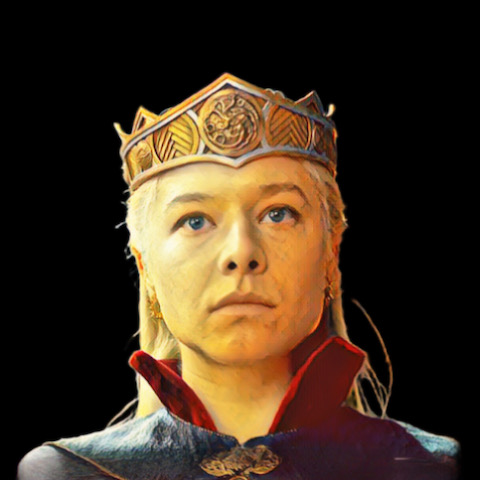

Emma D’Arcy changed course from the persona we expected from Rhaenyra to what was being delivered by Milly Alcock. Mature Rhaenyra is more aware of the political problems she faces. Her relationship with Ser Harwin is a difficult secret to hide having produced no less than three children, something that honestly leaves us more on the side of Alicent’s argument who reacts with indignation. But it makes sense if we remember the great maternal example that Rhaenyra had in her mother, Aemma.
Although in the book Rhaenyra’s bluntness about the paternity of the children was less obvious than in the series (in the book the Velaryons are white and in the series they are black, leaving the Caucasian children clearly sired by someone other than Laenor), the experience of being a mother filled the princess’s heart. She is, again quoting Fire and Blood, crazy about her children, who are also loved by Laenor. Unfortunately, her romance with Ser Harwin is only in the imagination as we say goodbye to him very quickly. Ser Harwin may have been Rhaenyra’s great love and this is never confirmed or explored. Being Criston was a flirtation, being Laenor’s obligation, and then Daemon a political decision. But being with Harwin was affection, pleasure, and affinity, but also a 10-year relationship with three children. I regret not having more of this relationship in the series.


The conflict between brothers, the civil war
The relationship with Daemon Targaryen has always been the most recommended and the most complex in Rhaenyra’s history. In the series, there are vital differences from what is said book. For example, there is the question of whether Daemon ever had something with Alicent, something that disappeared at the same time that his participation in the (convenient) death of his first wife was confirmed, as well as his involvement in the seduction of Rhaenyra. What was surprising was the way in which Daemon actually got involved with Laenor’s ‘death’. He was suspected in the book, but here he offers an unlikely alternative to help him escape and live with his lover. This is odd because the decision makes his marriage to Rhaenyra invalid, as well as his bloodline becomes a bastard. Something that jeopardizes everything they’ve done, but reinforces Rhaenyra’s sweetness
The new Rhaenyra is more than sweet, she is discreet and almost submissive. She fears the greens and does not appear to be outraged as Alicent controls Viserys or the Court. She is distant with her half-siblings – which is consistent – but neither does she show the mutual hatred that she and Aegon harbor and which is essential to the conflict. Not even with all of Alicent’s hypocrisy, all the aggression she promotes in words, or even physics, we have a Rhaenyra acting hierarchically superior as we had in the first part. Was it the fear of having to justify the paternity of your children? Was it the fault of what she omitted? Where did all that hate go?
The Succession Dilemma
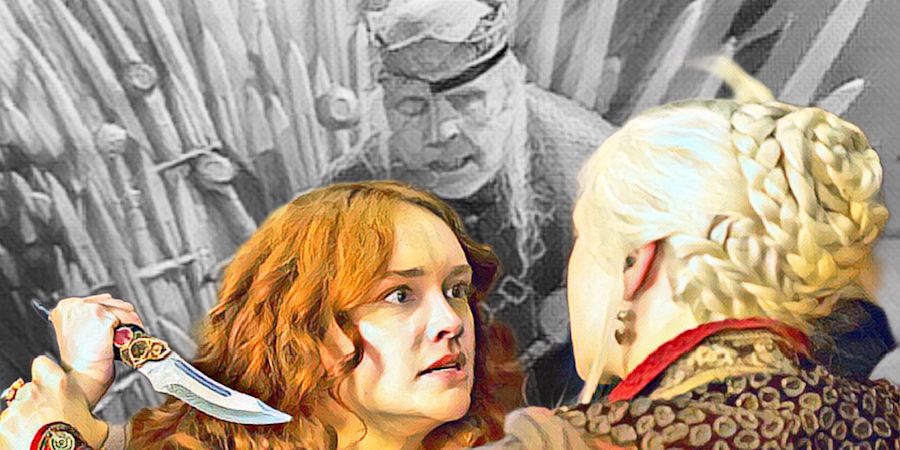
The personality inversion directly interferes with the moment Rhaenyra “becomes” Queen, with the death of Viserys. In the book, he suddenly leaves, raising the suspicion of his wife having done something to get him killed and also creating the opportunity for the coup. After all, without having a serious illness identified, no one expected him to be close to death. Rhaenyra was at Dragonstone at the time. In the series, it’s somewhat surreal.
First, the future Queen is publicly questioned. While we know she’s part of Vaemond Velaryon and Otto Hightower’s armed coup, she seems more of a diplomat than a future Queen at risk of losing her crown. If Viserys hadn’t crawled to the Iron Throne and Daemon executed Aemond, it would have been a different game. It was interesting to see Rhaenys less inclined to make a quick stand, but Rhaenyra failed to demonstrate command at a crucial time.
In the birth that almost took her life, Rhaenyra suffered the first loss, with the premature birth of her daughter, Visenya. But we didn’t see in her the revolt described in the book by what happened in King’s Landing. We saw the moments of insecurity, of a tentative democratic decision, and a commitment to a prophecy (for us unprecedented). A docility that Daemon sees as dangerous. Would it be wrong?

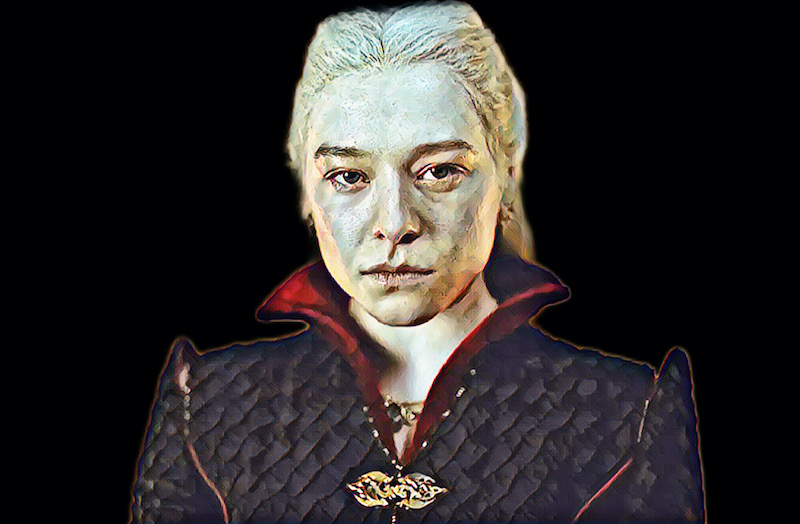
A look, a change?
Rhaenyra’s difficulties haven’t even begun. Her children’s fate will be as tragic as hers. Visenya’s death was the beginning of her losses. Crowned by Daemon in Dragonstone, she seems to feel the weight of her responsibility and still tries to reconcile the crisis. Daemon obviously does. and once again kill Otto, which seems to be logical. She stops him. And she is moved by the message she received from Alicent and seems to contemplate peace, however, with the death of Lucerys, her beloved son who was tragically swallowed by Vaghar in the attack led by Aemond Targaryen, we see her stagger and change her eyes.
Will we see another Rhaenyra?
Descubra mais sobre
Assine para receber nossas notícias mais recentes por e-mail.
 miscelana.com