
As published in CLAUDIA
Romance reveals details about the fascinating disobedience of the painter Artemisia Gentileschi
While waiting for the release of the film Firebrand, an adaptation of a book by her and directed by the Brazilian Karim Aïnouz, the writer Elizabeth Fremantle spoke exclusively with MISCELANA/CLAUDIA about her new project, the most personal of her entire career.
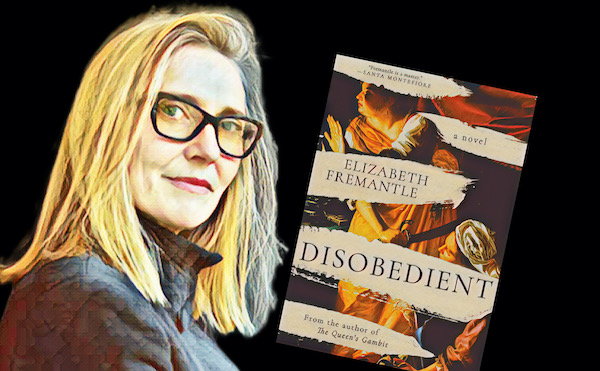
Elizabeth Fremantle knows British queens well and her book about Queen Katherine Parr – The Queen’s Gambit – became a film, renamed Firebrand, which was directed by Brazilian Karim Aïnouz, and features Alicia Vikander in the role of the Queen and Jude Law as Henry VIII. However, it is with Disobedient, that she is anxious and excited. The book embarks on the life of another strong woman, the painter Artemisia Gentileshci, an iconic artist compared to Caravaggio, Rubens, and El Grecco.
Artemisia’s trajectory, as it should be, was marked by pain (physical and moral), and sexual abuse, but also success and romance. For Elizabeth, there was something even stronger. A rape survivor herself, she was moved by the strong brushstrokes of the Italian, who placed figures of abused women as central characters in her paintings and expressed her personal revolt with violent and daring images. Elizabeth knew what that pain was and wanted to tell her story.
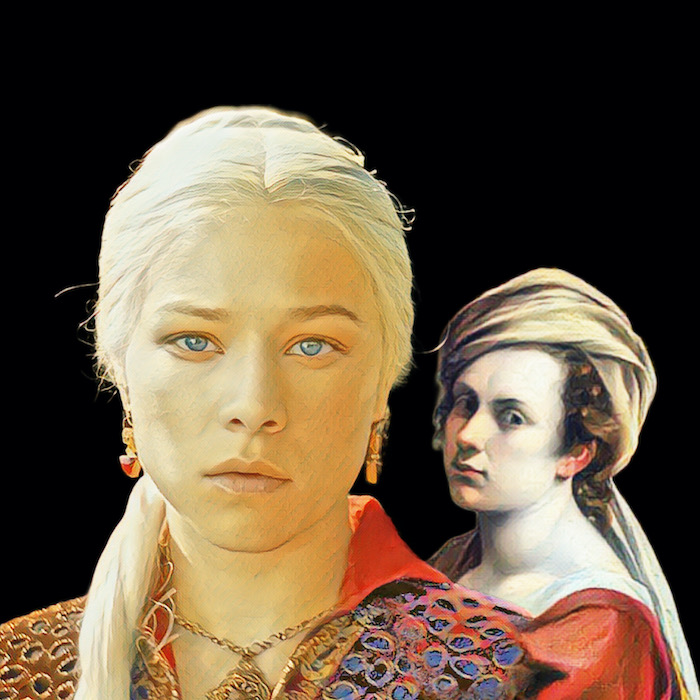
As a fan of her books, I was excited to talk with her. To help, the audiobook in English has none other than Emma D’Arcy, our Rhaenyra from House of the Dragon, in the narration. She has every face that, like Katherine Parr, one day she will arrive on a platform or in the cinema. All of this and a little more are in the exclusive chat for CLAUDIA/MISCELANA about women, history, and inspiration.
MISCELANA: Did you already know the story of Artemisia? How did the theme of your new book become?
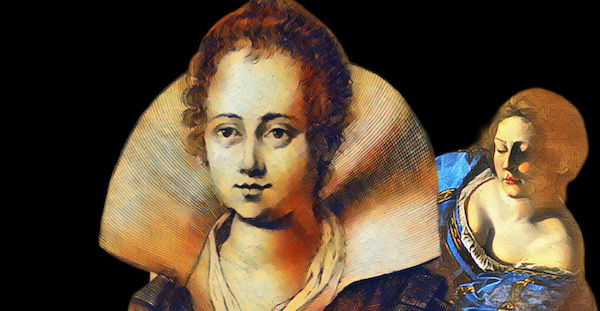
ELIZABETH: When I research all my novels, I see a lot of period art, and when I was researching The Queen’s Gambit I discovered Artemisia and thought ‘Oh my God, she’s an amazing character’, but to amend ‘this is not the time to I tell this story.
MISCELANA: Was it in another historical period at the time?
ELIZABETH: Yes, I wrote the books set in the Tudor court well and I had hopes of writing three more books of the same type. That’s why I couldn’t suddenly place a book set in Italy in Rome in 1611.
MISCELANA: But there’s something else that connects you with her, isn’t there?
ELIZABETH: Yes, it’s a very personal story for me because Artemisia is raped by her painting teacher and I’m also a rape survivor, the same age as her. So it was a very, very personal story for me. I really wanted to write it, but I didn’t know if I could.
MISCELLANA: Why?
ELIZABETH: Because when you write a novel, you live with your characters and what happens to them for two years in your head. And I just didn’t know if I was going to be able to do that.
MISCELANA: What has changed?
ELIZABETH: People started talking about their experiences and I realized that it could be a really empowering thing for me. I was thinking of writing about the writer Aphra Behn, who lived in the late 17th century, but I couldn’t get into that story. She is an amazing woman but I just couldn’t because I kept thinking about Artemisia, her story kept talking to me. So there was a big exhibition at the National Gallery here in London that was postponed because of Covid but there were a lot of articles in the press and I kept reading. I understood that I had to write this novel because if I didn’t, someone else would and I really wanted to.
MISCELANA: I’m sorry for your pain too…
ELIZABETH: I did reveal in the foreword why I felt it was so important to be open about this. I hope other women feel like they can open up about what happened to them without feeling ashamed. I myself was always hesitant to talk about what happened because I didn’t want people to feel sorry for me and in that way, it turned out to be an incredibly empowering experience.
MISCELANA: Artemisia had incredible strength even more so for a woman at that time, didn’t she?
ELIZABETH: She was a virgin and a virgin who was raped. It was completely normal practice to be expected to marry your rapist because the crime was treated as if it were about family honor. And that’s part of her story. But you know, Ana, what really always still shocks me when I think about it is that there are still parts of the world where women are forced to marry their rapists for the honor of their family. It’s not something from the past and that’s why I choose to write about these women. Their stories may be stories from 500 years ago, but they still have relevance for modern women.
MISCELANA: Without giving away an even bigger spoiler, Artemisia’s rapist was a friend of her father’s, a man he brought home, trusting for his family’s safety. What can we anticipate for MISCELANA readers about her story?
ELIZABETH: She lived with her father and three brothers. When she was just 12 years old, her mother died, so she grew up surrounded by boys and helped her father with painting. But what’s interesting is that there’s no doubt that when you look at her work, she’s a better painter than he is. Her work is more expressive and has more emotion. He is very skilled, but she has something else, something of real vitality and vigor in her work that is absent in his. From this I concluded that he may have had to struggle internally with this, knowing that she – a woman – was better than him. He is proud of her and very jealous. And that’s, it’s an important part of the atmosphere of the house, this kind of weird attraction between these opposing emotions that he feels because he drinks too. So the family is not particularly happy and they are not rich. Artemisia paints the backgrounds and some of the details, but he recognizes that more commissions could be received if he starts passing her paintings off as his own, which creates even more difficulties within the family. I took this from the fact that there are many paintings by him that are now being attributed to her.
MISCELANA: And how does the predator enter the story?
ELIZABETH: I won’t reveal more because I feel like it might spoil it for people who don’t know her yet [laughs] but still about Artemisia, I see her as someone who wanted to gather information and learn and be a better painter but doesn’t think about love or marriage. She thinks of nothing but her work as a painter and dreams of being judged as an equal to her male colleagues. In a way, she is a proto-feminist. Something that is clear in the types of work she chose to paint, with women perpetrating violent acts against men. There is anger in the paintings that makes me see her as a proto-feminist.
MISCELANA: Yes, especially after we know everything he lived through, it’s very powerful.
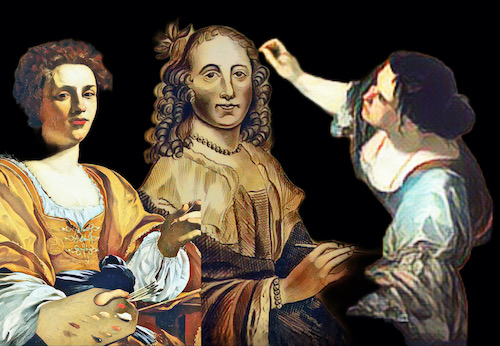
ELIZABETH: I thought that this person, the man who committed the violence against her, was someone who could help her with her career, help her achieve her dreams, but even when everything goes wrong, that doesn’t stop her from fulfilling her dreams. dreams. And in some ways, I kind of feel like it was the other way around, the rage drove her to create her great masterpiece, which is “Judith Slaying Holofernes”, an amazing painting. And she painted two pictures, I saw them side by side in the National Gallery, which was just amazing, really amazing.
MISCELANA: But one of the most shocking facts is that after being raped and accused of raping, Artemisia had to ‘prove’ that she was telling the truth.
ELIZABETH: Yes, without too many spoilers, but there is a court case and she is subjected to torture to prove her testimony. Not him, but her. That’s a very important part of the novel and it’s an important part for me to understand its psychological make-up.
MISCELANA: But her life wasn’t restricted to that trauma, was it?
ELIZABETH: What I find even more extraordinary is that Artemisia becomes the first and only woman of her time to be admitted to the Academy of Arts and Design in Florence. Soon after, it was sponsored by the Medici family, the rulers of Florence. She makes her dreams come true, her impossible dreams. What’s more, she also lived something of a libertine lifestyle, taking lovers even though she was married of convenience to someone who was her friend. She lived this remarkably modern life, especially for a woman in the early 17th century. She traveled all over Italy, lived in Naples and Florence, and traveled to England, where she painted at the court of King Charles I. There is a fabulous painting in the Royal Collection, which is a self-portrait that Artemisia did while in England. She was a woman who refused to be submissive. I really admire that.
MISCELANA: But her art was only practically rediscovered in the 20th century…
ELIZABETH: What happened is it was so celebrated in its time, but when that kind of art, baroque art, with those biblical scenes, went out of style with the coming of the Enlightenment, it became less talked about. Especially in Victorian times, at the end of the 19th century, when no one was interested in anything women had to say and she was automatically ‘dismissed’. It was only in the mid-20th century that feminist art critics began to reevaluate her work and bring it to light, and yet it took another 40 years for it to really resurface. So I hope this novel makes her the household name she deserves to be. You know, that’s all I want for this, for the romance to let people know about her.
MISCELANA: I love the title Disobedient!
ELIZABETH: It came up when I was having lunch with my editor and she said, look, we’re going to have to think of a new title and it had Artemisia’s disobedience in mind and she loved that. And then it ended up being just ‘Disobedient’, which I think is better.
MISCELANA: Yes, she owns her voice. She is not following the rules.
ELIZABETH: Yes! And it’s not like it’s someone else calling her that, it’s like she’s reclaiming her naughty character.
MISCELANA: And I loved the connection to House of the Dragon! (Laughter).
ELIZABETH: Yes, Emma D’Arcy! (laughs) Oh my God, Ana. I listened to the tapes recently and it came up with something completely new. It’s like having, it’s like a new, new element to the book. And that’s really something to look forward to, yes.
MISCELANA: Can we dream of seeing Artemisia’s story on screen too?
ELIZABETH: Yeah, well my film agent is working on it, let’s see if it happens.
MISCELANA: Fingers crossed! Because “Firebrand” – which still doesn’t have a confirmed release date – came out of a bestseller of hers. How does research work for biographies/novels like yours? There’s a large volume of series and books reimagining historical people, isn’t there?
ELIZABETH: There are some personalities that we know a lot more about. Katherine Parr, who is the central character in The Queen’s Gambit, who changed her name to avoid confusion with the Netflix series and became Firebrand is about her, but not just her reign. In her case, there is a lot documented and the book is rigidly respecting history. What I do is introduce other characters who have their own stories and who allow me to go out a little, like Dot, a companion for Katherine Parr’s stepdaughter and who gave me the freedom to have another story structure, parallel to Katherine’s, who it had to follow a certain rigid scheme.
MISCELANA: Can you tell us a little bit about how it turned out in the film?
ELIZABETH: Quite different. It kept the essence of my Katherine and my Henry. [laughter]. They are there, and some of the dialogue is there too, but Karim [Aïnouz, the Brazilian director of the feature] took it in his direction and saw something that is much denser. It’s a single episode from the book that he’s taken and put his spin on and there’s a kind of genuine empowerment fantasy for Katherine, which is fantastic.
MISCELANA: Do you know how the adaptation work was?
ELIZABETH: Karim comes from a different perspective. He himself said that initially, he didn’t think it was a project for him because he thought, I’m not interested in royalty, I’m not interested in British royalty. Why would I make a movie about this story when it just doesn’t interest me? But when he looked at it again, he understood that it really is the story of an abusive marriage, a violent and harrowing story of abuse. I love the movie. I think it’s a really wonderful piece of cinema and I also want to say that he [Karim] is a really lovely man. I really fell in love with it and I, you know, love to think that movie is next to my book. They exist together.
MISCELANA: Was the research for Disobedient more complex?
ELIZABETH: Yes because we know much less about her everyday life. He had all the court transcripts translated from Latin into English and there are many letters he wrote but none from this early period of his life. Because the court transcripts are so rich they tell the story of that year, of her life from all these different perspectives, from all the different testimonies, which was incredibly helpful. I mostly stuck to what was said there, although what’s really interesting is that many of the stories are a little different from each other, but it gave me the freedom to tell ‘my’ story. The people, the places, the situations are correct, I’ve only slightly changed some of the moments when she made the paintings, not least because we’re not sure when she painted them.
MISCELANA: Is there anachronism?
ELIZABETH: I always think that historical fiction is initially an act of imagination, of reading between the lines of history and figuring it out. It’s fiction, but you find your story within that, the lines of that story, but I never want to write a novel that doesn’t have relevance now for modern readers. Gotta have something. All my novels are contemporary novels. They happen to be set in a period of history and it’s a period that fascinates me, where women are starting to find their voice. There is so much rich material for people right now!
MISCELANA: And we discovered many things!
ELIZABETH: When you take these figures from the past, like Anne Boleyn, so many novels have been written, so many films have been made, and each one is of its time. If you look at the vintage ones from the 1950’s they all have bright red lipstick and 50’s hair. They all speak to their specific audience. So it’s a contemporary romance. They’re all contemporary novels with an eye to what’s interesting to a contemporary reader and sometimes that creates anachronisms, but I don’t mind that.
MISCELANA: There’s a risk of not separating facts from suggestions, isn’t there?
ELIZABETH: Yes, anachronism of course is anachronistic. A historical novel is always anachronistic. The language, the things it focuses on, is unavoidable. I always kind of giggle when people talk about historical fiction because it’s such an anachronism. Of course, there are, but it’s about giving the reader the feeling of being back in the past. It’s not about creating an accurate picture of the past, because nobody would read that, nobody would understand. So yeah, but I think when we know a lot of facts about a character, I think it’s really important to honor that and honor the essence of that individual story.

MISCELANA: I like historical novels because I discover other details, other perspectives. Even other important women! Katherine Parr, for example, was essential in the formation of Elizabeth I, it is relevant to know her better…
ELIZABETH: Exactly, and that was one of my starting points for writing the three Tudor novels, which are about the sons of Henry VIII coming to the throne. There was a 50-year period in England of female monarchy, which was completely unprecedented in that period, so Mary Tudor and particularly Elizabeth Tudor were really important characters. By the way, this is one of the main points that Karim draws in the film Firebrand, which is Katherine’s influence on Elizabeth. He cast a fantastic actress to play Elizabeth. And Anne Askew is another really pivotal character in the film. Of course, there is much more to the story in the book and the film Anne Askew is a small part of it, but it is quite shocking to think that women have been burned alive just for preaching their beliefs. [Young Anne’s fate] When I was young, all I thought about were those girls who were going to be executed. Jane Gray and Catherine Howard were just teenagers. It’s shocking.
MISCELANA: And are there any new women on the horizon?
ELIZABETH: I made two proposals and one is another Italian novel, which would be a good partner for Artemisia and the other is an Elizabethan novel. My editors still haven’t decided which one they want me to do. I’ll probably end up doing both, but what I really want to do right now and I’m really excited is the Italian one because it’s a fantastic story, but I can’t talk about it, so… [laughs]
MISCELANA: For now, the expectation is for the release of Disobedient, which hits stores on July 27th (still no forecast for a translated version in Brazil)
ELIZABETH: I’m looking forward to it because this one is really important to me because it’s so personal and I really want it to find its readers. You know, that’s so important to me because I think that’s the cathartic thing, not just writing it, but putting it out into the world and having people respond to it, hopefully in a positive way.
Descubra mais sobre
Assine para receber nossas notícias mais recentes por e-mail.
 miscelana.com
1 comentário Adicione o seu