
There was no way to avoid it, in the year that the film The Exorcist completes 50 years, the death of its director would have the film mentioned in the title. Certainly, the horror classic is one of the most important of William Friedkin‘s cinema and filmography, but it was the film that won the Oscar for Best Director, in 1972, which has his greatest signature, The French Connection. In any case, Hollywood felt the death of one of its greatest masters, aged 87, as a result of pneumonia.
William Friedkin was rightly deified. He had a keen eye, he innovated in the action sequences, he worked the sound and the soundtrack to accelerate the tension, and above all, he treated any genre with the same seriousness. He was considered one of the greatest of the 1970s, alongside Spielberg, Coppola, Scorcese, and DePalma. His mentor was none other than Alfred Hitchcock and when he won the Oscar, he was the youngest director in the history of the academy, at just 25 years old.
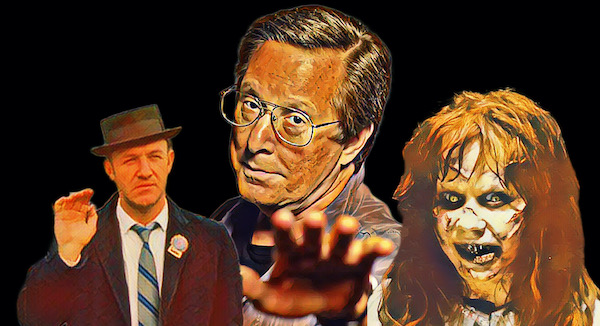
Many were surprised that, after the French Connection drama, he bet on the horror subgenre when releasing The Exorcist, but it was always original. The difference and success of the film lies in the fact that he never faced the story outside the drama box (in line with the author of the book, William Peter Blatty) and the impact was personal, until his death he remained fascinated by the theme of exorcism and religion because, as he always liked to highlight in his works, it was the struggle between good and evil that inspired him to tell stories, which he also liked to avoid happy, perfect heroes or victimless dramas.
The son of Jewish emigrants, William came from a poor background, which he considered irrelevant because, in his view, everyone was like him, knowing the difference between right and wrong” and without access. He entered cinema when he got an administrative job at a TV studio, where he discovered another universe. He worked his way up to live TV director. There, the stories of real dramas attracted him, and his documentary about an innocent man condemned to death in 1962, recreating what would have been the crime and a fanciful montage of the execution, not only removed Paul Crump from the Death row but also put the name by William Friedkin highlighted as a talent to watch. Thus, with prestige, he arrived in Hollywood, as a documentary filmmaker. He eventually managed to join Hitchcock’s TV production, where he directed a few episodes. His first feature, Good Times, starred Sonny and Cher. A failure.
None of the other three panned out, and it was when he heard the stories of the two NYPD detectives who had busted an international heroin ring that he realized he had a good story to tell. It was the only one, French Connection had been rejected by others of greater renown. Backstage was marred by fights, but it yielded not only award-winning performances but also one of the most iconic chase sequences in cinema history. Even with the prestige of the highest award in the industry, Friedkin was not the first option for The Exorcist (Stanley Kubrick and Mike Nichols refused) and was already gaining the reputation of being “difficult”. For men, it was almost a compliment, really.

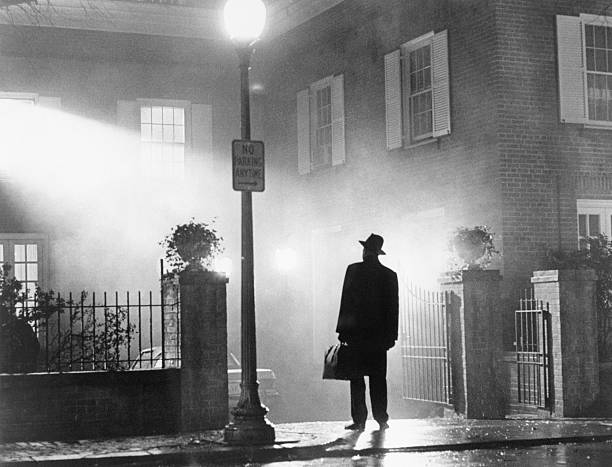
Before closing with Ellen Burstyn, he tried to convince Audrey Hepburn (who wanted to record in Italy, where she lived, so she ended up being discarded), Anne Bancroft who would only be released the following year, and even Jane Fonda, who turned down the role. The recordings were famously full of interviews and disasters, with delays, and fire destroying the set and cast without connecting with the emotion he sought (and the director used physical and psychological abuse to get what he wanted). It worked because it scored one of the biggest box office hits of all time.
The Exorcist marked his peak, followed by some failures that shook his trajectory of success in cinema, something that balanced directing for TV and operas. By this time, his arrogance and explosive temper had virtually isolated him from the market. He worked until recently, less adored and still arguing that he wouldn’t have made his greatest film. Nonsense, we know there was. And not just one, but two of the greatest of all time.
Descubra mais sobre
Assine para receber nossas notícias mais recentes por e-mail.
 miscelana.com