
2023 marks the centenary of the birth of Maria Callas, one of the greatest opera and pop culture phenomena of the 20th century. It also marks the 70th anniversary of what is considered the definitive recording of Tosca, one of the soprano’s most famous roles.

Born in New York, the daughter of Greek emigrants, María Kekilía Sofía Kalogerópulu, Maria (who simplified her last name to Callas when she went on stage), grew up in Athens after her parents separated and where she began her study of classical singing. She survived the war, struggled with weight and aesthetic standards, and her religious commitment to her art made her a complex artist, loved and criticized in equal measure. She appreciated strong and dense female roles, bringing bel canto operas by Donizetti, Bellini, Rossini, Verdi, and Puccini to the obligatory repertoire of everyone who followed her, always with realistic and profound interpretations of each role.
With an irascible, conflicted, and unstable temperament, Callas became known as La Divina, often separating her personas. There was Maria, insecure, troubled, and arrogant Callas, perfectionist and untouchable. Her heyday was precisely in the 1950s, the period in which she reinvented herself (losing 28 kilos) and became a fashion icon, and also, luckily for us, the period where she made several complete recordings of her work, preserving her unique voice.
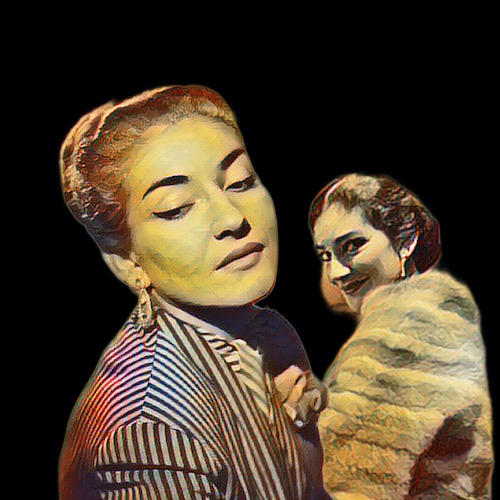
Callas began to emerge on the opera scene in the late 1940s, performing at major opera-oriented theaters such as La Scala, Covent Garden, and the Metropolitan. Her interpretations of her on stage and on records by Lucia de Lammenor, La Traviata, and Norma are a must for classical music lovers. And especially Tosca.
Recorded in August 1953 – 70 years ago – it is considered a milestone in history and one of the best-selling opera recordings to date. Conducted by Victor de Sabata and reunited Maria Callas with two of his closest colleagues, tenor Giuseppe di Stefano and baritone Tito Gobbi. From backstage legends there are versions that de Sabata was not satisfied with Maria’s reading of the verse “E avanti a lui tremava tutta Roma“, the phrase said by Tosca after killing Scarpia and forcing her to repeat the reading for half an hour until hit the tone considered until today, unequaled. It’s so definitive that when Herbert von Karajan made his version nine years later, he used to listen to the 1953 recording to build on it. According to the German maestro’s producer, he suffered from Tosca’s entry in the third act and said of De Sabata’s arrangement: ‘He’s right, but I can’t do that. That’s his secret.’”
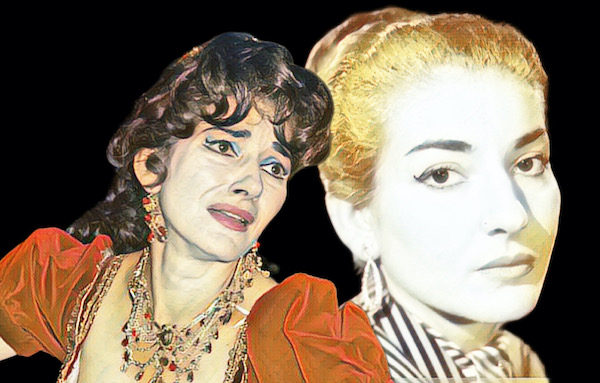
As of 2020, this particular recording has been listed by the Library of Congress as a piece to be held for preservation in the National Recording Registry because it is “culturally, historically, or aesthetically significant.” Unsurprisingly, Tosca has the aria that is arguably La Callas’ personal manifesto: Vissi D’Arte, which says everything it stands for.
Descubra mais sobre
Assine para receber nossas notícias mais recentes por e-mail.
 miscelana.com
1 comentário Adicione o seu