
The central theme of the Physical series is not how fitness became a lucrative business in the 1980s, encouraging exercise without dealing with health. It’s how people with eating disorders or other psychological problems have found a surrogate source of their addictions, or at least, that’s the view of heroine Sheila (Rose Byrne). That way, triggers are to be expected, and any slip in the self-destructive process can start all over again.
When we first met Sheila three years ago, she was bulimic, compulsive, traumatized by sexual abuse as a child, and trapped in an extremely unhappy marriage. Her negative voice was relentless with anyone or situation, creating a dense, strange, and not-at-all-friendly character. Unconditionally supporting her equally troubled husband, she spirals into an extramarital affair, stealing, lying, and also discovering in an aerobics class that not only can she stay slim doing what she loves, but that she had the talent to start a business that would make her a millionaire.
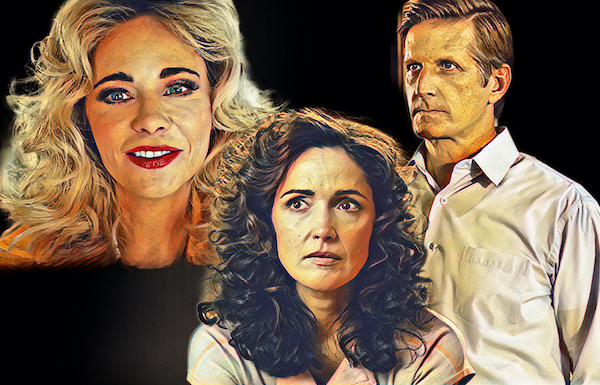
In the second season, it was the race against the end of the healthy farce: as she went up, her husband went down, and the lies about her physical and mental health were exposed, demanding from her a commitment to improve. And then, in a more positive third and final season, we see just how difficult the road to control really is. It doesn’t just depend on herculean mental strength to deal with problems, but a relentless ability to overcome triggers, something Rose Byrne is making a show of making clear. Sheila’s bulimia has a firm root in the past that cannot be changed: she was raped repeatedly by her father’s best friend when she was 13 years old, something that her family chose to ignore and forget, but that even as an adult she cannot forgive or forgive herself. It is a deep, constant pain and in the mask of the insane universe in which Sheila envies other women, she feels empty and even aware of what she lives, she is alone and without the strength to face the issue. The scene in which her rival sings I’ve Got You Under My Skin brings another perspective to the American classic, a more literal and frightening one.

Hopelessness is in the air in each episode but in the background. On stage, we have a unique character in her willpower to reach her material goal, to break taboos, to have her business, and not depend on any man for anything. However, long before the #metoo movement, women endorsed the misogynistic campaign of not respecting or helping themselves and Sheila is the victim of yet another abuse when, after a night of frank conversation with Kelly Kilmartin (Zooey Deschanel), her rival uses the information she has to create a humiliating situation for her: personal and professional. Months of control go down the drain, with Sheila slipping back into bulimia and alone in the hotel. She had called (drunk) her boyfriend, inviting him to meet her, but, to our surprise, the one who shows up at her door is John Breem (Paul Sparks). Just like Sheila, we are increasingly confused about what is reality or imagination from her head. John has been the only one she really never lies to, the only one who has any leverage over her problems. Was it love? Is she seeing things? The only certainty is that the answer for Kelly will not be smooth. And this time, we are unconditionally on Sheila’s side.
Descubra mais sobre
Assine para receber nossas notícias mais recentes por e-mail.
 miscelana.com