
I have already posted here in MiscelAna summaries of the stories of Alva Vanderbilt, Caroline Astor, and Consuelo Vanderbilt, which are the maps of the plots of The Gilded Age. The series by Julian Fellowes is not a biography of them, but without secret, it uses real elements for its version. Thus, even though the Vanderbilts were mentioned at the beginning, Bertha Russell (Carrie Coon) is Alva, in strength and events, but the promise that her clash would be with Agnes van Rhijn (Christine Baranski) remained unfulfilled. In its place, the series portrays the “real” Mrs. Caroline Astor (Donna Murphy), which, in a way, deflates the character a lot. Her toughness and bad temper when it comes to the “new rich” seem more like a fan of Caroline following the Queen Bee than a strong personality. See if this gets resolved. But, in the trailer for the second season, a War in New York society is announced, even more fierce than the first. It’s the historic “War of the Operas,” which shook the city in 1883 and which features potential spoilers for the series. Warned!

The War of the Operas was the dramatic stage of the cultural and economic conflicts of the 1880s, which inspired books by Edith Wharton such as The Age of Innocence, filmed by Martin Scorsese, in 1993. The film opens precisely with the inauguration of the Metropolitan Opera House, with the opera Faust. We can count on something similar in the HBO Max series.
The records of the rivalry between the opera houses have articles from the New York Times, photos, and engravings to eliminate any doubt about the relevance and importance of what moved Manhattan in 1883. time. The award was a wreath emblematic of prestige and leadership. Whoever was Team Alva was automatically against Team Ms. Astor. Nothing more operatic.
We can replace Alva with Bertha. Seen as an intruder, although rich and committed, the quick “Peace” achieved between them at the phenomenal ball that closed the season, everything goes downhill when it comes to the division of boxes in the theater to see operas. As if what was on stage was more interesting than what was in the audience.

Caroline Schermerhorn Astor had an “advantage”, she was a native New Yorker, thus she held the post of guardian of the rules of conservative society. The Astors’ fortune came from maritime exploration, which placed the Vanderbilts (in the series, the Russells) of fortunes coming from the railroads, as less respectable because it was bigger and more recent.
The “seasons” were – and still are – determined by the seasons: summer in Newport, winter in New York with balls, formal dinners, and Christmas parties. And what opened the season was precisely the opening night at the Academy of Music. As there were only eighteen cabins, they were reserved for the most distinguished (or, traditional) families. Obviously being among one of the 18 was essential to define who was in or out, but the one who “chose” was Mrs. Astor.
In The Gilded Age, we can tell that Caroline will not have forgotten the ordeal she went through to ensure that her daughter was invited to the Russells’ ball. Because just as the real one excluded Alva, she will bar Bertha. Alva only took action after being stopped for years, Bertha will be faster. She led the scorned families to create the Metropolitan Opera Company, which needed a theater of its own. One of the interesting parts is to follow the evolution of the city, which was “rising” to where Central Park is today. The Academy of Music was on 14th Street, and the first Met was on 39th and Broadway, following the commercial trend in New York that was looking for new addresses. The original Academy that opened in 1854 was destroyed by fire in 1866 and rebuilt, but today it no longer exists.
The Met was born to “humiliate” the Academy of Music. That’s because it came more than 30 years after the city approved the construction of a space “to promote taste and ensure accessible musical entertainment to the public at a moderate cost”, which was far from the truth. So much so that it was seen as an “alternative” and more democratic. The intention was always to overshadow the old Academy. In all senses. Just imagine in The Gilded Age!
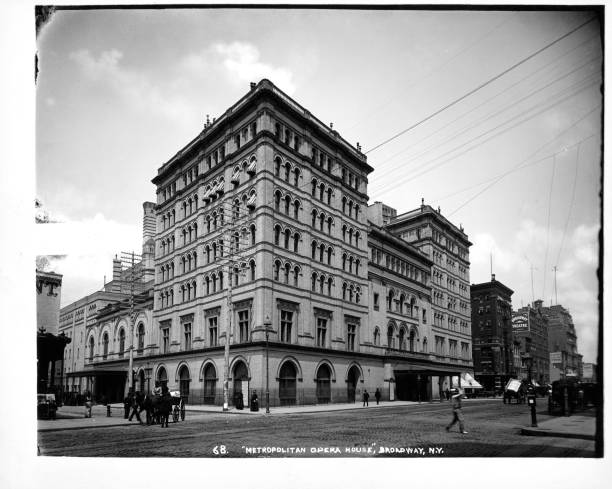
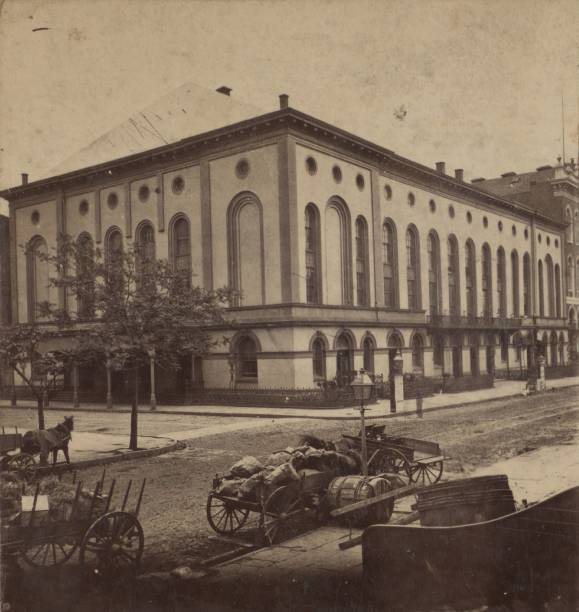
Historically it happened like this: a group of 22 men met on April 28, 1880, at the Delmonico restaurant to start the project of the new theater, with no less than three levels of private boxes so that the new industrial families of New York could exhibit their fortunes. Who doubts that the “outcasts” of the Academy were the first to support it?
The inauguration was on October 22, 1883, with immediate success. In just three years, the Academy changed its programming to more “popular” vaudeville shows, before closing its doors and being demolished in 1926 (today it is the address of the Edison Building). It couldn’t survive the perfection of the Met, which was more luxurious and had no acoustic problems, in addition to being in a more noble address. Not that it was a difficult challenge because although the Academy of Music had 4 thousand seats, and was initially seen as an “acoustic triumph”, it quickly became the target of criticism for being the stage for everything but Art, with complaints about the architecture, interior design and the proximity of the seats. As the Met surpassed all this and was signed by one of the greatest architects of the Gilded Age, the architect J. Cleveland Cady, we can see an opportunity to insert Larry Russell (Harry Richardson) into the plot. the opulence of the interiors earned it the nickname “Golden Age” which identifies the entire historical period. And Alva/Bertha?the Queen of New York society.
In the face of devastation, Mrs. Astor conceded defeat and abandoned her Academy of Music for the elegant Met, prompting the old guard to follow her. All end-of-season face, no? That’s because soon after, her daughter starred in the scandal of a divorce when she was the target of gossip for having an extramarital affair. Furthermore, Caroline was widowed and lost two children shortly thereafter, ending her days suffering from dementia, dying in 1908, aged 78. Not that Alva’s, or Bertha’s, victory is overwhelming. Alva was betrayed and faced the prejudice of divorce. Here I hope the series is different!
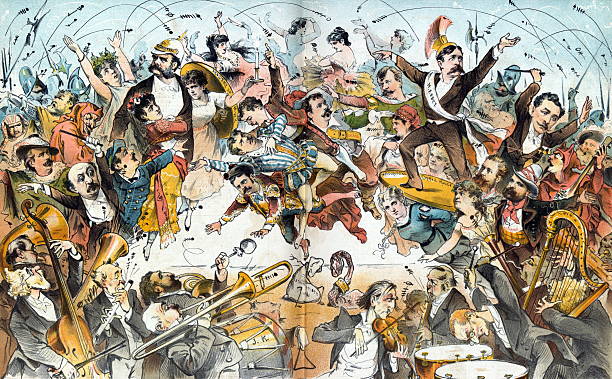
The Met that we will see is not the current one still in operation in New York, at Lincoln Center. As the stage area over time no longer accommodated modern productions, the original on 39th Street was demolished and moved to uptown.
On stage, the theaters reflected the rivalry of the two women, making the years between 1883 and 1886 one of the most culturally “lively”. The first opera was Faust, with soprano Christine Nilsson. While the Academy did not just host opera, it also served as a theater and meeting and exhibition hall, including political rallies, benefit balls, and science and industry fairs, among other events. When the Met came, they even tried to compete by offering 26 new boxes in addition to the 18 existing ones. The season-opening was on the same day in both theaters and the New York Times even has articles chronicling the societal divide between which house to support. “Where to go this year is as problematic a question as what to wear”, summarizes one article.
The description of the Met’s sweeping victory hints at the HBO Max series. “By 8:30 am the house was fully packed. The veranda and gallery were congested, as they were the only places where men and women could stand,” the article describes. Yes, the stocking was complete. As historians point out, Alva “won” Caroline, but who is Queen Bee has no title for nothing. Those who wanted acceptance had to stop by their box at intermission. A good fight! Something that will be sensational to see in The Gilded Age.
Descubra mais sobre
Assine para receber nossas notícias mais recentes por e-mail.
 miscelana.com