
Márcia Haydée‘s name has always been linked to the Stuttgart Ballet, especially because she was John Cranko‘s muse, as well as his replacement as artistic director when he passed away in 1973. During her leadership, Márcia maintained the mix created by the choreographer: modernity, classics, and revisions of well-known ballets. She didn’t leave the stage to choreograph until later in her career, having revised Sleeping Beauty and Giselle, among others.
If she was Cranko’s muse, it can arguably be argued that her ex-husband and partner of 30 years, Richard Cragun, was hers. A virtuoso and good actor, versatile on stage like few others, Cragun has always stood out in Márcia’s original works. His Carabosse in Sleeping Beauty is iconic, but it was in 1992 that Márcia Haydée recreated a modern version of Giselle for her friends, including him. One that is 100% original and in no way reflects the traditional choreography of Jean Coralli or Marius Petipa. For many years, inaccessible, this version of the complete ballet can be seen on YouTube and is interesting.

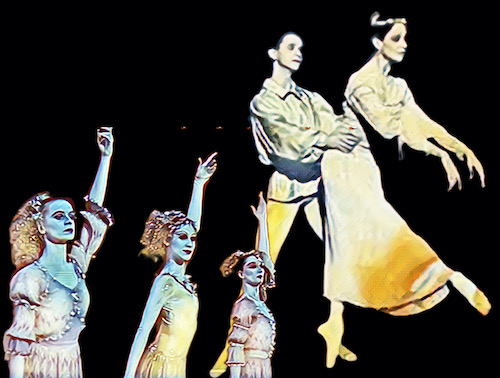
Having said all this, it is worth disclaiming that traditionalists may resent Márcia’s proposal, but it is still valid. The choreographer inverts the narrative, as well as the steps. The plot moves from a village in Germany in the Middle Ages to the 1800s, where we first meet a tormented Hilarion (Richard Cragun), already crying over the death of his beloved, Giselle (Birgit Keil). The first act works as a flashback where we see that Hilarion has moved away from his city, and when he returns, bringing gifts and hoping to meet Giselle again, he discovers that in his absence, she had fallen in love with the sensitive painter Albrecht (Tamas Detrich), who was Bathilde’s fiancé. , even though he does love Giselle.
Just like in the original story, Hilarion has a violent nature, and his growing jealousy is a harbinger of tragedy. Giselle has a premonition too, where we perceive the specter of Myrtha (Catherine Batcheller), the Queen of the Wilis, following the drama from afar. When the love triangle turns into a physical dispute between Hilarion and Albrecht, Giselle tries to interfere and ends up being accidentally stabbed by both of them. There is no scene of “madness”, but the death of a person who does not have a peaceful end. The first act, therefore, ends in the opening scene, with Hilarion crying and remembering how he lost everything.
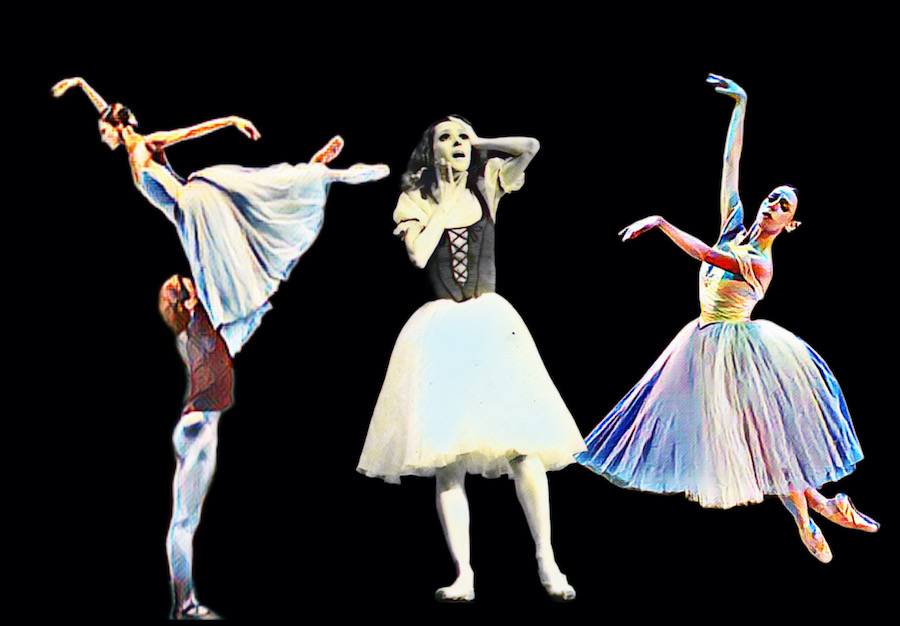
In the second act, he is also highlighted. Hilarion is in the forest where Giselle was buried and is soon surrounded by the Wilis, led by Myrtha. And here is another crucial difference in the Stuttgart Ballet version. The Wilis, in Slavic legend, are “supernatural beings” like “forest goddesses” and therefore not souls dressed in white, as we usually see. It’s a darker act, where they are more like the witches in Macbeth than the spirits we usually see in Giselle. Hilarion tries to negotiate with them for his life, but in vain. Yes, they evoke Giselle, who saves Albrecht, and the two say goodbye at sunrise, but nothing is exactly like we’ve seen before.
I would say that the greatest audacity of all in this version of the ballet is the strange proposal to take the lead from Giselle herself, with fewer solos or leadership in the story. Here she is, an emotionally abused girl and victim of femicide, none of the traditional versions of her heart-stopping or killing herself when she discovers that she was betrayed by Albrecht. In Márcia’s very clear vision, “No one dies of love”. And it works thanks to the brilliance of Richard Cragun.
Recreating ballets from scratch, for some, would be a way of “saving” the Art of Classical Ballet. It doesn’t always work. Stuttgart itself no longer dances this version, opting for the more usual one with Jean Coralli’s steps. As it is rare and curious, it is worth trying to check it out.
Descubra mais sobre
Assine para receber nossas notícias mais recentes por e-mail.
 miscelana.com