
At first, The Age of Innocence seems to be “just another period romance”, but it is much more. The book, by Edith Wharton, was awarded the Pulitzer and was the first to be awarded to a woman. With precise details of the full complexity of American society in the period known as The Gilded Age, the book is a profound study of human nature and social and economic problems of a period of many changes. Even though it was a masterpiece, it needed a director of Martin Scorcese‘s stature and talent to finally bring the story to the screen.
In 1993, period films were the obvious Oscar films, unsurprisingly The Age of Innocence was nominated in the most important categories, including supporting actress (Winona Ryder), actor (Daniel Day-Lewis), and actress (Michelle Pfeiffer). It’s perfect. And he deservedly won the Oscar for Best Costume Design for Gabriella Pescucci.
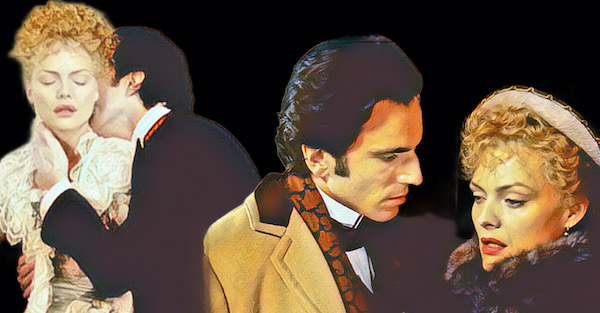
The project took 13 years to complete and Scorcese only read the book in the early 1980s, but even though he saw that it would be an exciting film, he had other projects ahead. Only in 1987 did he resume his plans and wrote the first draft in 1989. By then, Day-Lewis, already an Oscar-winning and famous actor, had a contractual commitment to Fox after The Last of the Mohicans and agreed to star in the film, something that remained a commitment even after Fox withdrew from production due to the high costs. It’s not a surprise (a good part of the actor’s biography includes literary adaptations or biographies).
Narrated by Joanne Woodward, as if replacing Edith Wharton and her thoughts, we have a guiding voice that ‘translates’ the customs and etiquette of the period. The Age of Innocence reflects a part of the writer’s childhood, which she described as “a long-vanished America”, destroyed by the First World War and much softer than the tragic conclusion of House of Mirth. For Scorcese, at least visually his sources were the cinema classics, The Heiress, from 1949, which won the Oscar for Best Actress for Olivia de Havilland, and The Leopard, by Luchino Visconti, from 1963, which he showed to the cast and audience. technical team. before starting to rotate.
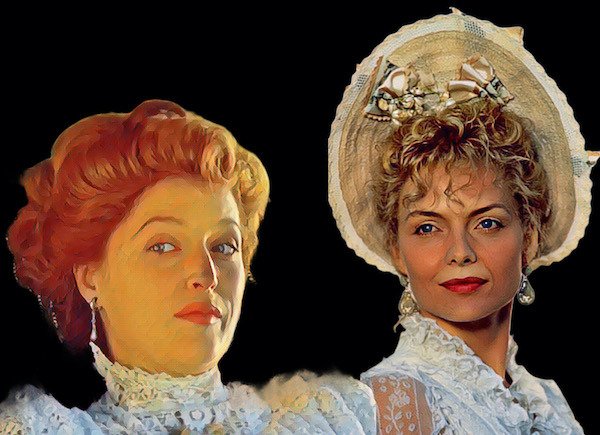
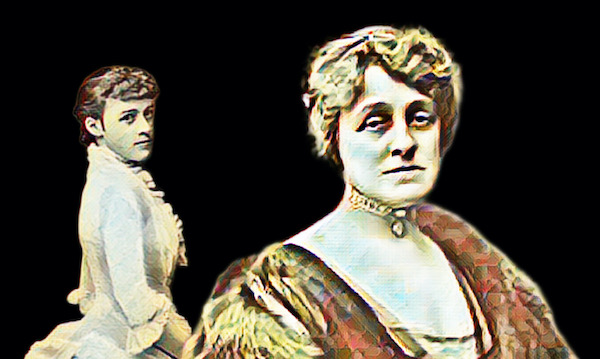
Another great highlight of the film is the romantic, sad, and unforgettable soundtrack written by Elmer Bernstein, waltzed and heartbreaking. The Age of Innocence is one of Martin Scorcese‘s best and most profound works, a strong influence on the series The Gilded Age and a film that was already a classic. Even three decades later, it is impeccable.
Descubra mais sobre
Assine para receber nossas notícias mais recentes por e-mail.
 miscelana.com