
30 years ago, in 1993, it was virtually impossible to turn on the radio without hearing Whitney Houston at the top of her lungs singing And I I I I I I I I I… I will Always, love yooooooooou. That’s right, I Will Always Love You was not only the most played song of the year but also broke all records and became forever associated with the singer, boosting sales of the soundtrack to the film The Bodyguard, one of the best-selling of all the times.
There are many behind-the-scenes stories from the 1992 classic film. Although Whitney was wary of singing a country hit and preferred a cover of What Becomes of the Brokenhearted, Kevin Costner‘s insistence on Dolly Parton‘s success proved accurate. The ballad has had a long and curious history too, which began in 1973, when Dolly wrote it.
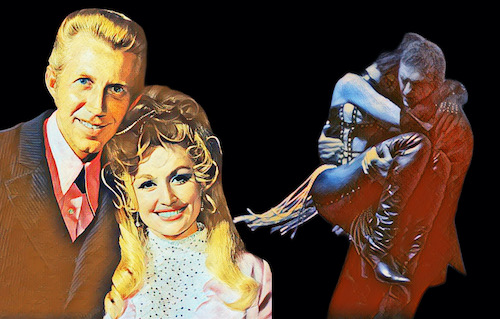
One of the best farewell anthems of all time, I Will Always Love You was an immediate success, but because country at the time was niche, it was almost unknown even thirty years later. It was not born as a romantic love song, but a fraternal one. That’s because Dolly Parton wrote the song for her friend and TV partner, Porter Wagoner.
Dolly became a TV star in the United States in the late 1960s thanks to Porter, who invited her to co-host his daily program. All episodes ended with the two singing a duet, which became classics. However, in 1973, Dolly surpassed Porter in popularity and created internal pressure behind the scenes, as well as encouraging the singer to take advantage of her fame to tour and travel more. The commitment to the program quickly stopped her from achieving stardom and she had to break up with Porter.
As Dolly recounted years later, Porter reacted badly when he found out she was leaving TV. He thought she was being disloyal and making a big mistake. Devastated and worried, she wrote in one fell swoop a song to let him know that “he” was wrong. Dolly was determined, but she was grateful for everything he provided for him. She sang I Will Always Love You on the show to a surprised and emotional Porter, who tearfully said it was the most beautiful song she had ever heard. The seven-year partnership ended on better terms thanks to the hit that reached number one on the 1974 Country chart.
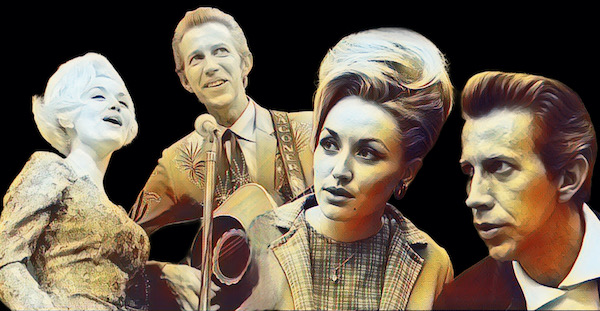
Before he passed away in 1977, Elvis Presley was enchanted by the song and was determined to record it. Unfortunately, business prevented such perfect material for the King’s voice from being recorded. It’s just that he demanded half of the publishing rights, as was common at the time, and Dolly refused. She has always been a successful singer, but she is one of the shrewdest businesswomen as well. Despite the prestige and projection she would receive by joining Presley’s catalogue, she remained firm. Do you know how we proved she was right? Whitney Houston‘s version alone earned the singer more than 6 million dollars. “My songs were what I was leaving for my family and I wasn’t going to give them up,” she recalled about negotiating with Elvis in 2004. “People said I was stupid. I cried all night. Eventually, when Whitney recorded it, I was glad I stuck it out,” she celebrated.
The fact that few associate that I Will Always Love You is not by Whitney, Dolly shrugs. “The way she took that simple song of mine and turned it into something so powerful that it almost became her song. Some writers say, ‘Ooh, I hate the way they did that to my song or that version wasn’t what I had in mind. I just think it’s wonderful that people can take a song and sing it in so many different ways,” she commented. “A lot of people say this is Whitney’s song, and I always say, ‘Okay, she can take the credit. I just want my money,’” she said jokingly.

The big difference from Whitney’s version is the a cappela entrance, which Costner suggested because it represented what Whitney’s character was thinking/feeling more than singing. Furthermore, the basis followed Linda Ronstadt‘s version on the 1975 album Prisoner in Disguise. In it, Linda does not recite the lyrics, like Dolly and omits the final verse “I wish you joy and happiness…” which changes the tone of the song. Whitney re-recorded the full version when the film was already finished and ended up generating an extra 40 seconds of screen time.
In 1982, Dolly Parton recorded another version for the film The Best Little Whorehouse In Texas and I Will Always Love You returned to number one on the Country chart. But no one takes Whitney Houston’s place as the best version of all. Unbeatable. Eternal. And still popular, even 30 years later. Compare.
Descubra mais sobre
Assine para receber nossas notícias mais recentes por e-mail.
 miscelana.com