
Assane Diop (Omar Sy) is a great burglar, but one of the fun parts of Lupin, for art connoisseurs, was putting him face to face with one of the most famous works of all time, which disappeared 33 years ago: Chez Tortoni, by Édouard Manet.
Painted around 1875, the canvas measures 26 by 34 centimeters, the painting depicts an unidentified man sitting at a table in the Café Tortoni in Paris while drawing in a sketchpad and having a half-empty glass of beer on the table. Its value increased when it was among the works stolen in one of the biggest museum robberies ever carried out, that of the Isabella Stewart Gardner Museum, in Boston, in the United States. There is a 10 million dollar reward for any of the stolen items, but to date, police have not located the culprits or the pieces.

In the Netflix series, the missing Manet is hiding in Paris, but the robbery could well have been Assane’s. Isabella Stewart Gardner’s robbery is still considered the largest property robbery in the world and took no more than an hour and twenty to happen.
In the early morning of March 18, 1990, a vehicle stopped near the side entrance of the Museum and two men in police uniforms rang the bell to enter, warning that they were responding to a call from the establishment. Stunned, the watchman ended up letting the two in and walked away from his desk, being surrendered and handcuffed with another employee in the basement.
Because there were motion detectors, every action was recorded as the thieves took no less than 13 pieces, the most well-known works of art taken from the Dutch Room including Vermeer, van Rijn, Flinck, and Rembrandt. Manet’s painting was in the Blue Room and the criminals also stole five drawings by Degas. There were so many construction projects that they had to make two separate trips to the car before fleeing. The real police only arrived at the scene in the morning, around 8 a.m. The two guards were still handcuffed in the basement.
Although the FBI led the investigation, 33 years later they have still not been recovered. The Museum still keeps the empty frames hanging today, as a reserved space for the day they are recovered. At this point…


The 13 stolen works were originally acquired by art collector Isabella Stewart Gardner and were on permanent display with others even more valuable. The selection intrigues experts precisely for this reason. FBI investigations point to the Mafia faction operating in Boston, which was in the midst of an internal gang war in those years.
The museum, which opened in 1903, held the impressive collection of Isabella Stewart Gardner, who organized the collection until her death in 1924. Without much funding since the 1980s, it was in poor condition and without a climate control system or insurance policy. , not even basic maintenance of the building. It had been the target of criminals before, in 1982 the FBI managed to prevent a robbery, and with this, they installed 60 infrared motion detectors and a closed circuit television system with four cameras around the building, but no cameras inside the museum. The reason is that it would have been more expensive to do this installation and it was better to hire security guards. The only way guards could call the police to the museum was by pressing a button at the security desk. Still, security operations were considered adequate.
Given this scenario, the robbery was easy. There were two guards on duty, young and inexperienced. While one made the rounds with a flashlight and a walkie-talkie, the other sat at the security desk. Fire alarms sounded in several rooms, but they were unable to locate any fire or smoke, so assuming a system malfunction, they disabled the panel. Perhaps for this reason, they were not suspicious when around one in the morning two “police officers” rang the doorbell claiming to be responding to a call. The uniforms looked real from the pictures, and they were admitted.
The thieves, still without revealing their identities, brought the two security guards together in the same room and managed to move them away from the table where the museum’s only panic button was located to alert the police. So they surrendered, handcuffed them, wrapped tape around the guards’ heads and eyes, taking them to the basement. Threatening their lives if they said anything about their appearance. Everything took no more than 15 minutes.
In just another 13 minutes, they went to the second floor, in the “Dutch Room”, breaking the sensors that would sound the alarms. Everything in an agile and “professional” way, they even removed a large oil painting of a Rembrandt self-portrait from the wall, but left it leaning against a cabinet and investigators suspect they changed their minds after reassessing the size to carry. Instead, they took the same painter’s self-portrait which is the size of a postage stamp and which was on display below the larger portrait. They also gave up on carrying a Napoleonic flag, whose frame began to be dismantled and was abandoned. The last work to be stolen was precisely the painting Chez Tortoni, which was in the Blue Room on the first floor.

Before leaving, just over an hour later, the thieves checked that the guards were okay and took the video cassettes with images from the closed circuit cameras and printouts of data from the motion detection equipment. Only the hard drive data was left behind. and were used by the FBI. The Chez Tortoni photo frame was left on the security director’s desk.
At the time, the FBI estimated the value of the theft at 200 million dollars, but in 2000, without having yet located any of the pieces, it was updated to 500 million dollars, whereas today it is estimated at 600 million dollars and is still considered the most valuable museum robbery in history. Vermeer’s painting The Concert alone is worth half the total value of the theft, considered the most valuable stolen object in the world.
The specific selection of works intrigued experts because there were others that were even more valuable, such as those by Raphael, Botticelli, and Michelangelo, but they remained intact. Therefore they believe that the gang did not specialize in Art.
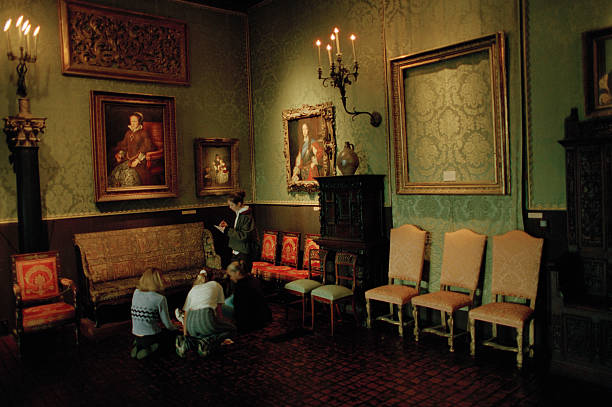

Interestingly, Isabella Stewart Gardner clearly stated in her will that “nothing in her collection should be moved”, which is also why, to this day, the administration has left the empty frames where the stolen works were located. The current reward for locating them is $10 million. Better yet, since the statute of limitations expired in 1995, the thieves and anyone else who participated in the robbery cannot be prosecuted.
It would be a perfect robbery for Assande, as we said. And the action is really Lupin‘s style, but it deserves a movie!
Descubra mais sobre
Assine para receber nossas notícias mais recentes por e-mail.
 miscelana.com