
Peter Morgan‘s job is not easy. Making an unauthorized biographical series about two of the most significant and emblematic women of the 20th century is a challenge for few and since 2016 The Crown has been proving that it can be respectful, bold, and interesting without necessarily omitting facts, rumors, and even wishes about the lives of real people whose desire was never to transform their career into entertainment. That’s right, in the days of reality shows, social networks, and fake news, it is important to remember that Princess Diana rebelled against a farce that imprisoned her emotionally and personally, which is why her story is so empathetic to so many people around the world, even more than 25 years later. And she is at the heart of the final half of the series, which ends in December 2023.

The Crown has been, for many, the story of Queen Elizabeth II (Imelda Staunton), the longest-serving queen of the British monarchy, but it is a mistake. The series is about the institution of the Monarchy and its impact on the shoulders of those who lead it, in this case, the Windsor Dynasty, which made a young woman of just 26 years old Queen when she was still barely thinking about her role in the History of the world. The weight of the Crown has brought unhappiness to many, including her, and even more so to those around her, and it has been exciting to remember, discover, and re-evaluate what we thought we knew about the Royal Family. Although the central focus was the Windsors and everyone anticipated Diana Spencer’s (Elizabeth Debicki) seismic passage through them, there were relevant characters who did not always gain the importance they deserved, as was the case of Mohamed Al-Fayed (Salim Daw), who in the 5th season he won one of the best and most exciting episodes of the entire series: Mou-Mou, his nickname. Combining his passage with the conclusion of the first part of season 6, gives him a lump in his throat.
As we already know, Al-Fayed is one of the richest men in the world, and his social rise, from being a street vendor in Egypt to the billions he made, deserves more than one episode. Impacted by the story of King Edward’s abdication, he always dreamed of integrating into British high society and, in particular, being in the circle of the Royal Family. In short, it seems like a shallow ambition but here’s the beauty of the series’ narrative: it’s not. And we root for his fight because it takes on another dimension in the lens of The Crown. On the other hand, if there is one thing that Peter Morgan knows how to do with precision, it is to reverse expectations. Just as we become attached to a young Charles (Josh O’Connor), oppressed by a destiny that limits him to be who he wants or loving who he loves, in this case, Camilla Shand (Emerald Fennell), in the following season he becomes the antagonist initially indifferent to the suffering he causes Diana (Emma Corrin). There are no soap opera good guys or villains in The Crown, they are injured people and hurting others, in a cycle tied by the institution that names the series. After being moved by Mou-Mou, here we also see that Al-Fayed may have interfered with the destiny of his beloved son, Dodi (Khalid Abdalah) by uniting him with Diana.
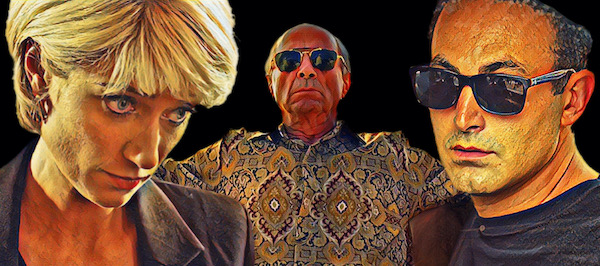
If Diana is still as famous as she is more than a quarter of a century after her death, imagine her life. If one day she lacked love and attention and appreciated the fame she gained upon joining the Royal Family, she certainly did not have the same reaction when she died in 1997, at just 37 years old. The incessant pursuit of the paparazzi and the unrestrained consumption of Diana’s personal life always reminded me of Nathanael West‘s terrifying The Day of the Locust (“Upon seeing the heroes and heroines, the crowd would become demonic”) and also marked me for always having a doubt as to how she could have escaped her tragic fate. The answer I still find is that there was no alternative.
Al-Fayed and Diana met casually when the Queen refused to participate in his dream, creating an even bolder goal for a man who was a winner. To this day, we want her happy and it doesn’t seem like at any point she found the love she was looking for. She fell in love with her husband, Charles (Dominic West), but the love story between him and Camilla (Olivia Williams) is, and always has been, true. In the other attempts, some point to Hasnat Khan as the possible man who would make her happy, but as he did not bear the brunt of the invasion of privacy, there is a good number who “bought” the romance between her and Dodi as what would have worked. We’ll never know, of course.
Without shying away from showing how Charles worked hard to change the public perception of Camilla as a cruel antagonist, The Crown managed to navigate turbulent waters with class. Whether because he had access to information from the princess’ intimates or because it is his imagination-desire, Peter Morgan is not hard with Diana, but soft with Camilla and Charles. The current King gave part of his life trying to be what was expected of him, he married Diana and tried (she thought he hadn’t even tried, but in his way, he tried) to be happy with a passionless marriage, but he failed. Diana’s shyness hid a strong, intelligent, and very sensitive woman, marked by rejections and deep family dramas and when being used for a fake union, she activated unexpected triggers.
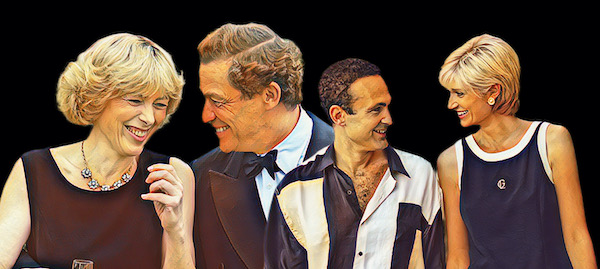
From the perspective of people who were also traumatized and unhappy, Diana should have accepted and moved on with dignity, but she refused to go down in History as a fool. Her resentment for falling in love with no return is undeniable and her rebellion against hypocrisy made her a modern heroine. All of this is in The Crown. While Spencer further reinforces the version of a paranoid princess on the verge of a nervous breakdown, the Netflix series portrays her as a woman in control, but suffering. Her existence was suffocating. As a young girl, she felt isolated and ignored. As an adult, isolated by excessive attention, a paradox that only those who lived in her life would have understood the extent of.
At the moment of the greatest decision about her destiny: divorced, rich, famous, and still young, Diana found herself with more limited options precisely because of her fame. Al-Fayed saw the opportunity to help her and, if he helped himself, unite her with his son Dodi. Every interference he exerted in the relationship he dreamed of and managed to plant, led it to its unexpectedly painful conclusion. Like Icarus near the Sun, his wings melted and he lost what he cherished most, his son.
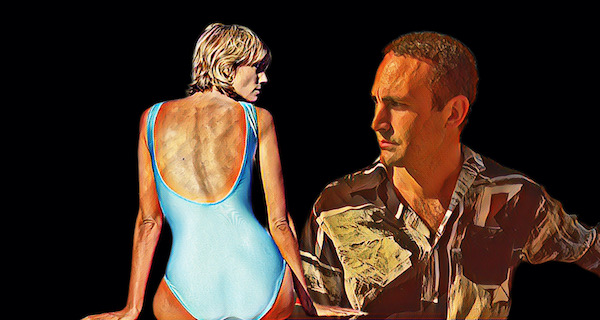
The suggestion that Dodi and Diana actually had more in common than is often said is exciting, as we see a series of known paradoxes and imagined moments of connection and romanticism. In fact, Diana, who became famous for exposing “the other woman” and symbolizing for all once betrayed women the catharsis of revenge of popularity (Diana was more beautiful, more famous, more loved than Camilla), exercised in her last moments of life the role of home wrecker, as Dodi was engaged to another woman with a wedding scheduled when he left everything for her. The fact that it was a setup, that Al-Fayed wanted something more from this union does not eliminate the fact that he had affection for Diana and believed that her son was the best option for her. What we will never know is what the two really felt or planned when they died together in the car accident in Paris.
I particularly appreciated the showrunner’s care in portraying Diana as still sensitive to the pain of those close to her, of living her life and seeking the elusive happiness of a life together and having chosen herself. The affection between her and her boyfriend was respectful and respect was what occurred to me throughout the five episodes: everyone had their perspectives addressed. From Charles to Camilla, from William to Harry. We’re on our way to finding out how The Crown will portray William, but I’ve already found it endearing as a 15-year-old, witnessing the pain of his parents’ relationship, is already overwhelmed by the role he will have to take on as the heir to the throne. We’ll see his love story with Kate Middleton at the end of the series, but if we can see anything, it’s that Peter Morgan knows how to tell a love story. The one he drew for Dodi and Diana was almost poetic. A delicacy appreciated by fans of the princess and a testament to those who follow The Crown: a lesson in retelling with a firm hand a story that is still being written, but which gains a new perspective when compassion is inserted into the narrative. Now we have to wait for the second and final stage!
Descubra mais sobre
Assine para receber nossas notícias mais recentes por e-mail.
 miscelana.com