
As published in CLAUDIA
One of the fun activities for the group of fans of the series The Gilded Age is to identify the historical facts and characters that transition between the fictional ones, be it a participation by Oscar Wilde to the soprano Christine Nilsson, or the fixed presence of Caroline Astor, played by Donna Murphy, among others. With a wealth of research material, and an impeccable period reconstruction, the series is a delight and Julian Fellowes – from Downton Abbey – transports us once again to the world of the rich and workers, this time in the United States. Content for the perfect escape, with good acting, drama, laughter, and even a certain romantic suspense.
As I mentioned when it was released, the main character is Bertha Russell, played by Carrie Coon, and largely mirrors the fascinating story of Alva Vanderbilt. Just like her inspiration, Bertha is a paradox of modernity while seeking to fit into traditional New York society, with its rules and prejudices. As writer Edith Wharton beautifully explains in The Age of Innocence, “the streets of Manhattan are straight and numbered, but the rules of society are not.” And that’s where The Gilded Age moves with gusto.


The plot continued where we left off in 2022, with Bertha achieving her first victory against the arrogance of the more traditional and the girl, Marian Brooks, played by Meryl Streep’s daughter, Louisa Jacobson, with her heart broken. I swear that after the frustration of Ted Lasso (I will always be in the group that supported Ted and Rebecca, #tedbecca) I promised myself not to chip characters in vain. And here I am, wanting Marian to be with Harry Russell soon, but hopes are slowly being dampened. People who are romantic don’t learn, apparently.
Many things amuse me in The Gilded Age because they take me back to a summer in the United States when I lived in New York and went to Newport, Rhode Island on the weekends. It was there that I heard for the first time all the stories explored today in the series and I was fascinated by the mansions that are still open to visitors today and that are serving as the setting for the production. Escapism is welcome, people! That luxury is real, even if so distant.


Another entertainment is the impressive cast of big stars from Broadway theater and musicals, which makes me think it’s almost a crime that none of them sing or dance at any point. It’s another secret of The Gilded Age, there are some of the most beautiful voices in American entertainment, playing even minor roles.
But not everything is perfect”. Using Bertha reliving Alva Vanderbilt‘s dramas is wonderful, but instead of mirroring her rival, Mrs. Caroline Astor, in Agnes Van Rhijn (Christina Baranski), they brought the “real” Caroline into the plot and even though Donna Murphy is incredible, Agnes’ antagonism generally falls flat because in general she is usually immobile, she comes on stage to say short and striking phrases, but she doesn’t really interact with anyone. Caroline Astor’s presence deflates Agnes’s existence, a distant mirror of Downton Abbey‘s fun-loving Lady Violet Crawley (Maggie Smith).

Basically, we are dealing with the same problems as period stories: women ‘need’ to get married to have a place in society, and those with a minimum of personality risk eternal loneliness. Hence there is nothing new, but the War of the Operas that is the backdrop of the action happened in 1883, just as there was the ill-fated debut of the play by Oscar Wilde, the soprano Christine Nilsson, which would inspire the creation of the classic The Phantom of the Opera really was the most sought-after star of the season and there was a fight for a British Duke, although not Buckingham. If I say who “won” it will likely be a spoiler for the series, so I’ll keep quiet for now.
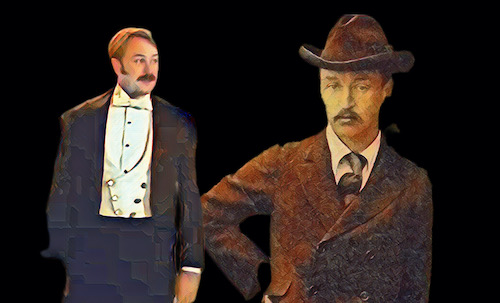

Alongside the many period series, especially the adaptation of The Buccaneers, whose plot is similar to The Gilded Age and inspired by the same real people, it is even more difficult not to draw a comparison, where the decision to transform Wharton’s book into a kind of Bridgerton seems more and more like a mistake. While the Apple TV Plus series doesn’t have the chemistry of the Netflix series, the HBO Max series surprises by being original, fun, and even modern. Just so you understand, both Nan Saint George from Buccaneers and Gladys Russell (Taissa Farmiga) are inspired by the sad and traumatic life of Consuelo Vanderbilt and could not receive more diverse approaches.
Another interesting side is that, as showrunner Julian Fellowes does not have a voice role, the diversity represented by Denée Benton‘s character, the beloved Peggy Scott, is taken care of directly by historian Dr Erica Armstrong Dunbar, who spent the last 20 years researching the lives of African-American women in the 19th century and brought to the story true characters as well as situations where the racism of the time is clear. No one really does the math, but slavery in the United States had only ended shortly before the period in which the series takes place. That’s why seeing a society of free black people ascending socially is relevant, even if it’s not the central focus.
But perhaps the best news is that with the successful outcome of this second season, which is already heading towards the final phase, perhaps we can start dreaming about a third phase. After all, there is so much drama to unfold that it could easily lead to a fourth season! I for one want even more.
Descubra mais sobre
Assine para receber nossas notícias mais recentes por e-mail.
 miscelana.com