
As published in CLAUDIA
Director Issa López grew up dreaming of cinema, but for a Latina woman, it was almost daring in her time to venture down this path. She studied Archeology for two years until she understood that her vocation of telling stories was more than a dream. After graduating, she wrote soap operas and TV shows on Televisa (one of the biggest Mexican TV networks) until, in 2003, she wrote Ladies’ Night, the fifth highest-grossing Mexican film of the year. If she was already awarded on TV, she also became an award-winner in cinema, directing other hits.
The prestige and experience to put before a challenge in his debut directing in English: rescuing the prestige of the True Detective franchise, a unanimous success at its debut, but with two subsequent seasons criticized and marked by behind-the-scenes conflicts, including its creator and showrunner, Nick Pizzolatto, who is no longer part of the creative side of the series.
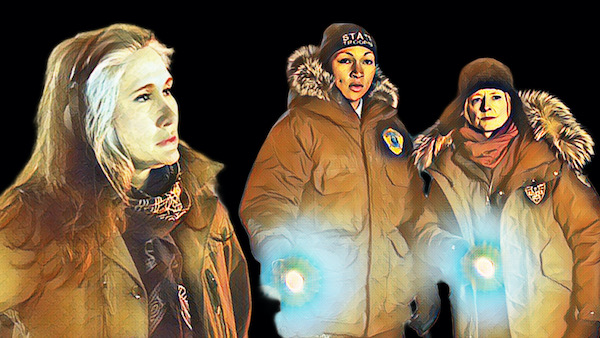
There are many challenges for Issa: the universe of the franchise has until now been essentially male, except for the participation of Rachel McAdams in the second season. Now women are in front of and behind the camera too. True Detective: Night Country also marks star Jodie Foster‘s TV debut. She is Detective Liz Danvers, who alongside boxer and actress Kali Reis, who plays Detective Evangeline Navarro, needs to solve the disappearance of six men working at the Tsalal Arctic Research Station in Alaska, shortly before the start of the 30 days. Alaska’s annual incessant night.
The cast was at CCXP 2023 in São Paulo, where Issa revealed many interesting facts about the new series, which had its premiere postponed until January due to strikes by actors and screenwriters in Hollywood. More prizes in sight? That’s what you appreciate.
CLAUDIA: This is the first season of True Detective directed, produced, and written by more women. What implications or impacts on the story?
Issa: You know, you grew up in Mexico and there was a legendary Mexican film director there in the 40s, Matilde Landeta, but that was it. She is a legend. In the 70s, between Marcela Fernandez and a few others, but I’m old enough to be at the “vanguard” of women taking leadership and I must say that we are selling this in Hollywood, in Latin America. Many Latin American works are directed by women. A voice that hasn’t been heard forever is likely to have some really interesting things to say.
CLAUDIA: How is True Detective: Night Country different from previous seasons?
Issa: When I got the call about Detective, I felt it and rewatched [the previous seasons] because I hadn’t had a review since they came out on TV. I watched it week after week and loved it because it was from a clinical perspective, not from an audience perspective. And I immediately saw a lot of influence, and I don’t know if Nick Pizzolatto [creator of the franchise and showrunners of seasons 1 to 3] did it consciously or not, but there are a lot of references to Seven [by David Fincher]. The first season especially and I love Seven. I think we all do! But this took me back to the film that gave rise to Seven, in my opinion, I believe it to be The Silence of the Lambs. Another film that created an entire genre and I decided to live these two a lot, like really, really [laughs because Issa was sitting next to Jodie Foster, who won an Oscar for Silence of the Lambs and is the star of this season of True Detective], but I knew it was essential to bring something new and we will certainly have new things. Other than that, it was impossible to stop my personal geekiness and there are a lot of John Carpenter elements and there are homages to [Stanley Kubrick‘s] The Shining, especially in the way we filmed the Arctic research station. It’s a little everywhere and lots of different flavors in a very Mexican cuisine.
CLAUDIA: What was the writing process like for you and your colleagues to portray a story that takes place so far away?
Issa: When I decided, for reasons I don’t know, to set the season in the Arctic – I’m Mexican and I hate the cold – I thought, ‘I don’t understand what’s wrong with me and I think I need therapy’ [laughs], but all of this happened during the pandemic, so in the context I would have immediately packed my bags, moved there and developed everything there, but Alaska had very high numbers within the Covid-19 situation so only when the COVID situation allowed it, I got on the plane and went. But in the meantime, what I did was write every word by listening to the radio stations in these small towns and following social media. This is because people in these cities, especially during winter, get bored and what they do is record their lives: they record themselves going to the supermarket going to get the mail, and going to buy drinks. There are endless hours on TikTok, and YouTube with these people, their voices, their little shops, and the way they drink together. It was so imprinted in my brain that when I arrived in Alaska it was a very strange feeling because I knew exactly where to turn to get to a place. Everything was very familiar. Technology helped. Not the pandemic. [laughter]
CLAUDIA: How do you define the essence of the True Detective series and how does this apply to today?
Issa: It’s always two main characters trying to solve a crime, without understanding that what they’re trying to solve are their own souls and their own secrets in the place where they are. That and a brilliant cast, as was the case especially in the first season which did so well.
CLAUDIA: And the biggest challenge of rescuing the prestige of the franchise?
Issa: The biggest part of the challenge, besides a good plot, is finding the people to play the characters and that there is chemistry between them and the moment you see them together. Honestly, I found it [laughs].


CLAUDIA: Are there any distinctions in the form or production style of True Detective?
Issa: Here’s the problem with getting into a certain genre. It has rules. Unfortunately, I’ve had to write a lot of romantic comedies in my life, don’t watch them! [laughter]. You know the rules of romantic comedy and I only mention them because apparently, I know what to do. Comparing True Detective: it’s a love story of true friendship between two women who hate each other, but who love each other and stay together. To find out how this happens, the rule of romantic comedy comes in, which is practically the same.
CLAUDIA: And the police part?
Issa: The police part is an unsolvable mystery that is actually solvable. It also has formulas: something appears, that no one has seen before and appears to be complicated. So you think, ‘Oh, let’s have the disenchanted detective in a small town’. It has already been done. ‘We’re going to have the tough guy who really has a huge heart.’ It has already been done. So how do we turn this into something you’ve never seen before? It’s all in the details. It all depends on how you film, where you film, how you build, what these layers are, how you deal with your work, with your actors, and with the work on the script. So it’s similar to a lot of series. It’s also different from many series. It also has its rules. HBO beautifully gave me absolute freedom over what rules I wanted to keep. For example, I decided to continue in some moments the tradition of True Detective in which they are in a car discussing the nature of the universe and life.
CLAUDIA: The story takes place in Alaska and has American actors, where does Latin American sensitivity come into play in True Detective?
Issa: In everything. It was the most Mexican thing I’ve ever done and it’s so Mexican in the weirdest way and Latin Americans all over the world will feel it. It doesn’t matter where the action takes place, what matters is the spirit where it comes from. There’s Kaile Torres’ character, Navarro, who is a Latina Marine and somewhat common in Alaska. Many of the American soldiers have Latino ancestry, which is interesting and profound. And on the show, especially the things that the characters go through are incredibly personal to me, both of them. And that comes from where I grew up the food I ate and the way they talk. They may speak English, but deep down it’s Mexican.
CLAUDIA: And what constitutes the universe of the True Detective franchise?
Issa: There are themes that I think are sadly universal in the series, which deal with missing women and their horrible fates. This happens all over the world and in Latin America, we are very familiar with it. Of the four films I’ve directed, two deal with this. So they are an important component of what True Detective is: communities that have lost their environment because of savage capitalism, burying secrets. This season it is an ice ground that is frozen and is unbreakable until it melts or breaks for us to access, but the theme is universal.
Descubra mais sobre
Assine para receber nossas notícias mais recentes por e-mail.
 miscelana.com
2 comentários Adicione o seu