
Before 2023 comes to an end, we will post one of the important anniversaries of the year in France (and in the world): the 400th anniversary of the Palace of Versailles. It has been listed as a World Heritage Site for 44 years and is still one of the greatest achievements of 17th-century French art. The sumptuous house that was the address of the last generation of French kings began as a hunting lodge for Louis XIII, but thanks to his son’s vision it was expanded and completely transformed into what we see today. Luckily, neither the French Revolution nor two World Wars destroyed the palace, which is celebrating its fourth centenary, enchanting millions of visitors a year with its 2,300 rooms spread over 63,154 m2.
This part – and the period we will talk about next – was very well explored in the two seasons of the series Versailles, still available on Netflix (I recommend it!). She recounts in detail how the future Sun King, the young Louis XIV, chose the place to be the base of his reign (which was the longest in French history), taking power from Paris and taking the Court to the most remote area of the urban center. Louis XIV’s father discovered the region at a young age, in August 1607, when he came to hunt in the forests and began to frequent the area even when he inherited the Crown. At the end of 1623, he decided to build a small hunting lodge so he could stay overnight and enjoy the days more, turning it into his country residence. The passion passed from father to son.
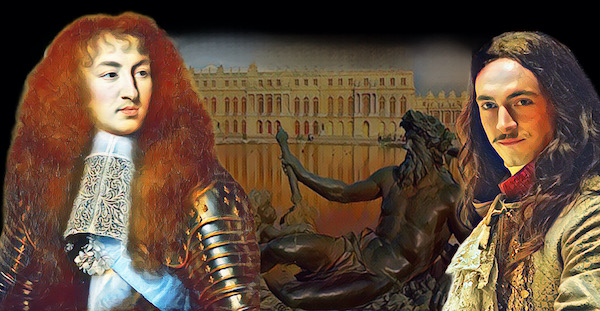
As it never functioned as a fortress and was expanded in the Renaissance period, it was only called a “castle” by rural people because it was luxurious even though it was in a rural area. In general, “palace” was what they called urban residences and in Paris, they also called Versailles, Palais. When Louis XIV decided to transform Versailles into his “capital” in 1673, the building was demolished to make way for the city we see today. He became so closely linked to him precisely because he took on the role of architect and took care of every detail of the place that was his shelter when he was just three years old and isolated himself there to escape a smallpox epidemic, returning 10 years later already pre- adolescent. Always accompanied by his brother, his mother Ana of Austria, and Cardinal Mazarin, he stayed until he never left.
Everything was excessive in Versailles: the dramas, the parties, the entertainment in the gardens. Who is Sun King also reflects the love of the outdoors and open spaces, and has ample space. The plans for the palace were so grand that even though he died at an advanced age, he never saw it completed.
Without Louis XIV, the Court returned to Paris, and the palace was abandoned, even though its fame was so great that Tsar Peter the Great visited it twice and was inspired to build his palaces in Russia. Only the great-grandson of Louis XIV, at the request of Peter, returned with everyone to Versailles. Louis XV was not satisfied with completing his great-grandfather’s work, he created other spaces as well. He experienced romance, received the most respected minds in Europe, and died as a result of smallpox in 1774. His grandson, Louis XVI, would become the last King of France, alongside Marie Antoinette.
There are so many fascinating stories that happened in Versailles that it is difficult to choose just one. The Court remained in Paris, only the Royal Family was in the Palace, a distancing that proved fatal in the Revolution. Louis XVI and Marie Antoinette did not have an accurate understanding of the country’s economic difficulties, which eventually cost them their heads. Lucky for the Palace it was not looted or broken because the center of everything was back in Paris and the address became the property of the people and transformed into a museum with the works that once belonged to the King. Part of the collection was transferred to the Louvre and the furniture was auctioned.
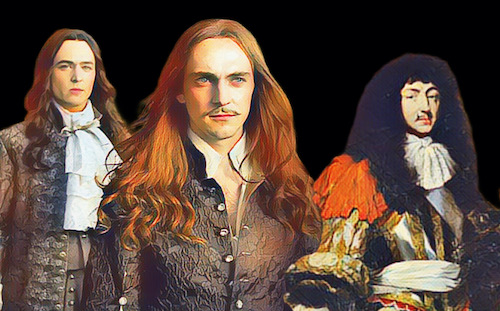
When Napoleon crowned himself Emperor, he refused to live in the Palace, choosing the somewhat more modest Trianon as his home. It was Louis Philippe, crowned in 1830 as “King of the French” who recovered Versailles, creating a museum “dedicated to all the glories of France”. During periods of World War, the doors were closed to protect the works, becoming the scene of the signing of the peace treaty in 1919.
Then, for many years, the Palace suffered a lack of maintenance for several years and was only renovated when American billionaire John D. Rockefeller invested in the restoration. Over the years, the Palace’s curators remodeled the rooms looking for furniture that had been scattered during the revolutionary sales of 1793. Little by little, Versailles regained prestige and interest. Today it has all the grandeur and luxury that made its history.
Descubra mais sobre
Assine para receber nossas notícias mais recentes por e-mail.
 miscelana.com