
While he was alive, Leonard Bernstein aroused critics and worshipers with a similar passion. Everything about him seemed exaggerated: the always lit cigarettes, the exaggerated gestures during the conducting, the strength of the music and orchestration. Since he ‘appeared’, still young, ‘genius’ seemed to be part of his brand.
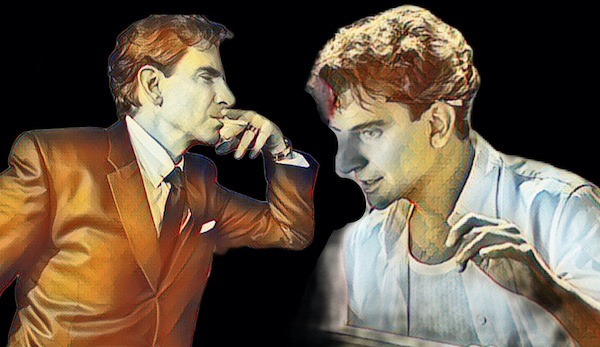
If the intensity on stage was evident, behind the scenes it was impossible to imagine. The film Maestro, directed by and starring Bradley Cooper, confirms any and all suspicions. Nothing that we could have even discussed as much of the discussion surrounding the production revolved around various topics, in particular, the actor’s prosthetic nose. If you are not from the generation that lived with him while he was still alive – or don’t google it – you stay in this field. The makeup left Bradley frighteningly I-LIKE Leonard Bernstein. The gesture would be easy to ‘imitate’, but the actor incorporated the smallest details, including the maestro’s speech. In the film, it seems that the music he loved most came from his own voice: he talks and talks ad infinum.

Maestro‘s behind-the-scenes are as confusing as his life and took at least 5 years to reach the screen and the platform. Initially called The American, the film would feature Jake Gyllenhaal in the lead role. However, the production was unable to release the musical rights and without music, it would be virtually impossible to tell the story of this unique composer and conductor. When Bradley Cooper, who already co-wrote his version, got the song, Maestro became the only film to move forward.
Although it has great strength throughout the narrative (I think some sections are long), the script wanders through Bernstein’s music and creativity but focuses more on his unusual love story with his wife, Chilean actress Felicia Montealegre, played by an eternally brilliant Carey Mulligan. This is because the maestro was homosexual, a fact “hidden” from the general public, even though it was open to the couple’s artistic and intimate environment.
Both Carey and Bradley can now count their names on the select list of nominees for the 2024 Oscar, and the actor, in my opinion, can now prepare the winning speech. Carey already comes up against Emma Stone‘s favoritism for Poor Things. As a director there’s no way Maestro can take away the hype surrounding Greta Gerwick for Barbie, even if I consider Bradley Cooper‘s work superior. Another undeniable and deserved award will go to Kazu Hiro, who already won the Oscar for transforming Gary Oldman into Winston Churchill in The Darkest Hour as well as Charlize Theron into Megyn Kelly in Bombshell. When Bradley Cooper is Leonard Bernstein at 70, you’ll swear he’s aged before your eyes.

Maestro smartly avoids the trendy narrative, which avoids being non-linear. And I thank you for that! We start with Leonard Bernstein remembering Felicia nostalgically and we go back in time, following him from the moment he gained stardom, at a frenetic pace that is gradually reduced, when his relationship with Felicia gradually falls apart. Interestingly, at the beginning, there are a lot of people telling him what we should know, which is that he is an innovative artist who mixed classical and jazz, and who was passionate and restless.
I agree with the other critics that there is an indecision even in Bradley Cooper‘s aesthetics in the direction, there are moments that are deliberately technically and visually stunning, without exploring the most expected songs, elongated clips of concerts interspersed with gaps and pauses in the dialogues, which do not fill the emotional void. If you didn’t know Bernstein before, you still don’t understand him. Neither artistically nor personally. This makes Maestro a good film, possibly award-winning, but far from unanimous. As I didn’t like anything I saw the next year, I didn’t like Barbie, and I was irritated with Oppenheimer, I worry about the artistic void we are experiencing. There is a great need for directors to impose ‘aesthetic signatures’ that become very obvious, getting in the way of the basics of simply telling us a good story. In the case of Maestro, the genius of the biographer was lacking, on the other hand, it increases the mystery of the legend.

Descubra mais sobre
Assine para receber nossas notícias mais recentes por e-mail.
 miscelana.com