
Next to Giselle, perhaps one of the longest-running and most popular ballets, produced uninterruptedly every Christmas for 131 years, is The Nutcracker. It is by far the most profitable, supporting companies and dancers over the years thanks precisely to its popularity.


As I already said in MiscelAna, its debut did not signal the success it maintained for more than a century, with conflicts behind the scenes and even Marius Petipa‘s skepticism about the story. He delegated much of the work to his assistant, Lev Ivanov, who, in turn, avoided daring to bring new ideas. Where he let his own imagination run wild, Ivanov was happiest, and – for many – it was he who fully understood Tchaikovsky‘s beautiful score. So much so that, 10 years after the premiere, both the Snowflake Waltz and the role of the Sugar Plum Fairy (which only appears in the second act) began to be competed for by stars from the company.

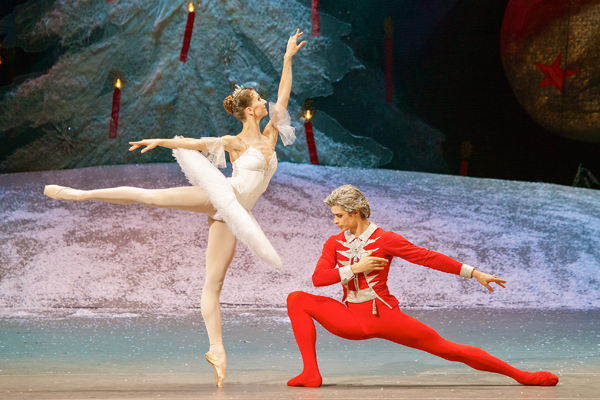
One of the traditions of the original is the inclusion of children in the production, invariably marking the debut of many dancers with The Nutcracker. So, whether it was George Balanchine, Rudolf Nureyev, or the modern Mark Morris, almost everyone tried to create their own version of ballet. Balanchine’s, reaching its 70th anniversary in 2024, is one of the most popular, reaching the depth of Tchaikovsky’s music. Although the story’s theme is childish, the melodies are often dense, almost tragic, in keeping with the composer’s style.
It is ironic that of all its versions, the least “canonical” is precisely that of Petipa-Ivanov. In Russia itself, the Kirov created a new version in 1934, maintaining student participation in ballet, bright colors, dolls, and a well-lit Christmas tree. What is worth mentioning about this production was one of the first attempts at a certain realism in the prologue, at the luxurious Christmas party at the Stahlbaum house to contrast with Marie/Clara’s dream. None other than young Galina Ulanova danced at the premiere. However, besides Balanchine, only one other choreographer is cited as having been able to understand the richness of Tchaikovsky’s score: Yuri Grigorovich.

The great choreographer, who was at the head of the Bolshoi for more than 30 years (and who is approaching his centenary), created his version of The Nutcracker in 1966 and it is this production that is still the company’s official production, being considered one of the richest ever imagined. With sets and costumes designed by designer Simon Virsaladze, the story “lost” its childishness (there are no children in the roles of Clara/Marie or Fritz and his friends, just adults. Furthermore, it transformed the ballet into a love story, in the transition of Marie/Clara from childhood to adolescence. Nothing more romantic than having the couple Ekaterina Maximova and Vladimir Vasiliev in the main roles in their debut.
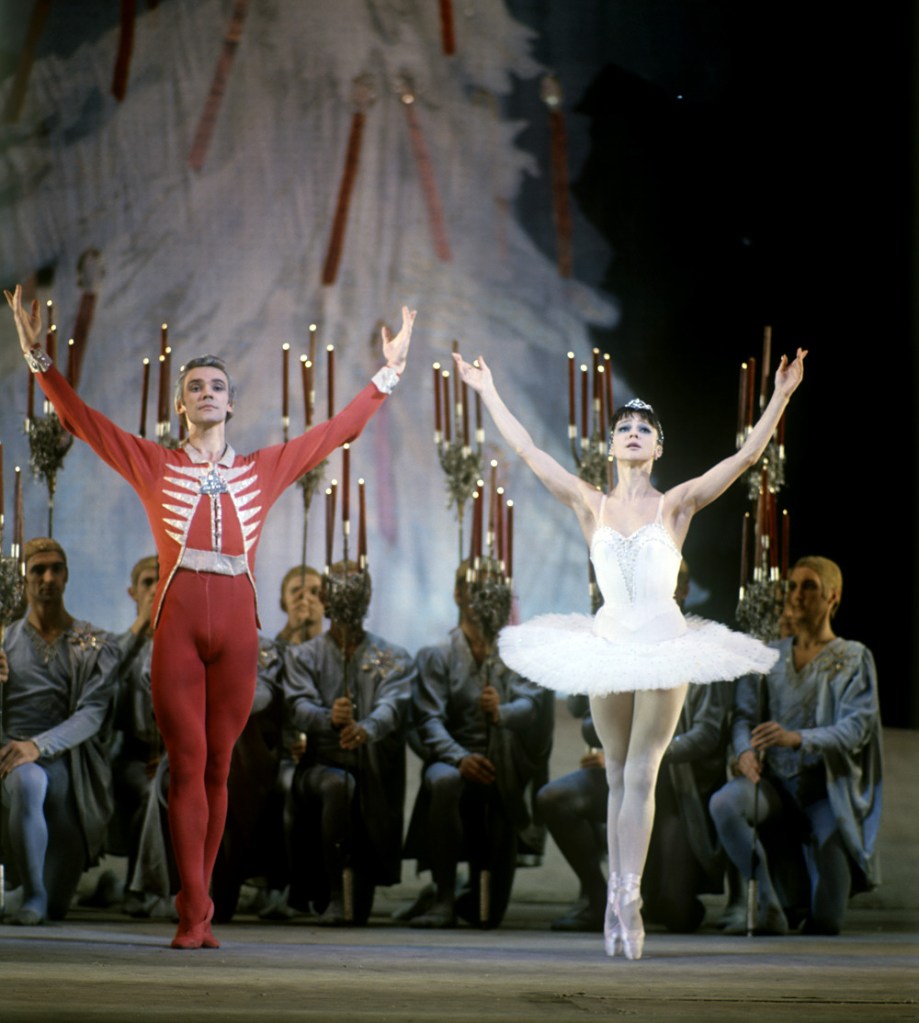
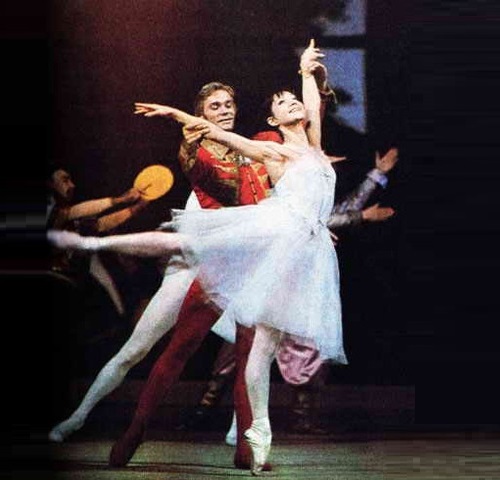
Others point to Grigorivich’s adaptation, which “marries” Marie/Clara with the Nutcracker Prince, almost as a philosophical meditation on the unattainable nature of ideal love, bringing greater depth to a ballet that had a simpler original proposal, creating one of the great 20th century classics.
This version of Grigorovich has been filmed several times, with the original couple and several stars since. The 1978 film saved the magic of the original cast for posterity. We who are fans of this legendary couple understand how the public fell in love with seeing them together in a more adult and romantic version of The Nutcracker. For the choreographer, the two represented exactly what the roles demanded: she, the romanticism of a young girl maturing, and he the ideal fairytale hero. What no one questions is the timelessness of its creation, 57 years ago as the official version of the Bolshoi Ballet and, alongside Spartacus and Ivan the Terrible, one of its “signature works”, bringing magic and miraculous faith to the repertoire. so present at the end of the year festivities.
With so many versions available, my favorite is still Balanchine’s, but Grigorovich’s, which marked my childhood with the 1978 film and the peak of the Maximova-Vasiliev couple, awakened a lot of affection in me. Technically complex, extremely musical, and with so many versions available over its almost six decades, it is part of my Christmas tradition to revisit. Happy Holidays!
Descubra mais sobre
Assine para receber nossas notícias mais recentes por e-mail.
 miscelana.com
2 comentários Adicione o seu