
When I started watching A História Delas, on Star+, I remembered an old Hollywood work, Peyton Place, which was first a film starring Lana Turner, in the late 1950s, and then became an American TV series, in the 1960s, revealing a young Mia Farrow to the world.
More than half a century separates the two and the series could not be more different in theme, country or cast, but in common they feature four women – two white and two black – who could mirror each other in some way, in a coexistence that reflects issues of racism, machismo, and other prejudices and challenges that are (still) part of the female reality. The agenda of the American series is outdated, but that of A História Delas is not, on the contrary, it is ultra current and unites the excellent Cris Vianna, Letícia Spiller, Bia Arantes and Emma Araújo in a drama that involves us immediately.
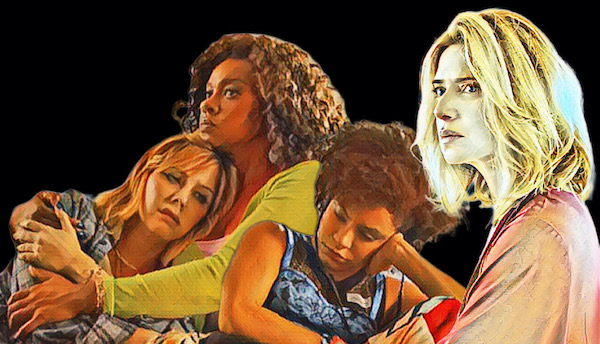
Written by Ana Julia Travia and Mariana Trench, A História Delas, begins with the upheaval in the lives of Isabel (Letícia Spiller) and her daughter, Ana Rosa (Bia Arantes), when her husband is arrested and they are forced, by court decision, live in the only property in Isabel’s name, precisely the house that he helped his ex-nanny Marta (Cris Vianna) buy. Surprised, Marta now owns her own business, but finds herself forced to host her ex-boss, which angers and disturbs her own daughter, Ana Jasmim (Emma Araújo). There are hurts from the past, difficulties from the present and more surprises in the future, but everything intertwines their lives, with an interesting narrative. The cast chatted via zoom with CLAUDIA about the series, avoiding the big spoiler for the season finale, of course.
CLAUDIA: A story about women, a story that we know in some way and yet still surprises. Are you happy with the result of A História Delas?
Letícia Spiller: I said ‘guys, this story is like a soap opera story’ and I wanted to escape a little, you know? But things turned out to be completely different, it far exceeded my expectations because it wasn’t a soap opera text, it was more ours, more adapted to a cinematographic language. And I speak for my character [Isabel], who would be on the verge of a caricatured woman because she is an exacerbated alienated woman, with her feet in a stereotypical place, but she shows humanity.
Cris Vianna: Do you know that I haven’t seen everything yet? [laughs] But when they invited me, I saw that Marta’s story inspires me because she is a woman who understands that the place she is in no longer fits her, that there is a world out there and it is possible to try other paths. She is very attached to this dream of what she can give her daughter a better life, even alone and without fear and without revealing so much pain. Hope is the car surer than pain. Marta likes to go out, she loves cooking, she wants to see her daughter studying. The daughter goes to college and in the world of black women, being able to put a daughter in college is an inspiring place. So being able to tell this story was very, very, very important, very meaningful to me.
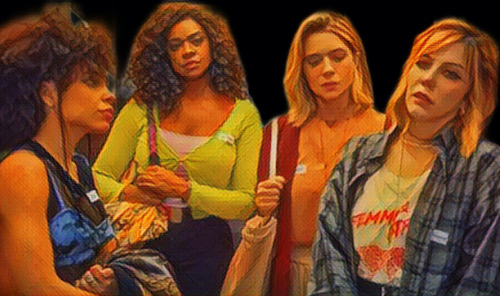
Letícia: I didn’t talk about that aspect! Sorry, I talked more about the initial emotion aspect. [laughs] Yes, yes. Seeking this humanity is also part of wanting to tell a story that is important to our society. In our story there are 4 very well constructed women, each in their perfectly real realities. When you watch the series you see that there is no villain, there is no victim. They are living women who have to live together and this shock brings a great wealth of reflection and maturity.
Bia Arantes: I loved playing Ana Rosa, and the series has that: women with perfectly possible lives, with layers and layers that end up generating complicity. When I read the story, I was fascinated, because, hey, that’s what I want to tell. I want people to be able to feel that and I think it’s well constructed.
Emma Araújo: For me it was incredible. I read the script and fell in love because it’s a story that we see happening next door. Sometimes we are experiencing this in our house! Furthermore, working with these people on my first audiovisual project was a real gift! And that’s what Cris said, when I received the news that I would be in the cast, I thought ‘man, my mother is going to be very happy’ because my mother was the person who worked her whole life, who had 1000 clients, placed the daughter of college and the daughter is living it here. [all without emotion] Besides being a very beautiful story, it is very emotional for all women.
CLAUDIA: Do you identify anything in common in them?
Emma: They all have different stories, but what identifies them is that they are searching for themselves within a society that sometimes ends up hindering their women from going after what they want or even understanding who they are. For me, it was incredible to be able to learn from this character alongside these incredible women.
CLAUDIA: And in this conflict of classes and generations they address topics such as structural racism, so many important topics and the cast has chemistry. Starting off, you guys look like mothers and daughters!
Letícia: I’m sure CLAUDIA readers will find themselves in the story that brings about this transformation of women because they are all being forced to change.
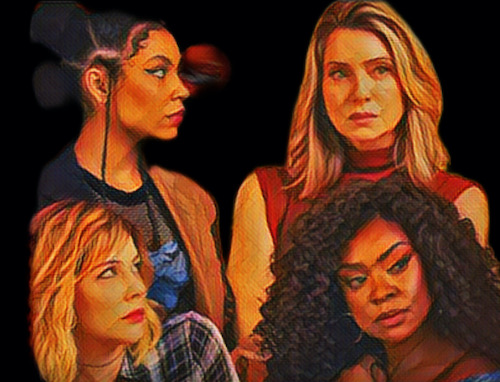
CLAUDIA: And what can we say about their arc without spoilers?
Letícia: Isabel is in a state of torpor and until the moment she ends up at Marta’s house, she still doesn’t even realize the gravity of her situation, because she lived for a long time in delusion, she was a woman who canceled herself, who opened up I gave up her career for the sake of her marriage, her daughter, and it’s horrible to say it like that, but she was a bluff until then. A bluff as a mother, a bluff as a professional, as a woman. She became depressed, and I’m even moved to talk about it because I know there are many women in this situation, without purpose, without perspective. And how can I get back to living with Marta? It could be a light in her life. You will rediscover the joy of living, but I can’t say exactly what will happen [laughs] but there is something very surprising in the last chapter, which is the theme for the second season. I’m sure there will be a second season. [laughter]
Cris: There’s one thing that’s really cool and that in the end is very clear to me: everyone finds self-love, each with their own values and realities.
Bia: The spoiler I can give is that the friction of coexistence, at a given moment, will be nothing because they will have to come together in earnest because the problem will be much bigger. [laughter]
Emma: There will be several unresolved cliffhangers, things that change places, and… [laughs when she realizes it is going to be a spoiler] Anyway, I’m not going to say anything else, no! But it will be really good! [laughter]
Descubra mais sobre
Assine para receber nossas notícias mais recentes por e-mail.
 miscelana.com