
Russian classical ballet has given the world some of the greatest legends of the Art, but, in creative terms of “complete ballets”, few were as significant in the 20th century as Yuri Grigorovich. The choreographer, who turns 97 in January 2024 and is still active, has created some of the greatest works of Russian dance, including Spartacus and Ivan the Terrible, to name just two of his creations. A creative mind, with a temperament that earned enemies, Grigorovich commanded the Bolshoi Ballet for 30 years, the most powerful and famous of them, becoming, without a doubt, a dance legend.
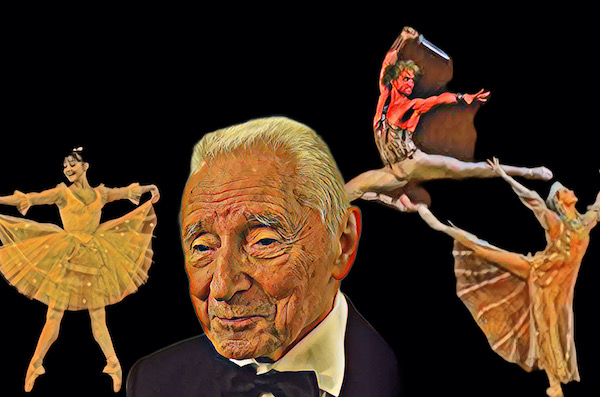
Born in Saint Petersburg, on January 2, 1927, dance is in his DNA as his family was already linked to the then Imperial Ballet (today Mariinsky). Unsurprisingly then, he studied at the company’s school, which he entered at just 19 and danced until he was 35, when he was already considered a promising choreographer.
While he was on stage, Grigorovich was not a noble danseur, but a démi character, that is, he stood out in more theatrical roles and typical dances. Still at Mariinsky, then Kirov, he began to do what he really liked: create ballets. The first was in 1957, The Stone Flower, with music by Sergei Prokofiev and a great success. Then, in 1961, he created The Legend of Love, another hit. Russian dancing had its new (and young) genius.
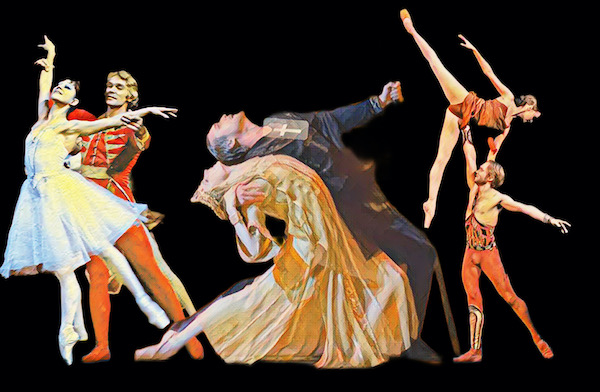
While continents away George Balanchine explored what he called symphonic ballet, Grigorovich remained faithful to ballet librettos, but his works always had a social aspect and a history of political impact. The Stone Flower is based on folk tales from the Urals and was considered an innovative production for introducing modernity into the steps. The Legend of Love is based on a Persian tale by Farhad and Shirin. With both successes, the Bolshoi Ballet, which competed with the Kirov, in 1964 hired Iuri Grigorivich as its Artistic Director, a chair that he would only release (under pressure) more than 30 years later.
Just two years after he arrived at the Bolshoi, the choreographer worked with married couple Ekaterina Maximova and Vladimir Vasiliev, reframing the Nutcracker ballet as a love story for them. The success was so great that since 1966 this has been the company’s official version when staging Tchaikovsky’s ballet. But it would be with Spartacus, in 1967, that Grigorovich would be such a success that the world began to revere him. He created a ballet about the confrontation between two arch-opponents, a rebellious slave and a noble warrior, once again relying on the virtuosity of Maximova and Vasiliev to achieve success.
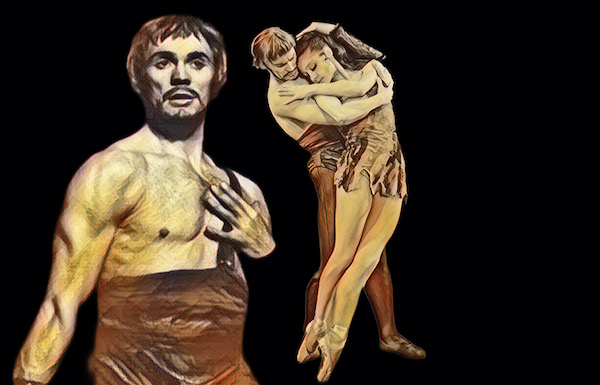

Among the originals, which still include the brilliant Ivan the Terrible, 1975, Angara and The Golden Age, in 1982, he revised the greats such as Raymonda, Sleeping Beauty, Giselle, Romeo and Juliet (he made his version in 1979), Don Quixote, La Bayadere and Le Corsaire, among others. But none made a greater impact than his 1984 version of Swan Lake, in which he changed the tragic ending to a happy ending, provoking conservatives who considered it sacrilege.
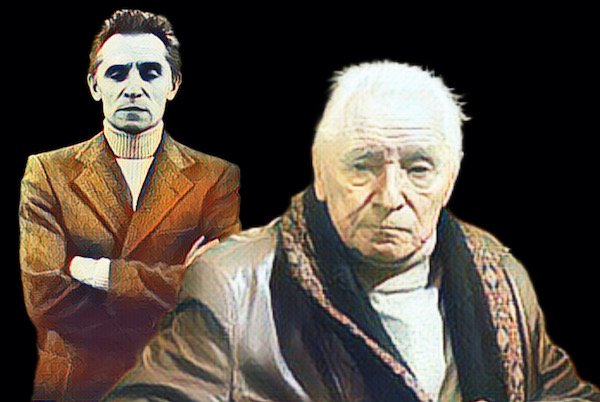
Longevity transformed the image of Grigorovich’s early years as innovative and creative into conservative and even slow, preferring to reinterpret classics rather than create new ones, creating enmities precisely with the stars he formed by preventing them from creating or dancing elsewhere. His figure came to be considered dictatorial and it didn’t help that he cast his second wife, the beautiful Natalia Bessmertnova, in most of his ballets. Internal stress and political and world changes led Grigovorich to leave the Bolshoi in 1995, but he was called back in 2008 to be a guest choreographer.


Having been widowed in 2008, when Bessmertnova passed away, at almost 97 years old Iuri Grigorovich is still rehearsing new talents and remains active. Three years away from his centenary, he is still writing his story, which is, unanimously, legendary.
Descubra mais sobre
Assine para receber nossas notícias mais recentes por e-mail.
 miscelana.com