
On October 12, 1972, a Uruguayan rugby team boarded a flight to Chile, where they would participate in a competition. The joy, hope, and youth of those on the chartered plane would end when the plane crashed in the heart of the Andes, in an isolated area known as the Valley of Tears. Of the 45 passengers, 29 survived the crash and only 16 were rescued alive.
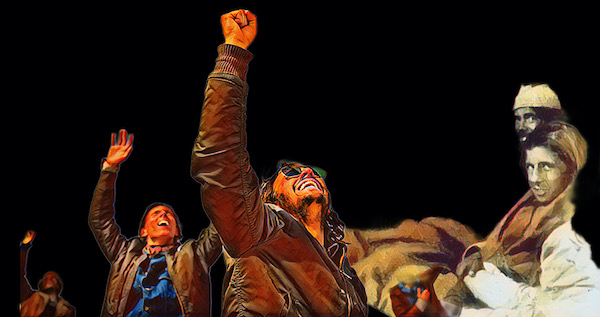
They spent about 70 days where there was no hope, communication, water, medicine, or food. To make matters worse, 54 years ago, there wasn’t even technology that could help what had happened with Flight 571 of the Uruguayan Air Force. Even less, with passengers. And yet, when found on December 23, 1972, the story of survival revealed itself even deeper. Even more so with the conclusion – and admission – that they resorted to extreme measures to stay alive, including cannibalism. Obviously, a story like this would not fail to make it to the cinema. The Society of the Snow is the Spanish film that hopes to have a chance at the 2024 Oscars and that will be released on Netflix in January 2024, after spending a few weeks in theaters.
Based on the book of the same name, written by Pablo Vierci and directed by Juan Antonio Bayona (The Impossible), the film brings back the incredible story that still arouses curiosity around the world. Pablo grew up in Montevideo and knew the athletes, who died and the survivors, but he waited 36 years to “give a voice to those who didn’t make it out alive”.
“Reaching an agreement with all survivors and families of the deceased was vital to this project and everyone responded unanimously and favorably to the approach to the story,” explained the director. The survivors were instrumental and their enthusiasm fueled the film and my perspective.” Obviously, the most delicate part was the revelation that, with no other option, the survivors had to feed on the bodies of their dead comrades. “I’m very interested in the symbolic nature of this act – the idea of giving oneself to another. At the heart of The Society of the Snow is a spirit of collaboration and friendship that appears spontaneously as the main characters face increasing adversity”, continued Juan Antonio. “The giving of oneself to others manifests both spiritually – when one walks for others or heals their wounds – and physically, with those bodies giving permission to be eaten in the face of death. It is a device as extreme as it is mystical and humanistic. Despite dealing with dark themes, my films are full of light — they talk about death to emphasize life”, he summarized.
And it’s true, the decision to film the story was made in 2012, when he was working on The Impossible and he not only made sure that the cast personally met the survivors who were still alive but also that they were at the scene of the accident.

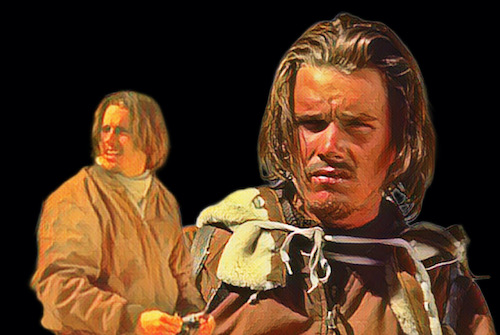
The Society of the Snow hits screens 30 years after Alive, the 1993 film starring Ethan Hawke, at the time, 20 after the accident. It wasn’t a hit, but it has a terrifying and perfect recreation of the accident. I swear, if you are afraid of flying, DO NOT watch it. Directed by Frank Marshall, the film was consulted by Nando Parrado (one of the survivors and the role of Ethan Hawke) and would have been one of the first roles for newcomer Brad Pitt, who auditioned to play Roberto Canessa but did very poorly in the final. reading. The role went to Josh Hamilton. One of the “advantages” of the new Netflix film is precisely that it brings actors unknown to the general public.
The film promises to be emotional because it reinforces human strength against the extraordinary. And there is the personal commitment of the director, who convinced everyone, including the survivors, that the story deserved a new presentation, with a letter written in 2011. “We were all fascinated by the idea that there was a completely new version, very exciting and very from this point of view’, explains the book’s author, Pablo Vierci. “It was an overwhelming and emotional email where he explained that he had used the book Society of the Snow to write The Impossible, which had not yet been released, and he told us what he thought was necessary to tell the story of what happened in the Andes.” And more than 50 years later, the time has come.
Descubra mais sobre
Assine para receber nossas notícias mais recentes por e-mail.
 miscelana.com
1 comentário Adicione o seu