
The longevity of the band The Who is undeniable. In 1964, when they adopted the name, it had already been on the road for at least two intense years under another name, of course. That’s why 2024 is, officially, the year of his sixtieth birthday. That’s right, they’ve been together for 60 years. They deserve the post because not only were they contemporaries of The Beatles and Rolling Stones, but they were even more so because, with justice, they are considered one of the most influential rock bands of the 20th century, with artistic and technical contributions to rock like no other group. Well, who? The Who.

Like all band stories, it all started in high school, where Pete Townshend and John Entwistle met Roger Daltrey. Townshend and Entwistle played together, but more focused on jazz. After Daltrey was expelled from school at just 15 years old, he founded the group Detours, the basis of what would become the Who. He was already playing professionally when he chanced to meet Entwistle on the street, carrying a bass and asked him to play with Detours. Soon after, Townshend was recruited as a guitarist. Supported by the guitarist’s family, who were musicians, they gradually advanced and found their style, changing their professional name to what it is today.
The turning point came when drummer Keith Moon joined The Who, aged just 19. The energy he brought to the music changed not only the group’s sound but rock music in general. At this point, the band was already on its way to getting a record deal and changing managers. Combining great melodies, lyrics, and a heavy sound with an aesthetic from the mod subculture (to this day, a British look that mixes music, haute couture, and disheveled hairstyles), The Who gained popularity.
In addition to Moon’s crazy signature drumming, which included throwing his sticks in the air mid-beat, all the members had some unconventional signature on stage: Daltrey began using his microphone cable as a whip, occasionally jumping in mid-beat. crowd and Townshend used the guitar to imitate a machine gun as he jumped on stage and played with a quick arm-spinning movement. He also created what came to be known as the “bird man”, when he raised his arms and held them up to produce feedback with the guitar. Perhaps the group’s most classic “signature”, which began to be imitated around the world by rockers (to this day) was “breaking the guitar”, an accident that changed rock. And that happened 60 years ago. During a performance, Townshend accidentally smashed the head of his guitar on the stage’s low ceiling and was angered by the audience’s laughter, deciding to smash the instrument on stage before picking up another one and continuing the show. The public’s reaction was surprising: they liked the gesture so much that they started to expect it to be repeated at every show. To become even more iconic, Moon started kicking his drums too. Self-destructive art became The Who’s signature on stage.


This artistic streak is always attributed to Townshend’s years at art school which gave him his experimental training. He soon became the main composer and eventually assumed leadership of the group. The Who began to always be ahead and experiment, creating a constant expectation of what they would do next. By the end of 1964, the band had gained critical and worldwide recognition, with a record deal with Decca Records distributing their music in the United States as well.
One of the factors behind The Who‘s longevity may be the fact that the musicians were never close friends, which helped them overcome countless fights and differences by focusing on music and work. Even before they ‘exploded’ they also decided that they would function democratically without a single leadership. Rare thing in rock groups but it worked for them.
My Generation, in 1965, determined The Who‘s entry into rock history. The rock opera Tommy, from 1969, is “just” another classic that confirms the group’s originality and its position as one of the greatest influencers of several generations since then. When the 1970s began, The Who was recognized as one of the best and most popular live rock bands.
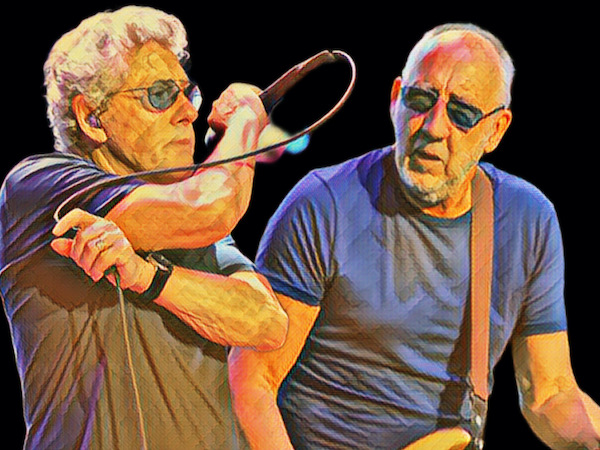
Drugs, alcohol, and fights were part of the scenes as in many other groups, but Keith Moon‘s drug addiction, which culminated in his death from an overdose in 1978, marked what many consider the end of the “real” The Who. As we know, the band overcame the trauma and between comings and goings, separations and reunions, moved on. With Entwistle’s death in 2002 (from the heart, with cocaine use attributed as a major factor in the heart attack), The Who effectively became the duo Daltrey-Townshend, who played in Rio de Janeiro in 2017. They claim that after 50 years, today they are best friends. According to Townshend, accepting their differences “gave us a real relationship truly genuine and compassionate, which can only be described as love.” A love reciprocated by fans from all parts of the world and all generations.
Descubra mais sobre
Assine para receber nossas notícias mais recentes por e-mail.
 miscelana.com