
Anyone who saw her dance in films that immortalized Alla Sizova‘s art certainly left their mouths open. “Flying Sizova” was her nickname and it was justified. Beautiful, musical, and extremely talented, Alla was one of the greatest dancers of the 20th century. Unfortunately – and we will explain why – with fewer visits to the West, her peak can only be seen in films. One of them is the ballet Sleeping Beauty, from 1964. In the production that features Yuri Soloviev as Prince Desirée, it is a dream. Born in September 1939, she would have turned 85 years old in 2024, but she passed away 10 years ago, in 2014, as a result of cancer. It’s worth revisiting.
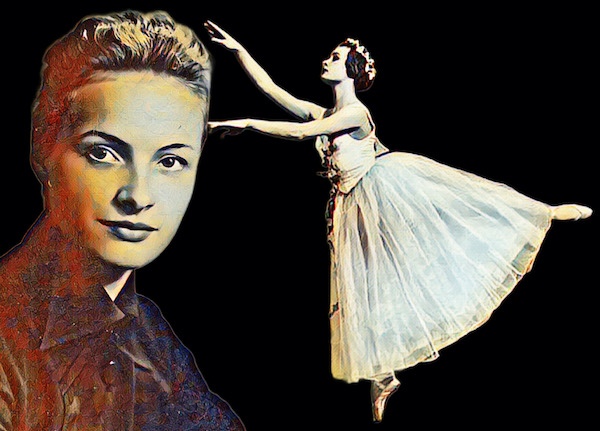
In a country that brings together some of the greatest dance legends, it says a lot when an artist stands out. A contemporary of some of the biggest names, including Natalia Makarova, Mikhail Baryshnikov, Irina Kopalkova, and Rudolf Nureyev, to name just a few legends, Alla was admired by them all.
Alla Ivanova Sizova was born in Moscow, just weeks after Germany invaded Poland and started World War II. Therefore his early years were marked by hardship and change, with the family eventually evacuated to the Ural region until the end of the conflict. With Peace, the family settled in Leningrad (today Saint Petersburg), where little Alla began to study ballet. Her talent was noticed immediately and so she was accepted into the prestigious Leningrad Choreographic School (later named after Agrippina Vaganova) where she made history by being cast in the role of the Queen of the Dryads in Don Quixote before graduating. The graduation, in fact, was recorded in films and photos. Alongside a young colleague, Rudolf Nureyev, she danced the pas de deux from Le Corsaire and their performance was so above expectations that they both went straight to Kirov as soloists.
Sizova’s impressive jumps became her signature and in a short time, she was among the company’s leading figures, dancing in her early years roles such as Masha in The Nutcracker, Princess Florine and Aurora in Sleeping Beauty, Myrtha in Giselle and Katerina in The Flower of Stone. Her mentor was the also legendary Alla Shelest. In roles where the fluidity of classical technique was important, she stood out, but her dramatic talent made roles like Juliet and Giselle equally iconic, something her impressive elevation made her a legend.
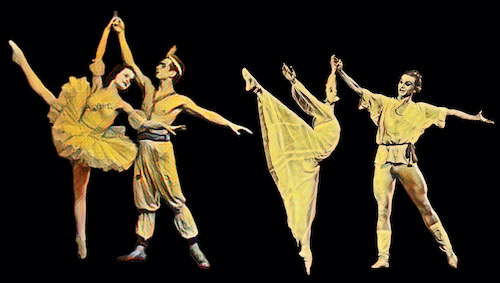
As is common in Russian ballet, partnerships are maintained over the years, which meant that Nureyev was expected to be ‘always’ with Sizova, on and off stage. The two shared an apartment, but legend has it that they didn’t like each other, and as it had two bedrooms, even though it was a clear suggestion that they could get married, they lived separately on the property, each with a relative, he with his sister, Rosa, and she with her mother. However, as they always danced together, Alla – like Yuri Soloviev – suffered directly the consequences of Nureyev’s defection in 1961. He, as a roommate on the tour, and she as his partner, were soon listed as suspected of having knowledge of the plans of the dancer, something they obviously didn’t have. The process of questioning and the retaliation of not letting them travel for many years impacted his mental health and that of Alla Sizova’s mother, who had a nervous breakdown. Soloviev, years later, would take his own life.
After Nureyev’s departure, his most frequent partner became Soloviev, something that became legendary because they were both virtuosos. In 1965, the dancer married a television producer and director, with whom she had her only child. Suffering from a serious back injury, some allege because of her jumps, took Sizova off the stage for two years, but she returned triumphantly, with no loss of technique and with even greater emotional depth. At this stage, her most frequent partner was the young Mikhail Baryshnikov, with whom she danced until he fled to the West in 1974.

Widowed in 1980, when her husband died of an aneurysm, she danced until 1988, when she retired and began teaching at the Vaganova Academy. In the 1990s she moved to the United States, where she taught at the Kirov’s Washington DC affiliate, the Universal Ballet Academy. In her classes, Alla Sizova became known for emphasizing musicality above technical proficiency, as well as being very affectionate with her students.
Another great sadness in the dancer’s personal life was in 2004 when she died in a drowning accident in Russia. She then returned to her country where she stopped teaching and began to live practically as a recluse. In the late 2000s, she developed Alzheimer’s disease and was diagnosed with cancer four months before her death. She was 75 years old.
If you can, I recommend seeking out the films of Alla Sizova in her prime. A timeless inspiration for everyone
Descubra mais sobre
Assine para receber nossas notícias mais recentes por e-mail.
 miscelana.com