
Two weeks before the start of the French Revolution, the Opéra stages signaled social changes that were also clear in Art. Classical ballet, already advancing and leaving the ballrooms for the theaters, was still without “stories” or if they had any, focused on Gods, Kings, Queens, and Fairies. Until the farmer and widow Simone came, whose rebellious daughter Lise insisted on marrying the poor Colas, while she wanted a union with a clumsy but rich young man, Alain. Arrogant, Lise takes advantage of Simone’s distraction and manages to create a situation where they “need” to get married precisely because no one is taking care of her. That’s why the ballet, La Fille Mal Gardée, gained so much popularity, after all, the public was not used to seeing real people on stage. Soon everything would change.
First performed on July 1, 1789, La Fille Mal Gardée had another name – Le ballet de la paille or Il n’est qu’un pas du mal au bien (“The straw ballet or there is only one step from evil to good”), success was immediate. With choreography by Jean Dauberval, the production has remained popular for 235 years thanks to the lightness of its story and humor, which are rare in dance even today, whose ballets generally center their plots on dramas that end in tragedies.
A Ballet that dates back 235 years in 2024, was staged in two revolutionary moments in History
Tradition says that when Dauberval was traveling through Bordeaux, he was inspired by an engraving by Pierre-Antoine Baudouin that he saw in a printing shop. Baudouin was known for painting idyllic and erotic subjects in watercolors and crayons and had died 20 years earlier. The engraving is called Le reprimande/Une jeune fille querellée par sa mère, and is from 1865, depicting a disheveled young woman hiding her lover from her mother, who scolds her for not finishing the work. Dauberval found the image so amusing that he immediately set about creating a setting suitable for a ballet.
At the premiere, at the Grand Théâtre de Bordeaux, in Bordeaux, the role of the young woman went to the choreographer’s wife, Marie-Madeleine Crespé (also known as Mme. Théodore), Eugène Hus played Colas, and François Le Riche created the role of the Widow Simone, since then establishing the tradition of men dancing the female role.

Neither the original music, a collection of 55 popular French songs of the time, nor the steps were saved, but La Fille Mal Gardée did not disappear thanks to its popularity in revolutionary Russia. There is more than one version of the music, there are something like six scores and choreography, but the one we know and love is the one from 1960, written by Frederick Ashton, who only discovered ballet precisely because of the Russians.
Alexander Gorsky’s version, with music by Peter Ludwig Hertel, has been established for the Bolshoi since 1903. He was inspired by Marius Petipa and Lev Ivanov‘s 1885 production, staged at the Imperial Ballet in Saint Petersburg. In turn, Petipa/Ivanov used notes from Paul Taglioni (brother of Marie Taglioni) dated 1864, from a performance in Berlin. This explains the differences in what we see of the ballet to this day since Ashton’s version has Ferdinand Hérold‘s beautiful score, used in one of several versions of the ballet in the late 18th century.
But let’s go back in time, before the ballet ended up in Moscow, just two years after the premiere, Dauberval staged the work for the King’s Pantheon Theater Ballet in London, where he changed the title to La Fille mal gardée, which became the definitive. In this production, Charles Didelot sang Colas. Meanwhile, in post-monarchy France, Eugène Hus led the Paris Opera version. The music we know today in the West was used for the 1828 production, created for the ballerina Pauline Montessu, but with star Fanny Elssler turning the role of Lise into one of her most popular, she requested a new and exclusive pas de deux ( still today in the 2nd act) which uses melodies by Gaetano Donizetti from the opera L’elisir d’amore.
La Fille Mal Gardeée was first performed in Moscow in 1800, with Didelot (the same one who had danced in London in 1791), during the period he served as Maître de ballet for the Imperial Theaters of Saint Petersburg. Half a century later, under the management of Jules Perrot, the Imperial ballet staged the ballet again, but it was in 1885 when the Italian ballerina Virginia Zucchi chose the work in the performance for Tsar Alexander III that the Naughty Peasant Girl became popular in Russian ballet. being supervised by Petipa and Ivanov directly. As a curiosity, Virginia was the first to transform the mime scene in the third act, in which Lise dreams of getting married and having children, into one of the most anticipated moments of the ballet, as well as the pas de deux of the ribbons, in the first act.
Established in the repertoire from 1894, La Fille Mal Gardée became popular among dancers, including Olga Preobrajenskaya, Anna Pavlova, Tamara Karsavina, and Mathilde Kschessinskaya. It was with Matilde that an essential change was made: real chickens were used on stage, but when Olga was performing, on purpose, Mathilde would have opened the cage at the wrong time to disturb her rival’s solo, but Olga continued dancing as if nothing had happened. happened and was even more applauded.
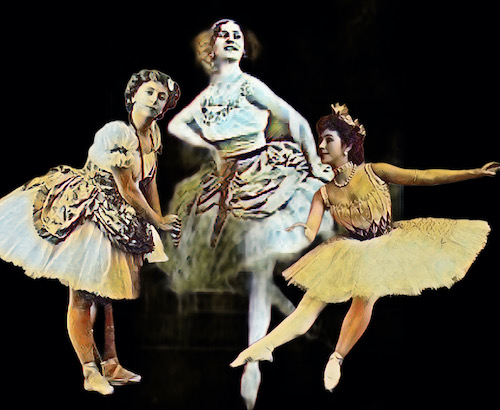
In keeping with its tradition, incidentally one of the last productions of ballet in Russia for years took place a month before the October Revolution of 1917, but luckily by that time La Fille mal gardée was already written down in the Stepanov method, and this material was essential for future reassembly.
From Russia to the world: a second revolution
In 1903, the Bolshoi Ballet recovered La Fille mal gardée with choreography by Alexander Gorsky, based on the production by Petipa/Ivanov, which became the company’s ‘definitive’ while at the Kirov, Oleg Vinogradov‘s was maintained, which left the repertoire in 1995 is still not back.
As time passed, not even France remembered La Fille Mal Gardée anymore. It was necessary for Anna Pavlova, who loved dancing Lise, to present the ballet on her tour in London in 1912, especially impacting a young member of the audience, Frederick Ashton. Americans only discovered ballet in 1940 with Bronislava Nijinska and the American Ballet Theatre’s version. In 1972 they created a new version, with Natalia Makarova as Lise, and the play was performed until 1984, with stars such as Mikhail Baryshnikov, Gelsey Kirkland, Susan Jaffe, Cynthia Gregory, Fernando Bujones, and Marianna Tcherkassky in the cast. Today ABT uses the Royal Ballet version, considered the definitive one.
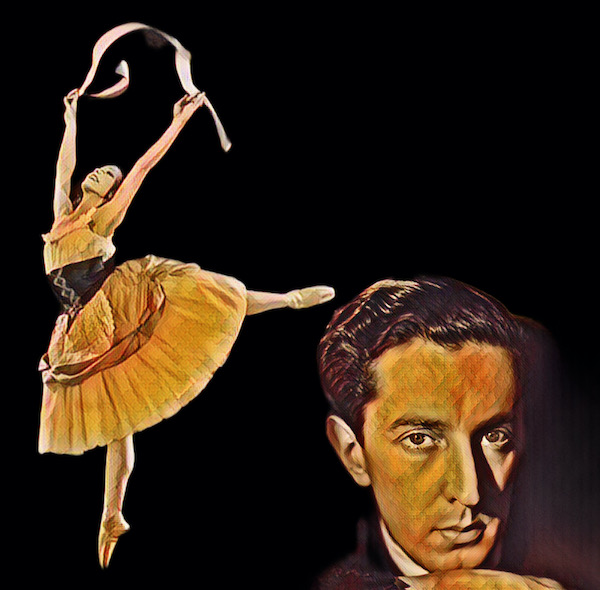
As the Royal Ballet’s principal choreographer, Ahston went on to work on his version in 1959, whose premiere on January 28, 1960, made legends of the lead duo, Nadia Nerina and David Blair, as did Stanley Holden‘s performance as the widow Simone. and Alexander Grant as Alain. At this point, the most popular score was Hertel’s, but he preferred Hérold’s 1828 music, rearranged especially by maestro John Lanchbery, retaining a Hertel part for Simone’s famous clog dance.
Ashton’s vision is so perfect and musical that it is one of his most famous works. He had the help of Tamara Karsavina for the mime scene, but created several others such as the tape dances in the second act. He played Simone in some performances. Marie Rambert was enchanted by the prodigy and described the ballet as “the first great English classic”. Ironic, remembering the eternal rivalry between France and England.
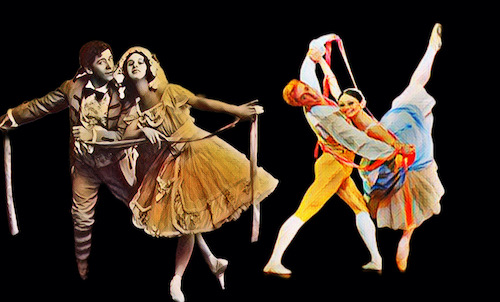
In Brazil, the production at Theatro Municipal do Rio de Janeiro is one of the most beloved by the public, having marked the debut of a young Julio Bocca in his first leading role, back in the 1980s. In the year in which it turns 235 years old, La Fille Mal Gardée remains one of the most popular in the world and it deserves it.
Descubra mais sobre
Assine para receber nossas notícias mais recentes por e-mail.
 miscelana.com
1 comentário Adicione o seu