
There is a generalization that the Marvel universe has ‘already done’, or, in general, Superheroes. Unfortunately, the heaviest phase, with characters dealing with trauma, came with a younger, more diverse generation that some suggest took away the pace and interest in the content. Or, the ‘excess’ of series and the obligation to watch everything to keep up. In any case, Echo is one of the best content on Disney Plus, and it went almost unnoticed. Almost.
We met Maya Lopez (Alaqua Cox) in the Hawkeye series in a remarkable passage, Echo is the immediate continuation, but it came two years later, and almost no one who watched Hawkeye or even Daredevil will really be lost. As this is not my case, I saw everything and loved it.
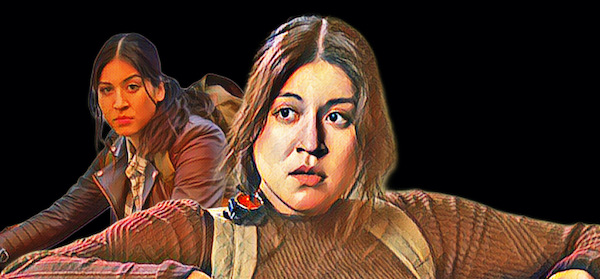
Maya Lopez is a deaf Choctaw girl, motherless and fatherless (killed by Hawkeye), whose crime boss – Kingpin (Vincent D’Onofrio) – has her as his daughter. Because of her talent, she is a deadly underworld enforcer, using the code name Echo, but upon discovering that Kingpin betrayed her (he had her father killed), Maya returns to Oklahoma and the family she hasn’t seen in years to resolve all pending issues.
In episode five Echo, who is a Native American who was raised far from her relatives, who did not accept her father’s life of crime. The problem is that while she searches for answers, they indirectly lead her ex-partners to track her down in Oklahoma, putting her family at risk and this transforms Echo into something different, more dramatic and less action-packed.
In her culture, matriarchy is a reality, but Maya has problems with her grandmother (Tantoo Cardinal), while she finds support from her first cousin Bonnie (Devery Jacobs). These deeper relationships are moving, even if quick. They teach her how to channel the mystical energy of the Choctaw through her hands, but she cannot perfectly imitate the movements of the opponents who originally gave the character the superhero name Echo; the show’s title is rationalized by a late, weak reference to how she “echoes” her ancestors.
The fact that the narrative incorporates the physical barriers of the actress in Echo (she grew up on the Menominee Tribe reservation, is deaf, and has a prosthetic leg) highlighting her inner strength is one of the positive points of the narrative because, otherwise, a minor antagonist I wouldn’t need five episodes just for her. There is an arc of recovery and contextualization that make this series in particular one of Marvel’s highlights. It’s sensitive without exploiting heroism. I know many people complained, but I found it exciting to see it in greater depth, as not everyone had the same opportunity.
Descubra mais sobre
Assine para receber nossas notícias mais recentes por e-mail.
 miscelana.com