
As films and series move in waves, we are starting the fashion wave, an opportunity to address feminine and historical issues via Fashion. The Spanish bio series Cristobál anticipates Apple TV Plus’ major production, The New Look, which features a large cast and focuses on another great designer of the post-war period, Christian Dior.
The two series, different in narrative and production, reflect their characters well: the mysterious Cristobál Balenciaga, whose aura of genius is also based on his insistence on being so exclusive that he avoided becoming popular, has this same ‘distance’ in the Starplus series. Dior, who was loved by the media and media, brings the spotlight to The New Look, with Ben Mendelsohn, Juliette Binoche, and John Malkovich in the cast. One of the great releases of 2024, without a doubt.
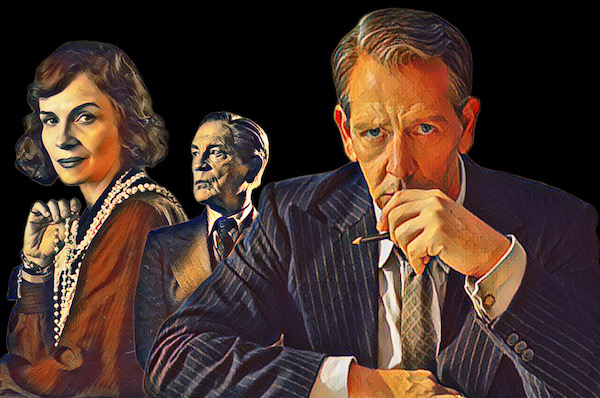
The ‘new look’, translated from ‘the new look’, was the name that Christian Dior’s collection launched in February 1947 became known as. The designer, in fact, named it La Corolle, an allusion to flower petals, a design he used to create the model with a thin waist and rounded skirt. It was a radical change in fashion and the editor of Harper’s Bazaar, Carmel Snow, put it on the cover of the magazine calling it “the new fashion”. (In the Starplus series, there is an allusion that Balenciaga would have done something along the same lines BEFORE Dior, provoking the same reaction in the journalist, but, as he was a staunch defender of exclusivity, he did not cause the same communication impact, ‘losing’ new for Dior).
The post-war revolution
“It’s a great revolution, dear Christian! Your dresses look so new!” she reportedly said at the end of the show at Maison Dior. A Reuters reporter would have heard the statement and cited it in his article, creating the term that came to be used for all dresses designed by Dior and/or that had the same silhouette of a very thin waist and a very full skirt, or the look Hourglass.
The revolution – which some like Balenciaga hated – was precisely to mark a model with broad shoulders and an ultra-thin waist to further highlight the femininity that was forgotten during the Second World War, where curves were never accentuated. The Spanish designer was “against” slimming the waist because he considered it took away comfort and created an impossible physical goal for most women. But there is more to this too.

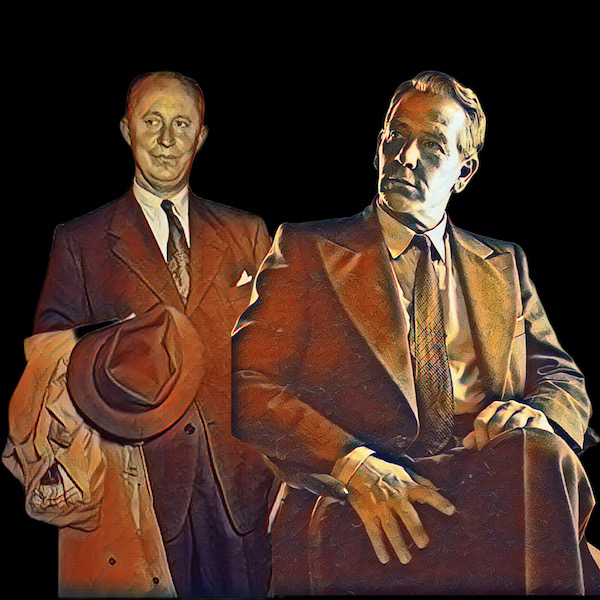
Historians point out that wartime rationing also resulted in fewer fabrics, so fashion had no way to ‘grow’, the less marked and straight models reflected this scenario. With Peace, abundance would come and Dior took the lead with full, elegant, and dream-worthy dresses. It was original and glamorous like nothing seen before.
At the time, critics considered the “new look” something anti-feminist because its inspiration was the models of the 18th and 19th centuries, where corsets destroyed the health of many by being unrealistically tight to create an almost non-human image, something that had been left behind. Even though corsets were literally forgotten, there was the ‘belt’, still used today to ‘tighten’ ‘less than’ bodies.
Be that as it may, with the mass approval of the ‘new look’, fueled by movie stars like Grace Kelly, all designers ‘had’ to follow the trend, including Balenciaga and Givenchy. And department stores began to adopt the models and consolidate the effect of mass consumption. The style remained popular for no less than 15 years.
The Chanel reaction: the invention of the Tailleur
The New Look series will focus on Coco Chanel‘s anger at the revolution created by Christian Dior. She reportedly defined La Corolle as the “clothes of a man who doesn’t know a woman, has never had one, and dreams of being one!”
Who won? Glamour, without a doubt, since both the ‘new look’ and the suit (which did not require the waist to be thin) became the ‘uniforms’ of the 1950s and 1960s.

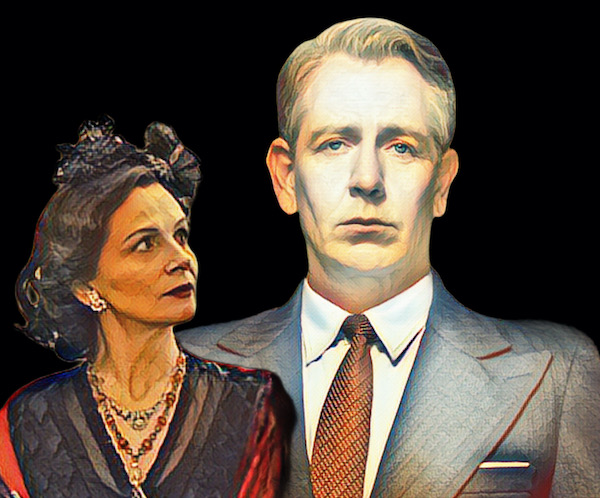
The rivalry could not have been more personal. The entire Chanel line was famously based on the principle of “feminine comfort” for independent women who still wanted to maintain elegance. Every volume that was back was exactly what she had eliminated from her collections. The answer came in style: Chanel created her most famous signature, the skirt and cardigan “suit” better known as the ‘tailleur’.
It was from this rivalry, from this discussion that Fashion became Pop, which means that anyone with access to information in any part of the world started to say the names of Dior, Chanel, Givenchy, and Balenciaga even without having access to the exclusive fashion shows, still only made in their Maisons in Paris. The French capital has assumed the position of ‘heart of fashion’ by bringing together the main designers, almost all of them ‘neighbors’ on Avenue Montaigne.
Given all this, the Apple TV Plus series will be super interesting for those who like History. Currently, Coco Chanel’s popularity is infinitely tarnished by her personal life, her involvement with Nazis and nobles (all of which will certainly be explored in the series). It will be incredible.
Descubra mais sobre
Assine para receber nossas notícias mais recentes por e-mail.
 miscelana.com
3 comentários Adicione o seu