
La Côte Basque practically became a code among VIPs and intellectuals to mark the downfall of the life of journalist and writer Truman Capote in the 1970s as it was the title of the author’s most controversial chapter in his last book. But it is also the address of one of the most renowned and historic restaurants in New York.
Capote reinvented journalism with his brilliant and spectacular In Cold Blood, immortalized the superficiality of fashionistas and social climbers in Breakfast at Tyffany’s, and crushed the souls of socialites and “influencers” with his book Answered Prayers, published posthumously, transformed the restaurant into an arena for egos and gossip, something that terrified the people he described so precisely in his work. The behind-the-scenes story of all this is the subject of the series produced by Ryan Murphy and directed by Gus Van Sant, Truman vs The Swans, from StarPlus. What is also a fact is that La Côte Basque was for many decades “the” place to see and be seen in New York, the temple of the rich and famous, and the perfect setting for the drama that only Capote’s acerbic mind could achieve. immortalize.
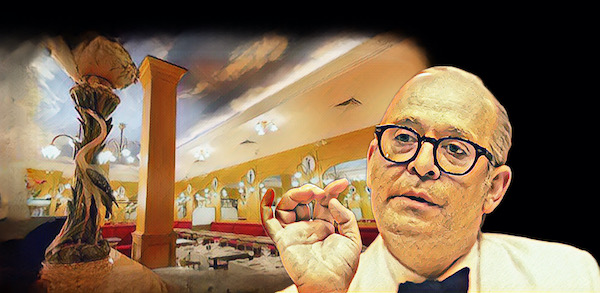
The restaurant closed its doors 20 years ago, more precisely in March 2004, after 45 years as a reference in a demanding city like New York. “Hands wring. The diners cry. The New is cursed. Misfortune is inferred. Darkness descends”, wrote the New York Times when the end was made official, marking the goodbye of an era. Unsurprisingly, the place is so notable for the city that since 2016 it has been the address of the popular Le Benoit, by chef Alain Ducasse, who modeled himself on his predecessor to gain new customers by surfing on traditional and offering more affordable prices. It will be difficult to achieve the aura of glamor that La Côte Basque aroused.
The ‘original’ was opened in the late 1950s by Henri Soulé, at 60 W 55th Street, in Upper East Manhattan, mere blocks from the homes and apartments of the richest and most famous of the time. She was a particular favorite of Jackie Kennedy Onassis, the most admired and imitated woman in the United States, to name just one of the best-known visitors. The place’s fame was as much for its French cuisine food as for the strategically and “elegantly arranged” tables with tablecloths and flower arrangements (which had an estimated weekly cost of more than 5 thousand dollars), as well as the walls decorated with images of “French murals by the sea”. One can easily estimate, updating the values, that a dinner would cost an average of 400 dollars (not including wine).
Henri Soulé became known as “the Michelangelo of French restaurants in America”, also the owner of Le Pavillon, and was adored by the American elite in NYC. They say that he was the one who “invented” the strategy and the term “Siberia” to call the bad tables where he placed the less popular customers. With him, La Côte Basque quickly became the city’s hottest place and it would also be precisely there that Soulé would die, due to a massive heart attack, in 1966.

All of this is brilliantly summarized by Truman Capote in his book, which immortalized the restaurant in literature. This is because due to its location and exclusivity, La Côte Basque was the place where all of the writer’s rich friends met for lunch, dinner, and, most importantly, gossip. It was also there that, as we will see in the Capote Versus The Swans series, they also planned revenge for his betrayal: cancellation. (Well, it wasn’t millennials who invented this revenge, but rather Capote’s swans).
The chapter La Côte Basque 1965 was the third in the book to be published by Esquire magazine before the work reached the public, and also the most controversial of all. In it, Capote unsubtly mentions the names of some easily identifiable people to parade judgment and even malice towards his friends. It could be argued that he was sincere, but I recommend reading the work because his text style is unique and describes the environment, the climate, and the people who frequented the place with a precision that not even a photograph could capture. That’s why it was so painful for them.
With the name of the place being associated with the scandals that Truman Capote disclosed, it was expected that it would be avoided, but that didn’t happen (although I bet the writer only managed to have dinner in “Siberia” after that). In 1979, Jean-Jacques Rachou bought the establishment and maintained its reputation as one of the best in the city until it closed its doors in 2004. Having survived for so long, what eventually decreed the closure of the place’s doors was the economic crisis in the United States. United. At the time, Le Côte Basque‘s farewell was compared to a “dead dinosaur”, making way for the new.
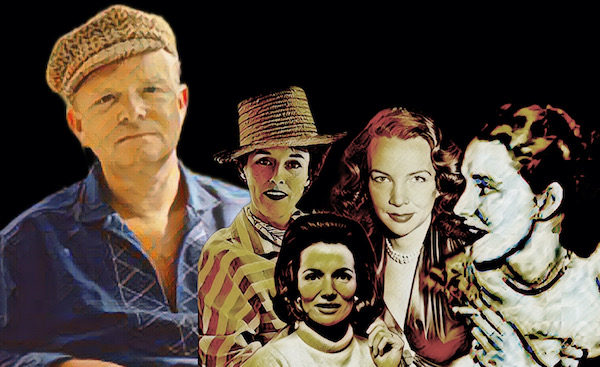
Certainly, the period reconstruction of the restaurant will awaken new curiosity about the place. The popularity of restaurants like Daniel (who worked at Le Côte Basque) or more accessible ones like Balthazar, Café Luxembourg, and even Le Benoit still don’t come close to what the original represented in its time. “I think New York now mourns the disappearance of classic food,” said Jean-Jacques Rachou, in an interview near the reopening of Alain Ducasse‘s restaurant. “But it depends on how you interpret it and in what kind of environment. I was stuck with clients who didn’t want to be in the same room with people wearing jeans,” he said. And the Swans would applaud him.
Descubra mais sobre
Assine para receber nossas notícias mais recentes por e-mail.
 miscelana.com
1 comentário Adicione o seu