
I have shared the full translation of director Doug Liman‘s protest, published by the website Deadline, where he explains his anger at the decision to release the remake of the film The Road House directly to the Amazon Prime Video platform, without going to the cinema first. “Amazon has no interest in supporting cinemas,” he says. “What they did to me and my film Road House, which is the opposite of what they promised when they took control of MGM”, he commented.

Doug Liman joins the long line of stars, generally directors, who are butting heads with the studios and the issue of theatrical release windows. Tom Cruise ‘held back’ Top Gun: Maverick throughout the pandemic until theaters were open for the public to see the film. In the words of Steven Spielberg, “he saved cinema”. This year’s big Oscar winner, Christopher Nolan, also set out to release Oppenheimer in theaters and IMAX screens, so much so that his credit says “written for big screens” in the opening. Nothing subtle.
The discussion around the ‘end of cinema’ or ‘the end of TV’ is not new. Technology has been intensifying the discussion, with enormous economic pressure. The multiple platforms, following the Netflix formula, gained space and support during the pandemic, but today they are unable to make ends meet. Mergers uniting large studios – until now competitors – are already a reality. Fox ceased to exist after being acquired by Disney, being renamed Starplus; Discovery and Warner ended the HBO Max brand to become just Max, and so the market continues, with the likely sale of Paramount to the Discovery Warner group. What Doug Liman was angry about is part of this movement too: MGM was bought by Amazon Prime Video, so any production from the studio now goes through the executive decision of its new owner. And the director was disappointed with the result.
Doug Liman is a super director in Hollywood, having worked with its biggest stars at different stages. He started with Jon Favreau with Swingers, back in the 1990s. He was the one who turned Matt Damon into a millionaire action star with the Jason Bourne franchise with The Bourne Identity; indirectly created Brangelina by working with Angelina Jolie and Brad Pitt on Mr. and Mrs. Smith and, of course, worked with Tom Cruise on both The Edge of Tomorrow and American Made, so he HAS a voice in the market and his protest will be echoed. He is, in fact, working on his third film with Cruise in the project of filming in outer space. And remaking The Road House, 35 years after the original (which made Patrick Swayze a star) was something personal for him.
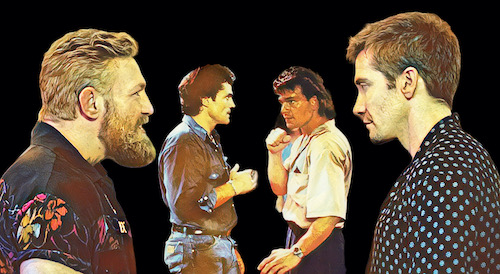
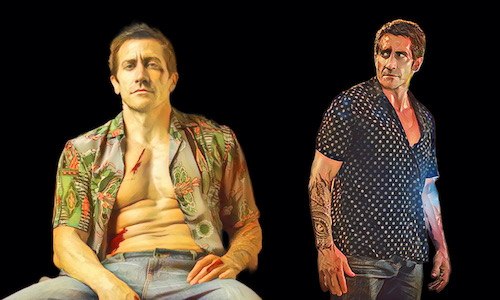
With the addition of Liman, The Road House, a bolder version of the story has been expected, even given the great popularity of the 1989 film. Jake Gyllenhaal has worked hard to create a physique that gives people something to talk about (explored on the poster) to play the “security guard who never lost a fight” and the cast also includes UFC megastar Conor McGregor. According to him, audience tests proved that the release would be successful at the box office. But it won’t happen as Amazon MGM Studios has already announced its debut on the platform in March. That’s why I feel sorry for it being so relevant. “A computer doesn’t know what it’s like to share the experience of laughing, applauding, and crying with a packed audience in a dark theater – and if Amazon gets its way, future audiences won’t know either,” he concludes.
I recommend reading and sharing.
My plan had been to silently protest Amazon’s decision to stream a movie so clearly made for the big screen. But Amazon is hurting way more than just me and my film. If I don’t speak up about Amazon, who will? So here we go.
When Amazon bought MGM, one of the few remaining studios making big commercial films for theatrical release (movies like Bond, Creed) they announced that they would put a billion dollars into theatrical motion pictures, releasing at least 12 a year. They touted it as “the largest commitment to cinemas by an internet company.” I can tell you what they then did to me and my film Road House, which is the opposite of what they promised when they took over MGM.
The facts: I signed up to make a theatrical motion picture for MGM. Amazon bought MGM. Amazon said make a great film and we will see what happens. I made a great film.
What else could I have delivered to the studio? Nothing, it turns out. Because contrary to their public statements, Amazon has no interest in supporting cinemas. Amazon will exclusively stream Road House on Amazon’s Prime. Amazon asked me and the film community to trust them and their public statements about supporting cinemas, and then they turned around and are using Road House to sell plumbing fixtures.
That hurts the filmmakers and stars of Road House who don’t share in the upside of a hit movie on a streaming platform. And they deprive Jake Gyllenhaal — who gives a career-best performance — the opportunity to be recognized come award season. But the impact goes far beyond this one movie. This could be industry shaping for decades to come.
If we don’t put tentpole movies in movie theaters, there won’t be movie theaters in the future. Movies like Road House, people actually want to see on the big screen, and it was made for the big screen. Without movie theaters, we won’t have the commercial box office hits that are the locomotives that allow studios to take gambles on original movies and new directors. Without movie theaters we won’t have movie stars.
Film executives are also at risk. Box office revenues are the war chests that allow studios the resources to make movies. It’s no surprise you see layoffs across the industry including at Amazon – without movies in theaters, there’s no revenue coming in. And once the theaters go out of business, it could take decades for the business to recover, if ever.
At the height of the pandemic there was a real possibility that movie theaters would not recover. We got comfortable watching movies at home. But then a remarkable thing happened when restrictions lifted. We started going back to the movie theater.
The fact that we still have movie theaters after the global pandemic didn’t happen by accident. It happened because brave filmmakers like Chris Nolan and Tom Cruise insisted their movies play in the theater, and they proved audiences are still there. They proved that despite everything, we still enjoy gathering and sharing in the communal experience of watching a film together. People love going to the movies, despite the convenience of streaming. They are not mutually exclusive. In fact, data shows that movies do better on streaming if they have been released theatrically first.
I’m not opposed to streaming movies. I made one of Amazon’s first original movies for streaming, and during the pandemic sold a streaming movie to Warner Bros. I’m currently making Instigators for Apple. But I am opposed to Amazon gutting MGM and its theatrical business, as I would have been had Jeff Bezos bought the Washington Post and then gutted its newsroom (he did the opposite).
I like the Amazon film execs and believe they are good people who are trying to do their best. They have a lifetime of experience making and releasing films in theaters. We tried everything to convince them to put Road House in theaters – they know all the arguments I presented here. I even asked them to allow me to sell Road House to another studio that would put it in theaters – they said no. Maybe they are victims in this as well, forced to betray the artists they spent their careers supporting.
The reality is there may not be a human villain in this story – it may simply be an Amazon computer algorithm. Amazon will sell more toasters if it has more subscribers; it will have more subscribers if it doesn’t have to compete with movie theaters. A computer could come up with that elegant solution as easily as it could solve global warming by killing all humans.
Descubra mais sobre
Assine para receber nossas notícias mais recentes por e-mail.
 miscelana.com
2 comentários Adicione o seu