
In the words of Truman Capote, Babe Paley had only one flaw: “She was perfect. Besides that? She was perfect”. And what he fed, with this summary, was the legend of this American socialite, multiple times topping the list of the best dressed in the world, as a muse of class and elegance. Of all the Swans he “betrayed” with his book Answered Prayers, hurting Babe was the one that made him suffer and even regret it. But, even though Babe was collateral damage, wasn’t it really important to reveal the truth behind the myth?

Capote’s proposal with his book was to create an American version of Marcel Proust‘s À la Recherche du Temps Perdu, reflecting on life and society, exposing its futility and facades of lives of glamor and wealth. Anyone who has read the book, or any other book by the writer, would argue that he almost achieved his goal but did not evaluate the consequences of his plan. Not so much because of the characters, but because Capote was one of those most passionate about the lifestyle he was criticizing. In this universe of the rich and famous, he was adored for his sharp tongue, and Babe Paley was the Queen, the one everyone wanted to be. Obviously, it would have to be ‘revealed’. And it hurt deeply for both of them.
For this reason, Capote Versus The Swans highlights the character of Naomi Watts in its drama. The empathy that Babe Paley arouses to this day from generations who had never heard of her until the release of the series is unique, and very much reflects what Babe Paley still symbolizes. She was not an actress, she was not a singer, she was not a politician’s wife, but a famous woman who was born and died in a life of material privileges, where social superficiality placed her on a pedestal. As Capote’s book suggests, underneath it all, she was a frustrated, lonely, sick, and unhappy woman. The problem of making this clear – without authorization or knowledge from Babe herself – was an extra humiliation for her, who only had this image as protection. You can still hear her heart breaking when she was exposed so effectively by someone who mastered words as well as Capote.
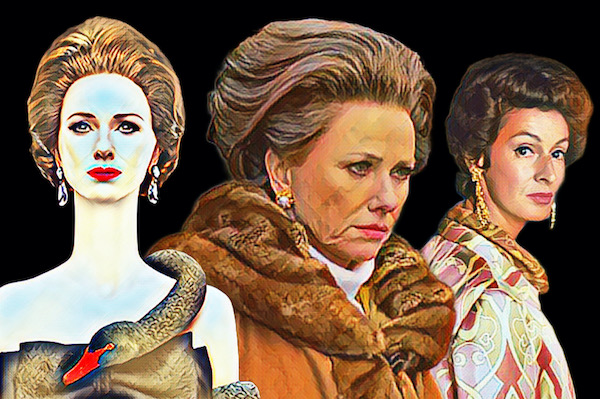
Who was Babe Paley?
If Truman Capote used the word perfection twice to define Babe Paley, it is necessary to consider that she in fact was what she seemed to be. Her publicly recognized elegance included her conduct in all aspects of her life: social or personal. She hid behind smiles and perfect dresses an unhappiness and disappointment that would come to light with the publication of the chapter Le Côte Basque 1965, which appeared in Esquire magazine, anticipating what would become Truman Capote’s last book.
Truman knew what he was writing, even if many doubted what he really hoped to achieve with it. He was close to Babe and had privileged access to her and her secrets, but he chose to betray her without any shame. Did he believe he was releasing the weight from his friend’s shoulders by revealing what a toxic man her husband was? Today this current of defense could exist, but 50 years ago this was not the case. It was a shame for her that the world knew how she was used and abused by all the men around her (including the author).
By the time Truman met Babe, she was already married to CBS network founder William S. Paley (Treat Williams, in his final role). In fact, she was the trophy of this ambitious man who many feared because of his power. To help you imagine who he was, think of Logan Roy (Brian Cox) from Succession: thick, unscrupulous, and dangerous. In the HBO series, Logan married English noblewoman Lady Caroline Collingwood (Harriet Walter) with the same goal of social advancement that Paley had when marrying Babe, but Babe was sweet and dear, very different from Caroline.

Born Barbara Cushing, nicknamed ‘Babe’, into a wealthy Boston family, she grew up as one of the perfect rich women in American society. With her sisters, she became known as part of the “Fabulous Cushing Sisters” and, as expected, they all married rich and powerful men, bankers, sons of presidents, and oil heirs.
Since the New York Dress Institute created its annual list of the 10 best-dressed women in the world, Babe Paley has frequently been among them, no less than 14 times. She was an original and natural trendsetter. One of the most cited examples she invented was tying a scarf on the strap of her bag. To this day it is imitated. She is also a pioneer of the high and low style because she mixed real jewelry with costume jewelry and her closet had exclusive pieces from Balenciaga, Dior, Valentino, and Givenchy. Yes, the stylists themselves. they felt prestigious if Babe was photographed with one of her creations.
Babe rarely smiled and was often photographed with her hand close to her face if they were close-ups, also to this day creating a style reference, even if the reason is that she did it to disguise the scars from a car accident that also broke her teeth. Plastic surgery and restoration were no problem for her, but she was still careful to disguise them.

Although it was a scandal, Babe’s first marriage ended in divorce in 1946. Alone with two children, it was not difficult for William Paley to win her over. He would soon also divorce Dorothy Hart Hearst, in turn, the ex of William Randolph Hearst (the inspiration for Citizen Kane and featured in Mank). Barbara was already a millionaire due to her separation, but having an influential husband was still important to her. And for Paley, her prestige was irresistible. Of ‘simple’ origins, he wanted definitive acceptance from New York society, but until then he had not joined the main circle. With Babe, he would have no rejection.
Whether there was affection between the two is another story. They had two children together and were married until she died in 1978. However, as Truman Capote’s text made clear, Paley cheated on Babe left and right. She accepted the situation, quietly, pretending to ignore the escapades. The Paleys’ luxurious life included homes in Jamaica, the Bahamas, a farm on Long Island, a house in New Hampshire, an apartment in New York, and an exclusive suite at the St. Regis Hotel in the same city, used as a “refuge” that was the setting for one of the most scandalous revelations in the Le Côte Basque 1975 chapter.
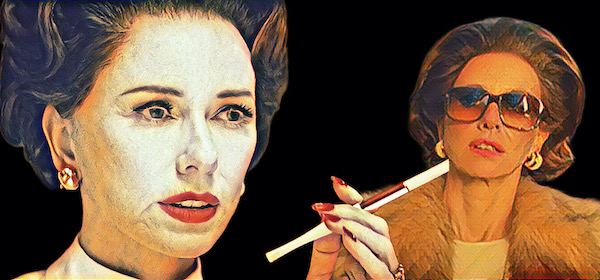
Babe’s friendship with the writer was born out of a misunderstanding. When producer David O. Selznick and his wife, actress Jenniffer Jones, were invited to the Paley home in Jamaica for a weekend, they asked if they could take their friend “Truman” with them. Paley, assuming they were talking about former President Harry Truman, eagerly responded that it would be “an honor.” By the time the diminutive writer arrived for his flight, it was too late to turn back. What’s more, Capote was already considered one of the greatest American writers (he fueled the marketing of this brand by circulating in Hollywood with the stars) and he and Babe soon hit it off, instantly becoming best friends.
Just as she offered her husband acceptance, so did Capote. Alongside Babe, he was always flattered, circulating in a magical universe of glamour, parties, expensive lunches, and lots of gossip. This futility is exposed by the character Lady Ina Coolbirth, who shamelessly tells all the stories of her high society friends during lunch. Among the most egregious was a media mogul who has an affair and tries to wash a stained sheet before his wife gets home. Until then, only Capote knew the fact and who it really was. Babe never forgave the writer for using it as material for a book.

A heavy smoker, at that time she had already been diagnosed with the lung cancer that would take her life. In her final years, she meticulously planned her farewell. She gifted pieces from her jewelry and clothing collection to friends and family, wrapping each one in colorful paper. She personally selected the menu and wines to be served at the funeral lunch following her burial. But she never responded to any of Truman Capote’s numerous calls or pleas to apologize. And she never divorced Bill Paley, who was buried next to her when he died decades later.
Because of his feelings of guilt, Truman Capote went into a self-destructive spiral after the breakup. He alternated between arrogance (“What did they expect me to do?”) and sadness about the book. Not so much for the other swans, Lee Radzwill, for example, didn’t cut it like the others. But having hurt Babe made him feel more, so much so that his name was one of his last words before he died. The unintentional poetry has achieved its objective – exposing American society – but at the price of tarnishing one of the most legendary muses of his time: Babe Paley.
Descubra mais sobre
Assine para receber nossas notícias mais recentes por e-mail.
 miscelana.com
1 comentário Adicione o seu