
King Charles III has been with the Crown for a mere 9 months and his health is already compromised. The announcement that he has cancer, without specifying more than that, surprised the world and his subjects because as Prince, he spent more than half of his life waiting for his mother, Queen Elizabeth II, to decide whether she would fulfill her promise to reign to death or not. She was a woman of her word and broke the record on the throne: no less than 70 years.
There are no mathematical expectations that Charles’ reign, now 76 years old, will be able to come close to his predecessor, but a reasonable estimate of at least 20 years (all Windsors are known to be long-lived). However, when in less than a year a disease as dangerous as cancer is made public, it could change everything. It’s only natural to speculate.
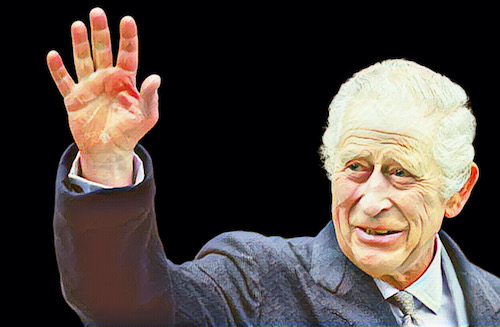
Whether Charles III, whose wait as heir was the longest in history in England, will have one of the shortest reigns is what has experts and journalists moving at the beginning of 2024. Partly because it will be up to him to decide, of course, once his words upon becoming King were “I solemnly pledge, for as long as God grants me, to defend the constitutional principles that are at the heart of our nation”. He was slightly more vague than his mother who promised to “dedicate her whole life” to the Crown. “As long as God grants” is a reference to a lifetime, but there is a technical opening to consider abdicating if you feel it is best for the Kingdom. Experts suggest that unlike Elizabeth II, who never made Charles officially regent, he could do this with his son, William, making a clearer transition than the one he experienced with the Queen. It will be?
Since assuming the Crown, Charles III has been trying hard to change the Monarchy, which clashed with his mother’s temperament, averse to change and attached to tradition. Constancy was Elizabeth II‘s strategy and something he swore to preserve (“Our values have remained and must remain constant,” he said in the speech), but he has also been trying to adjust.
For example, under his regency, there are fewer official members of the Royal Family working, and he has been more transparent – he talked about prostate surgery, now about cancer – while maintaining the “never complain, never explain” mantra established by the Queen. But it is precisely this most admired attitude of Elizabeth II that is not popular among the Monarchy and Generation Z, fans of social networks, inclusive speeches, giving their opinion (passionately) about everything, etc. Basically with the inverted mantra of ‘always complain and explain everything’ that neither Charles nor William were trained to follow.
One of the Queen’s principles that were modern in her time and now practically an obligation is what she said that she needed to be seen to be believed. For Charles, appearing in public is a reality that he enjoys, but his heir, William, seems to do not. With the diagnosis that will force the King to avoid public appearances, the demand for the Prince of Wales begins suddenly, who expected to have more time to get used to the exposure.
It is a fact that the public image of the Royal Family has been built precisely through appearances at ribbon cuttings, gala events, investiture ceremonies, as well as social media, but there is all the work carried out behind the castle walls (meetings with politicians, with the Prime Minister, signing documents, etc.) which demands the Monarch’s time and health. What is being established is that William, Princess Anne, Prince Edward, and Princess Sofia, who are next door to Queen Camilla, will include more of Charles’s public engagements in their diaries while his cancer treatment is ongoing. This certainly means the year 2024, which has barely begun.
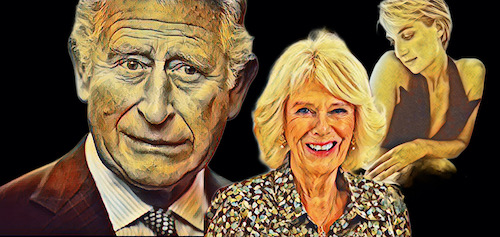
Times have been tough for the Royal Family, no one doubts that and I won’t go into details. The personal feuds between her sons and daughters-in-law, the shadow of Diana’s ghost lit by the series The Crown, and the scandal involving her brother, Andrew, are just some of the more public complications.
To make matters worse, William has bet on the strategy that worked for his father and Camilla, who went through 30 years of negative image to recently regain their popularity. The one who stands in the spotlight for her husband is his wife, Catherine, who suddenly left social commitments and announced that she would undergo a surgical procedure on her abdomen and would only return to traveling after April. A completely unexpected scare in the face of a drama that put the princess and her father-in-law in the eye of the storm at the turn of the year, when they were mentioned in a book as racist. As some argue, their silence cost them their health: days after Kate’s hospitalization, the King himself underwent prostate surgery. Ten days later, already at home and appearing at events, she announced that she had been diagnosed with cancer. As we know and already said, it is impossible not to speculate.
In his first year as King, Charles attended 425 royal engagements, second only to Anne who attended 457. Catherine was the one absorbing many of the appearances, but William – who apparently when younger questioned his destiny – will have to embrace it. Now. Immediately. Already. Experts question whether, amid changes in reigns, reducing these appearances would not be ideal, although this goes against the habit of young people who make their social networks private reality shows.
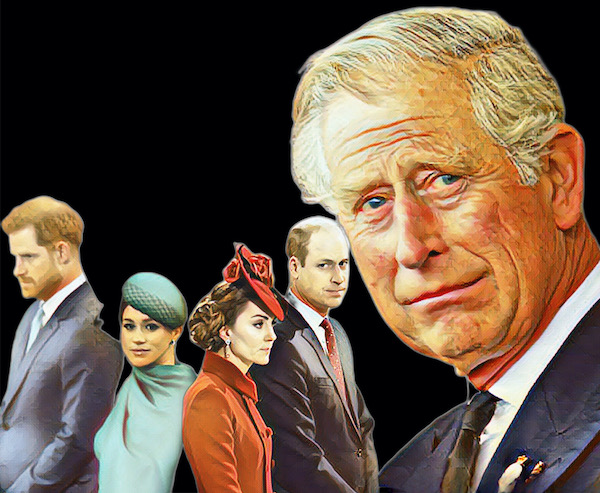
The irony of it all is that even under the specter of unpopularity planted by Diana, Charles never bothered and always enjoyed being in public. For Camilla and William, however, it’s a nightmare. Unsurprisingly, their break-up with Harry has only made a painful quest even more difficult for them, with Camilla having 3 decades of experience to fall back on. Today Camilla is popular and loved by a generation that did not live with Diana and that, even indoctrinated by The Crown, already had access to an image very different from that which her parents and grandparents had when Diana revealed the behind-the-scenes of her unhappy marriage. For William, who was personally trained by Elizabeth II and looks up to her, it is more challenging.
In recent years, to understand him, the general public (not just his subjects) has tried to decipher what moves the future King, what causes he is dedicated to, and what he is like as a leader. Charles always used the environmental flag even when it was far from popular. Diana embraced AIDS patients. Camilla to survivors of domestic violence. Catherine advocates for mental health causes, especially with children. And William? The two clearest are following his father’s approach to climate change and the one he learned from his mother, combating homelessness. But he is not yet directly associated with them, and if he takes on more real commitments, he will have even less time to dedicate to any specific cause. Would it be good or bad? The youth will judge him, but as any social activity comes up against politics – and Royalty cannot interfere in this field – how can the demands be balanced?
If Harry has a very public life, even outside of his duties as Prince, William is all about secrecy. There are no photos of his children other than the public occasions they are presented, there is no news or details about Catherine’s health. If there’s one thing he’s totally himself at, it’s being the opposite of his father, mother, and brother, more comfortable with flashbulbs and interviews than him. Apparently, if he can, when he is King one day, Catherine will do the honors and William will be restricted to palaces and bureaucratic functions.
Obviously, it is too early to conjecture about William as king, but there is still room to assess how and what Charles III’s legacy will be with the Crown. Apparently, the cancer was detected early and the treatment suggests a less invasive radiotherapy because the King will continue working, all of which suggests that the predicted 10 to 15 years on the throne remains a plausible possibility, perhaps even 20 years.

But the karma of the Windsors is somewhat clear, with very close and constant repetitions starting with the relatively recent example. Charles III’s grandfather, George VI, was only King because his brother abdicated the title to marry a divorced American. Even so, George VI reigned for only 15 years because lung cancer took his life. Elizabeth II, who then expected to only have to deal with the succession for at least another 20 years, became Queen at 25. And that, frighteningly, on the same date as today, 72 years ago. Even though many try to compare William to his father, it is with his grandmother that his life is clearly linked and mirrored. At least he is now 41 years old and has more experience than she did when she found herself thrust into the role that changed her life.
Again, however gloomy the facts may hint to be, nothing defines today that Charles III’s reign will be shortened, not even Nostradamus’ predictions. What is indisputable is that his reign is certainly one of the most turbulent within the Royal Family.
Interestingly for those who doubted him (yet another seed planted by Diana), his firm but open stance has been an important anchor in such conflicting times, particularly within his own palace. The memory of his mortality frightens monarchists more than would have been expected a few years ago. The historical account that arrived for Elizabeth II is now on Charles III’s desk and we don’t know how he will deal with it. Even though he will be off from the public scene for now, he remains the constitutional sovereign fully invested in all his usual activities. His official representatives are now Queen Camilla and Prince William, after April it will also have Catherine. Everyone will be watching History being defined before our eyes.
Descubra mais sobre
Assine para receber nossas notícias mais recentes por e-mail.
 miscelana.com