
The story of the rivalry between Coco Chanel and Christian Dior, in the period after the 2nd World War, was mentioned in Cristobál, the excellent Starplus series, as Chanel, who had closed her atelier during the Nazi period, ‘returned’ from retirement precisely when Dior launched her brand and became world-famous for creating the “new look”, which went against what she (and Balenciaga) prioritized for women: having a tight waist and full skirts. An exaggerated summary, but not far from the truth.
The New Look series brings a stellar cast to recount this period of immense creative richness in the fashion universe in a contextualized – and humanized – way of fights, nitpicking, dramas, heroism, and love, with beautiful clothes (obviously!) and revelations that many people forgot or didn’t know.
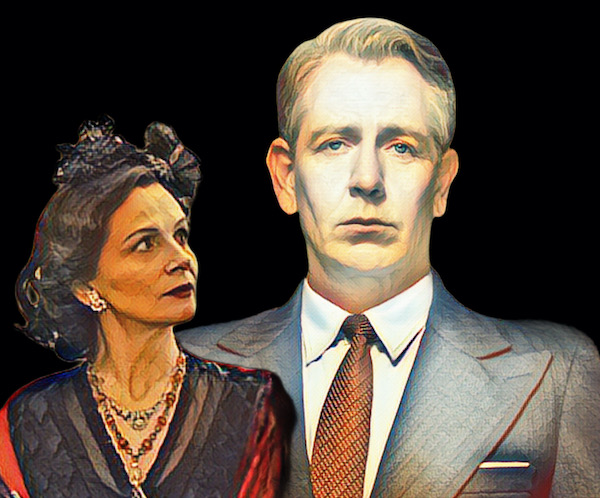
Christian and Catherine Dior: the heart of the series

This is because The New Look is about survival and the impact of the War on everyone’s lives and how the subsequent rivalry between Coco Chanel (Juliette Binoche) and Dior was born from the adversities of that period and this is cleverly the focus of the series. And it makes up for the fact that Ben Mendelsohn is so physically distant from Christian Dior since what he’s interested in is the drama.
In the first three episodes, we go back in time to see how in 1945, all the fashion designers were dealing with the paradox of continuing to live and not collaborating with the Nazis, whose women wanted clothes created for them by these fashion stars.
The first three episodes focus on survival
While in Cristobál we see that even Balenciaga “had” to work with the antagonists, in The New Look he is one of the resistant idealists. Christian, who worked for Lucien Lelong (John Malkovich), supports Catherine and her friends in the Resistance by painfully moving forward and creating dresses that only Nazis can afford. He is not a collaborator, but the fact that he does not react is a hidden problem for him at home.
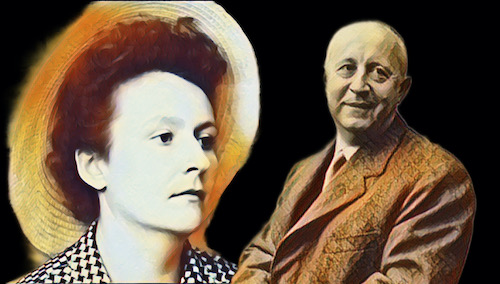
Maisie has a big role on her hands with Catherine, but although she’s good she doesn’t have anything in particular that sets her apart from previous performances. She puts herself at greater risk every day and is eventually captured by the Germans, leading Dior to despair and strive to do anything to save her. Therefore, when the series opens and he is questioned about not having stopped during the War, he explains that there are always two sides to the story and that creating (Catherine’s story was his secret for decades) was his way of resisting.
Which brings us to the brilliant and incredible Juliette Binoche as Coco Chanel. The designer’s collaboration with the Germans, including having been lovers with some, is one of the stains on her reputation and to this day generates reactions. She had Maison Chanel closed, of course, but The New Look series offers compassion for the designer’s choices, whose survivalist personality makes her use people and move forward, in contrast to Dior’s suffering and quiet sweetness in the story.
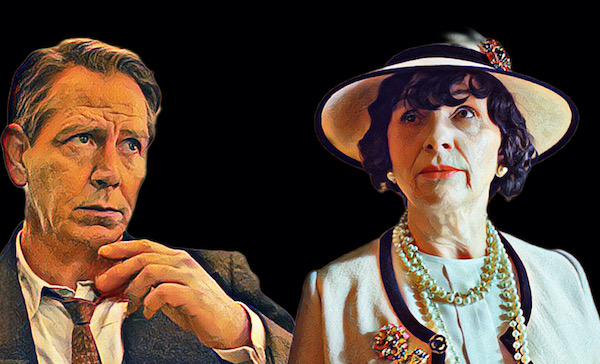
Coco and Catherine: two women with opposite decisions
Right away we see that, while Chanel dismisses Dior and his fame, the designer is softer towards her, even defending her when they remember her collaboration with the Nazis. Christian and Coco experienced the same drama, just as Catherine and Coco chose opposite paths.
Coco Chanel was a celebrity sought after by Germans at parties in Paris and circulated among them apparently without any problems. In fact, the series suggests, the proud designer would never show weakness or fear, she was in trouble with her (Jewish) partners, something that Nazism would conveniently ‘help’ her with, giving Chanel full control of her brand, and what’s more, he needed the Germans to save his nephew who was imprisoned and tortured for being in the French Resistance. For him, Chanel compromised her name and legacy.

The suggestion is sympathetic to her, of course, but here is Binoche’s brilliance: Chanel is not a good person, she is not empathetic and always turns situations in her favor. Her involvement with the Germans had weight in saving the lives of those she loved, but it was very convenient for resolving more delicate business issues as well. We see her getting more and more involved in dangerous situations just because she is scared, but, from the outside, never shows weakness.
Dior is less exposed than her in some ways, but when Catherine, who is pure idealistic, disappears precisely in the last days of occupation in Paris, he does what he can to try to save her, which is why he doesn’t see himself capable of judging Chanel. for the choices she made for the same reason.
It won’t always be like this, but for now it’s important.
Updated and period soundtrack
Each episode ends with a recording of a period standard by a contemporary artist, to illustrate the music of the war period. This is also uniquely elegant in The New Look.
An antagonistic Chanel
As we said, even more than Ben Mendelsohn, who is perfect as Dior, is Juliette Binoche who has the challenge of making us connect with the story’s antagonist. She is fascinating, reflecting all the paradoxes of the legendary designer’s personality.
Emily Mortimer‘s participation as Elsa Schiaparelli is another highlight of The New Look. The catwalk ‘fight’ may have been between Chanel and Dior, but it is with the Italian designer that the seed was planted.
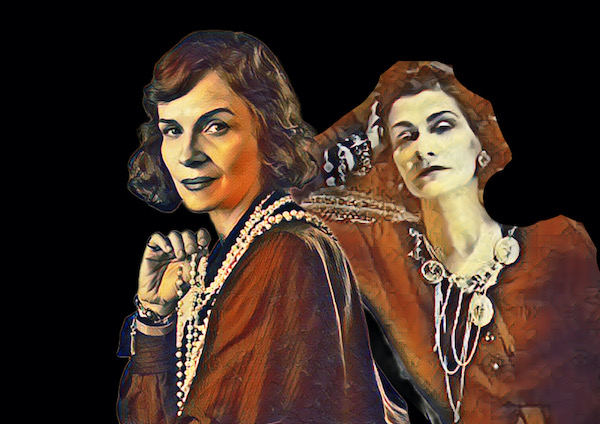

As shown in the episodes, alongside Chanel, Elsa was one of the most prominent figures in the fashion world between the two World Wars and one of the people who connected the French woman with important politicians and investors of the time.
But, before all this, it is with Schiaparelli – who witnessed Chanel acting as a Nazi spy – that the Frenchwoman’s legacy was irreversibly tarnished. The clash between the two is important, as neither is idealistic, both want to maintain a life of luxury, but it brings greater context to Binoche’s excellent work as a woman as complex as Coco Chanel. Everything that makes The New Look a great series to watch in 2024.
Descubra mais sobre
Assine para receber nossas notícias mais recentes por e-mail.
 miscelana.com