
In The New Look we will see the rivalry between Coco Chanel (Juliette Binoche) and Christian Dior (Ben Mendelsohn), on the catwalks and off, but, her real-life antagonist – Elsa Schiaparelli – is yet to appear. She is one that fashion fans know well, of course, especially Barbie fans, they know that hot pink was popularized by her.
The interesting thing about the series, largely thanks to Juliette Binoche‘s spectacular performance as Chanel, is understanding how the French designer, with a complex personality, was planting each of the conflicts, whether by her own decision or as a consequence of other decisions, provoked by circumstances of War. Among them, of course, is Elsa, and it is interesting and important to understand this conflict that placed two creative women in fierce opposition.
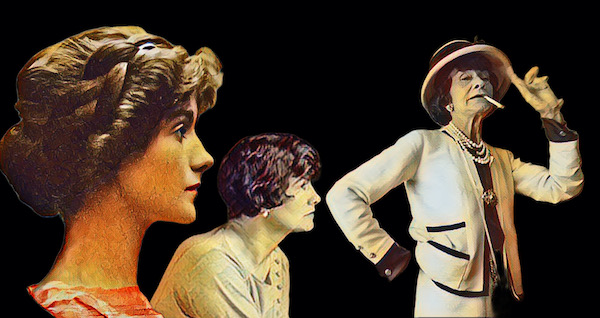
Who is Elsa Schiaparelli, who Chanel called “that Italian”?
Born in 1890, in the Corsini Palace, in Rome, Elsa Schiaparelli was a descendant of the Medici on her mother’s side, growing up and moving among European aristocrats and intellectuals. She dreamed of becoming an actress, wrote poetry, studied philosophy and always, ALWAYS, had a strong personality, getting what she wanted.
Schiap, as many called her, went to live in London just before the First World War and there she fell in love and got married. The union took her to New York, where, as in Europe, she circulated among intellectuals and painters. His only daughter, Maria Luisa Yvonne, was born in the United States, but when she had polio, lack of money and personal difficulties put an end to the romance and she soon returned to Europe, which, at the time, had more advanced treatments for the polio disease. daughter.
It was during this period that Elsa went to live in Paris and came into direct contact with Fashion. It all started with a trip to Paul Poiret’s studio, which was enchanted by the Italian woman’s style. From then on to drawing, it was just one step. Her freelance work gained momentum when one of her pieces was successful, a pullover with a “Trompe-l’oeil” image.
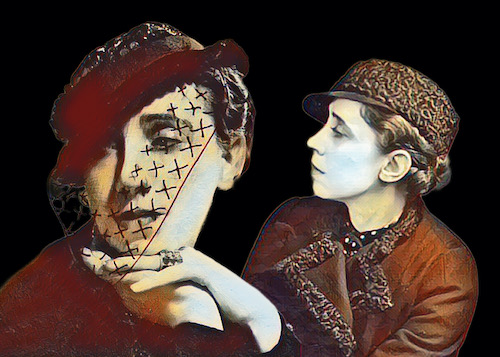
Suddenly, Elsa had ateliers and offices at number 4 rue de la Paix, in the epicenter of Parisian fashion, with sporty and colorful pieces, as well as other daring things that defined her as an innovator. In 1928 it was already selling in the United States, in another six years it was already on the cover of Time.
At that time, stars like Vivien Leigh, Greta Garbo, and Marlene Dietrich wore her brand, and women identified with her style. But the main one of all? Wallis Simpson, Duchess of Windsor, was the most famous woman of the time after she provoked Edward VIII‘s resignation from the British throne.
Surrealism and innovation ‘interrupted’ by the War
Elsa Schiaparelli had pieces – literally – of Art, mixing surrealism and structures in a modern and fun way. Without forgetting that she popularized and named the hot pink color in 1937, with the perfume Shocking.
The real shock came with the Second World War when Italy allied itself with Germany and Japan. Elsa’s citizenship became an obstacle, which only got worse with the Nazi invasion of Paris. Like the other designers, she tried to keep the ateliers running and preserve jobs as much as possible, but it didn’t work. Returning to the United States was the alternative.
Chanel is a rival, Dior an ally
Elsa and Coco were opposites in many ways, starting with the basic Chanel who hated hot pink and preferred black or white. They competed in a fierce market and as we know, competitiveness was oxygen in Paris.
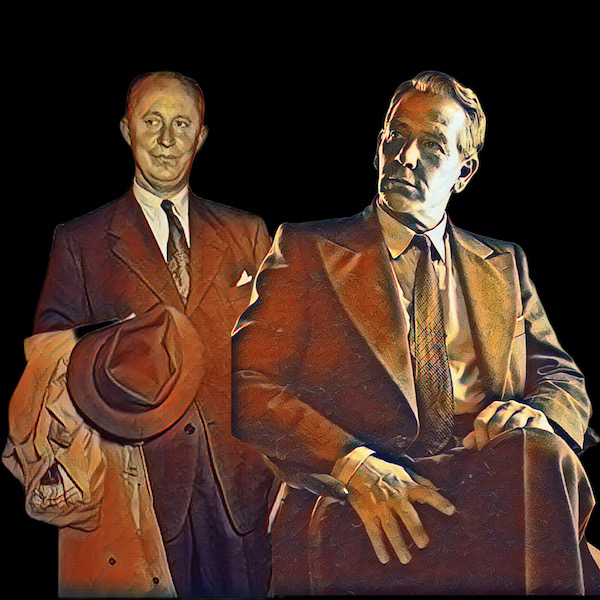
After the War, the designer returns to Paris and hires Pierre Cardin, who signs his first post-war collection in September, with the high-neck silhouette. Two years later, it was Hubert de Givenchy who began managing the brand, precisely at the time when Christian Dior launched the New Look, which had the support of Schiaparelli (and criticism from Chanel, of course).
In 1951, Givenchy was chosen by Schiaparelli as his successor, but he soon left to create his own brand and Philippe Venet took over Givenchy’s position.
How did Elsa die?
Retired, Elsa Schiaparelli died of natural causes, while sleeping, in 1973, at the age of 77, in Paris. She had already released her biography, Shocking Life, and only maintained her perfume line. Elsa is the grandmother of actress Maria Berenson and one of the biggest fashion designer influencers today. She was even the subject of the Met Gala in 2012 and an exhibition at the Metropolitan Museum of Art.
Not everything will be in The New Look, but it’s much more fascinating when we know, isn’t it?
Descubra mais sobre
Assine para receber nossas notícias mais recentes por e-mail.
 miscelana.com
1 comentário Adicione o seu