
In its first three episodes, The New Look did more for Chanel than Dior, without exploring exactly how the two designers, Coco (Juliette Binoche) and Christian (Ben Mendelsohn) would come to antagonize bitterly in the post-war period, with the success of Dior ‘forcing’ Chanel out of retirement, to, in her words, “save” Fashion.
Every trailer for the series reinforces the conflict, but we don’t get close to it until halfway through the season. Almost the opposite: when starting the flashback to address a sensitive point – how to survive the War and maintain idealism – the series embarks on everything except Fashion and the fight between designers.
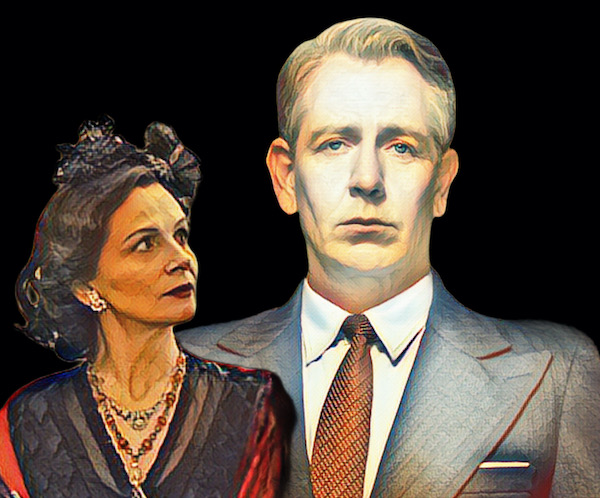
Working for Lucien Lelong (John Malkovich), Dior continued working and dressing the wives of Italian and German generals while Chanel, in theory refusing to do the same when closing her atelier, went further by becoming romantically involved with Nazis in the final stage of the war. Therefore, The New Look argues that they were both on the same side in ignoring resistance out of love: Chanel and Dior went to great lengths to save those they loved (her nephew, Andre Palasse, and her sister, Catherine (Maisie Williams), imprisoned by the Germans and sent to a concentration camp).
Juliette Binoche has had the advantage so far: Chanel is complex, dramatic, and with the most challenging arc: as she was exposed as a Nazi collaborator, her legacy was tarnished by what The New Look suggests are the consequences of a personal sacrifice and the denunciation of a former friend: Elsa Lombardi (Emily Mortimer). Was it really like that?
Who was the inspiration for Elsa Lombardi?
Elsa Lombardi was actually called Vera Bate Lombardi, the use of the first name the same as Coco Chanel‘s enemy in Fashion, Elsa Schiaparelli is confusing, even if Vera also became a former friend, as we see in the series and it is true.
With the humor and wit typical of actress Emily Mortimer, “Elsa”’s role in the plot is both funny and tragic, reinforcing Chanel’s narcissism, which she simplifies as “survival instinct”. We will see that one thing does not eliminate the other.
The real “Elsa Lombardi” was born in London as Vera Nina Arkwright, in 1883, from a noble family and active in British society. There are suspicions that this ancestry with the nobility came from a very strong bond, as some suggest that she may have been the illegitimate daughter of someone from the Royal Family, as she even circulated with the crown prince, something that made her particularly more interesting to Coco Chanel.

Because her wealthy first husband was an American, Frederick Bate, who was an officer in the American army, Chanel and Vera met during the First World War, in Paris. Bridget Bate, their daughter, was born soon after, but shortly after 10 years together they separated when Vera met her second husband, Alberto Lombardi.
As an officer in the Italian army, Alberto was part of the Italian National Fascist Party and his wife also became a member, putting the two in direct contact with the dictator Benito Mussolini. In the first years of the world conflict, Vera enjoyed the benefits of her husband’s political position, but soon everything would become minimally problematic.
As a British citizen and one with such important relationships, Vera became suspected of espionage, although nothing has been proven on this side. It was because of Chanel that she carried out a poorly explained and suspicious action, today known as Operation ModelHut.
An important connection before and during the War
It was because of her friendship with Vera that Chanel gained access to the British aristocracy. The two got along so well that it is said that it was the Englishwoman who inspired Coco for some of her looks and in the 1920s she became an ambassador for the Chanel brand in Great Britain.
When the war broke out, the two were already apart and because of her marriage to Alberto, Vera lived with every possible luxury in Rome. But towards the end of the War, things were a bit difficult for her. Due to her prominent presence at the British Embassy in Rome, Vera was viewed with suspicion by allies and fascists.
In 1943, Vera was arrested and held for a week in an Italian women’s prison suspected of espionage, being released by order of the German police in Rome only when Chanel needed her help for something bigger: actually being a spy.
What was Operation ModelHut and what went wrong
It is not a fact, as The New Look shows, that Coco Chanel was singled out by the Germans to collaborate with them due to some kind of veiled threat. On the contrary.
When the Germans invaded Paris, Chanel ostensibly closed all her stores in support of France but moved to live in the Hotel Ritz on Place Vendôme, where all the high fashion Nazi patent was fixed too. In this ‘forced’ coexistence, she developed a relationship with Hans Günther Von Dincklage, or “Spatz” (Claes Bang), who involved her in the controversial Operation ModelHut and other reprehensible actions.
Documents discovered in 2014 show that the designer effectively used her influence with the Nazi government to use anti-Semitic laws to her advantage and topple Jewish competitors in the French perfume industry. What is not clear is how she ended up becoming a Nazi Mata Hari when trying to reach Winston Churchill at the end of the War.

The context of the operation is as follows: in 1944, it was already clear to many that Nazi rule was numbered and that the Allied Forces would invade France at any moment. As an aide to SS leader Heinrich Himmler, Spatz used her lover, Coco Chanel, to negotiate a peace treaty with the English without Hitler’s knowledge. Chanel wrote a letter addressed to the Prime Minister and needed someone to deliver it to the British embassy in Madrid, Spain. Hence, as we saw in The New Look, she needed Vera’s ‘help’.
With the power of Himmler and Spatz, Vera was released from her prison for espionage and taken to Paris where she was briefed on the plan. Officially she would be traveling on business to discuss the opening of new Chanel stores in Madrid, but the important thing was to leave the letter for Churchill at the British Embassy. Easy, right, agree? Not so much.
Upon arriving in Madrid, Vera Lombardi went to the British Embassy as agreed, but once there, she named Chanel and Spatz as Nazi spies instead of negotiating Peace. Chanel and Spatz fled, but Vera was unable to leave Madrid until 1945, more than a year later.
How Vera died and Churchill helped both women
Chanel’s life was terrifying on both sides: she failed the Nazis and was persecuted in France as a war criminal. She fled to Switzerland and when her trial day arrived, it was through the direct influence of Winston Churchill that she was acquitted.
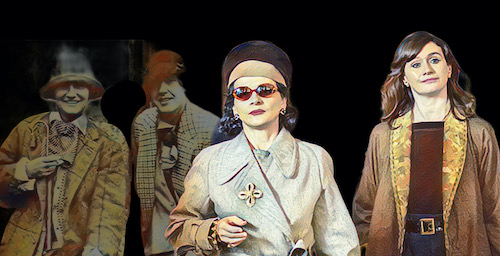
Vera had a more tragic fate. Unable to leave Madrid, she asked Churchill for help, who took more than a year to help her return to Italy in 1945. Two years later, Vera Lombardi died, aged 60, of unknown causes. Although it may have been natural, some raise the doubt of retaliation as the real reason for her death. Uncertainty fuels the imagination.
Her quick stint in The New Look is relevant precisely because it was so important in this dark chapter in Chanel’s career. The elegant but inefficient spies of the War days.
Descubra mais sobre
Assine para receber nossas notícias mais recentes por e-mail.
 miscelana.com
2 comentários Adicione o seu