
The 19th century was a great period for Classical Dance, with some of the greatest legends passing through the stages, from Marie Taglioni, and Carlotta Grisi to Fanny Elssler, there are several icons. The romantic period where the people who ‘invented’ classical ballet lived together.
If Marie Taglioni was the first superstar, Fanny Elssler had admirers on a similar level, and she is credited with having revolutionized dance. Witty and skillful, she had a more beautiful edge than Taglioni’s and a charisma that heated up the presentations. In pre-digital and binary times, the two engaged in a fierce rivalry. Today we will focus on Fanny, who passed away 140 years ago, but still fuels our imagination.
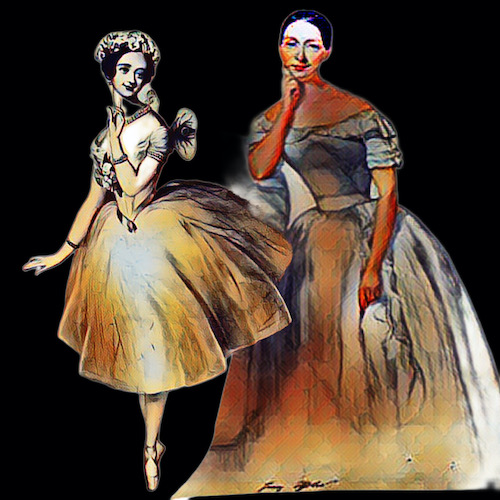
Vienna: the capital of music and the birthplace of dancers
Like Marie Taglioni, Fanny Elssler was born in Vienna (six years later) and was the daughter of people linked to Art. Her father was a copyist for the composer Joseph Haydn, which puts little Fanny close to great names since birth.
Her parents wanted her to be an opera singer, but little Fanny just wanted to dance. Since she was a child, she was trained in ballet, debuting on stage before she was even 7 years old. Her initial partner was her sister Therese, two years older, and a class partner as well.
For the Elsslers, Fanny and Therese were destined for fame and they studied with the best Austrian teachers, being sent to Italy when the dancer turned just 9 years old to improve her technique. This Italian season was important in determining that at the ages of 17 and 19, the two left Vienna to settle in Naples. Once there, Fanny began to stand out more.
Romance and Fame: the Italian season
Fanny Elssler – who would later always be referred to as the person who brought sensuality and theatricality to ballet – gained fame on and off the stage. In presentations, she already demonstrated that she was better than Therese, but their friendship remained unchanged for a lifetime.

Beautiful and cheerful, Fanny aroused passions among European nobility, collecting novels. The first and most notorious was with Leopold, son of Ferdinand IV, prince of Salerno. Even with a large age difference between them (20 years), she became his lover and became pregnant, needing to return to Vienna to hush up the scandal. The son was placed in a foster home.
Fanny’s next lover was another much older man, this time the statesman Friedrich von Gentz, who committed himself to educating her intellectually. With him, Fanny improved her German and learned to speak French. She was devoted to him and stayed by his side until his death in 1832, giving up advantageous contracts to be with Friedrich.
She then fell in love with the dancer and colleague Anton Stuhlmüller, famous in Berlin and with whom she became pregnant. Without being married and once again exposed to a scandal, the Elssler sisters went to London where Fanny gave birth to a girl who was taken in by the couple George and Harriet Grote, who adopted little Theresa for the next nine years, when Fanny finally decided to embrace her biggest challenge: dancing in Paris.
Elssler versus Marie Taglioni: rivalry in pre-binary times
With success wherever she performed, it was only a matter of time before Fanny was invited to join the biggest company of the time, the Paris Opéra Ballet. The one who reigned supreme in Paris was Marie Taglioni and the arrival of a younger dancer generated the rivalry that the public and critics wanted.
Marie and Fanny could not be more opposite in temperament and style, something that was clear and created the drama that brought audiences in pre-mass culture times to choose sides. The Opéra management undoubtedly saw the opportunity and hired Fanny as principal, displeasing Marie, naturally.


It was natural for comparisons and insecurities to arise. Marie didn’t have the physique for ballet – she had long arms and a hunched posture – and as a result her father, Filippo Taglioni, created steps and choreographies where he disguised his daughter’s ‘flaws’, highlighting her qualities with light steps, jumps and waltzes, like the baloné: a step in which she jumped into the air extending one leg forward, to the side or backward and landed with the extended leg touching the ankle. Marie’s biggest revolution in dance, besides these new steps, was bringing the pointe shoe to ballet. They were used in La Sylphide, to highlight the spirituality of the role, but were adopted for all performances afterward, changing the dance forever.
Fanny Elssler, whose strong personality also differed from the shy Marie, soon stood out for her precision in the Allegro, where she shined in small, quick steps, which became known as “dance tacquetée”. At this point, the strength in her feet also helped the newcomer, whose point is praised and recognized to this day. Youth, agility, sensuality, beauty, and above all, novelty, helped Fanny Elssler to eclipse the legendary Marie Taglioni for a time.
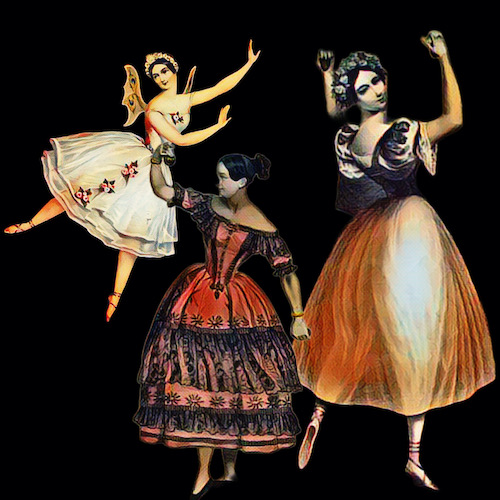
While fairies and spirits were Marie’s favorites, considered by historians to be the best of the two, Fanny opted for more earthly dances. When in 1836 she danced the Spanish cachucha with castanets in the ballet Gide Le Diable boiteux, she became the world’s biggest ballet star. And Paris would soon be too small for both of them.
Fanny Elssler: Europe has become smaller and Dance arrives in the United States
Today we could question the campaign that the poet Théophile Gautier, in love with Fanny, created by calling her the “pagan” response to Marie’s “Christian” form, with Elssler herself dancing La Sylphide, the role created by her “rival ” while the converse was not the same.
The truth is that we realize that little has changed: men fueled the division between women, highlighting beauty versus ugliness, sex versus modesty, and worse, old age versus youth. The six years that separated the two dancers were used ‘against’ Marie, in the eternal quest to create and tear down idols, but Fanny profited from it.
After he shined in Gide Le Diable boiteux, typical dances (which always had a place in ballet) became fashionable, especially the Spanish dance. Ahead of the trend, Fanny expanded the repertoire by bringing in Polish steps in the Polish Cracovienne (Krakowiak) and the Italian tarantella, which she learned in her years in Naples.
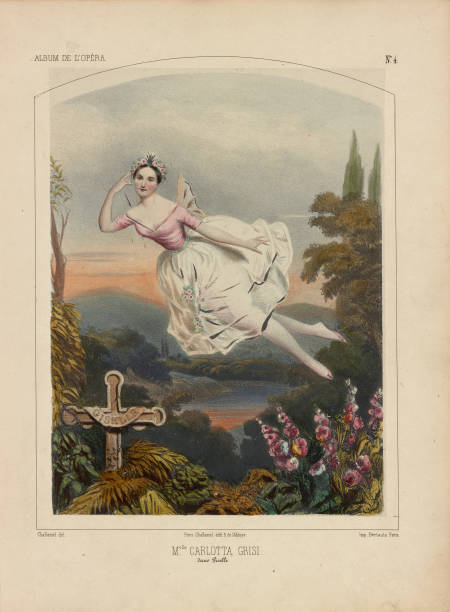

If Marie Taglioni made white tulle her signature, Fanny liked strong colors, with satin and lace costumes, borrowed from Spanish culture. But what made her stand out even more was her theatrical ability, which she used with fervor to bring a dramatic aspect to her performances. She not only outperformed Marie in La Sylphide, but Carlotta Grisi in Giselle, where she added unique dances to her performances. In times of worship of ballerinas, Fanny Elssler‘s temple quickly became full of passionate fans and Europe was not big enough for her to occupy the stage. She decided to travel to America.
Her tour of the United States began in 1840 and took two years, traveling across the country and establishing his name as the greatest reference in classical dance for an audience not yet familiar with the art. She – literally – stopped the country, being escorted by the President’s son and even closing Congress so that no one would miss her presentation in the American Capital. The collective hysteria is recorded with tears and declarations that no one has overcome it. Fanny Elssler was, at that moment, the greatest of all.
Rich and famous, the years of Elsserlermania
Between 1840 and 1842, Fanny Elssler was like the Taylor Swift of ballet, idolized, millionaire, and unsurpassable. She earned more than a thousand dollars per appearance and lent her name to products that earned her books under the Elssler brand: from champagne, bread, and cigars to many others. She was the biggest pop celebrity of the time, with rich and powerful lovers, and a star.

Returning to Europe did not change this status, and Fanny performed in Germany, Austria, France, England, and even Russia. Therefore, when the opportunity to bring together the four biggest stars in a performance arose in 1845, expectations went through the roof.
The Pas de Quatre, which to this day is danced by the greatest of each company, was the idea of Jules Perrot who managed to convince Marie Taglioni, Carlotta Grisi, and Fanny Cerrito to participate and needed Fanny to complete the group. But, after some time of negotiation, Fanny refused. Certainly, the “age” criterion, which gave Marie the greatest prominence of being the last to sing, that is, the one with the greatest prestige of the night, contributed to Fanny’s decision not to bow to her.
At that point, money wasn’t a problem for her, even less fame, and she didn’t consider the work or wear and tear interesting (in fact, behind the scenes there was a war of egos). Instead of dancing with her ‘rivals’, Fanny was replaced by the Danish Lucille Grahn and continued with increasingly sporadic performances, gradually stopping dancing.
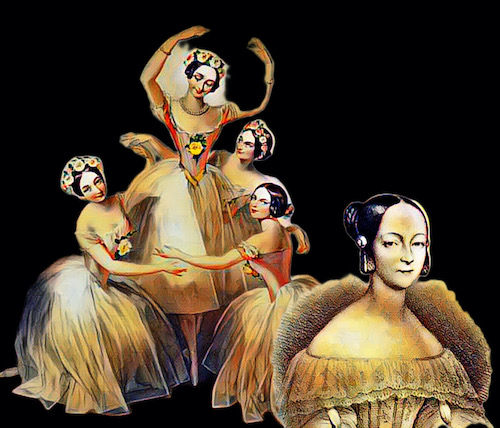
Retirement and Death
If there was an important woman in Fanny’s life, it was her sister Therese, who was part of her troupe across the United States and was always with her throughout her life. The two debuted and said goodbye to the stage together, but while Fanny remained single, Therese married a Baron and gained the title of Baroness von Barnim.
Away from the stage, Fanny settled near Hamburg for three years, only returning to Vienna to reconnect with her son, Franz. But he committed suicide in 1873, aged 47. Five years later, she lost her beloved sister.
At least the daughter Theresa, always devoted to her mother, went with a baron and had a daughter, named Fanny in honor of the ballerina.
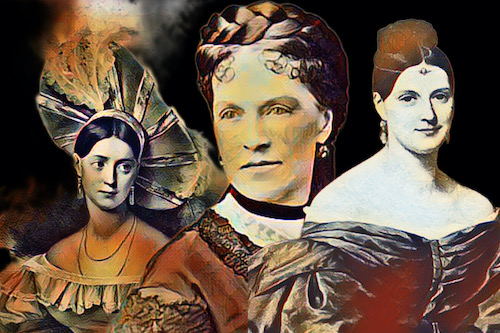
Just six years after Therese, Fanny Elssler died, of cancer, on November 27, 1884 (just six months after Taglioni). She was 74 years old.
Fanny Elssler’s image was so strong that when cinema was created, two biopics were made in her honor: Fanny Elssler, in 1920, with Lya Mara, and another film of the same name in 1937, with Lilian Harvey playing the dancer.
In her obituary, Fanny’s “violent passion for dancing” was a phrase they used to determine how at just 5 years old she already knew what she wanted to do. Her dance and her life confirm the intensity with which she lived her days. Her legend fascinates generations to this day. A star like few others in the world of Art.
Descubra mais sobre
Assine para receber nossas notícias mais recentes por e-mail.
 miscelana.com
1 comentário Adicione o seu