
In the 1980s, the series Shogun, divided into six episodes and starring Richard Chamberlain, was a worldwide sensation, bringing the exoticism of the East, adventure, and a historical basis to a fascinating drama of religious, political, and cultural conflicts. It wouldn’t be wrong to summarize the series as a mix of Game of Thrones and Japanese Vikings, taking away the magical elements of GOT. Therefore, the remake 44 years later is nothing less than a great opportunity to revive a phenomenon.

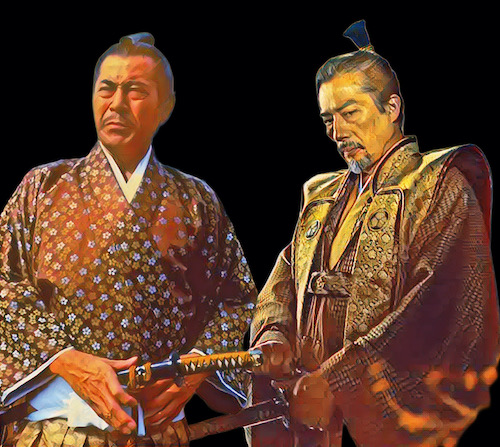
Just as Game of Thrones was inspired by the War of the Roses period, writer James Clavell created Shogun to portray a feudal historical period where civil war decimated important houses of Japanese nobility. The western thread is Captain John Blackthorne, inspired by William Adams, an English navigator who participated in the Battle of Sekigahara in 1600. It is through Blackthorne’s eyes that we see the Portuguese – who dominated the seas and Japan – as antagonists, Catholicism as a threat, and the various and complex cultural layers of a feudal period with Samurais and a strict code of honor. It has action, it has drama and suspense, it has everything to make it a fever again.
The Englishman who became a samurai
In 1975 James Clavell was already renowned thanks to his scripts in films such as The Fly, The Great Escape, and To Sir, With Love, but he would go on to create his most iconic when studying with his daughter, he saw a sentence in his history book: “in 1600, an Englishman went to Japan and became a samurai”. Unable to forget it, he dedicated himself to developing this – true – and fascinating story. Thus was born Shogun.
Following in the footsteps of Adams, who arrived in Japan in 1600, Clavell brings to Western culture the fascinating Japanese feudal culture, with the power struggle. Shogun is a commander who leads powerful military forces, therefore in the feudal period, he effectively had more strength than the Mikado (Emperor) in practice they were the true rulers of the country, at least until the abolition of feudalism in 1867.

In the book, as in History, when the navigator arrived in Japan, he ended up getting involved with the Tokugawa Shogun, but behind the scenes, the Portuguese wanted to colonize Japan in the name of Catholicism as well as the political machinations of shoguns seeking military dominance. This is because when the heir of Japan’s late supreme leader is still too young to rule, the five daimyōs chosen to help him are unable to work together and begin to fight each other. Due to Portuguese influence, the groups are divided between Christian daimyōs (who want to expand the religion) and daimyōs who oppose Japanese Christians, as they have foreign beliefs. For them, converts are traitors who demand punishment. A perfect setting for a great romance.
From the pages to TV and now 11 years to the remake
In the 1980s, TV didn’t have the prestige it has today, but the density of Shogun couldn’t be summarized in two hours of film, it needed at least six, which is why the large production made such an impact. It is still, even more than 40 years later, the biggest audience in NBC history.
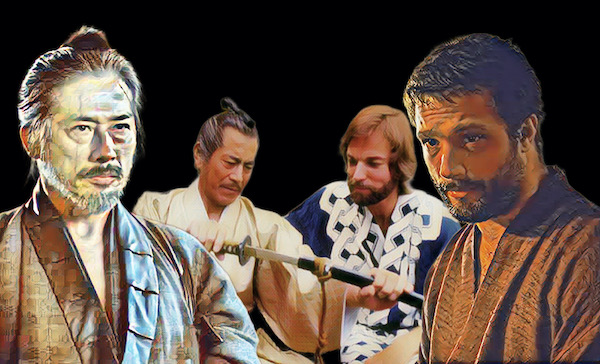
To play Blackthorne, the author wanted Sean Connery, already “released” from the role of James Bond in cinemas, but who turned down the opportunity (certainly because it was for TV). Roger Moore, still 007 in cinemas then, didn’t accept either and then the great American star of the time, Richard Chamberlain gained the opportunity to once again have a legendary character in his career.
Although it had Japanese stars in the cast, such as the great Toshiro Mifune, as well as actress Yoko Shimada, for many years it was the image of the white actor that marked the audience of Shogun, something that the 2024 version will have balanced better. For a similar and not-so-distant example, the film The Last Samurai referred to Ken Watanabe, but Tom Cruise was in the poster and in most of the scenes. Okay, “Tom Cruise is Tom Cruise,” but still the title wasn’t about him.
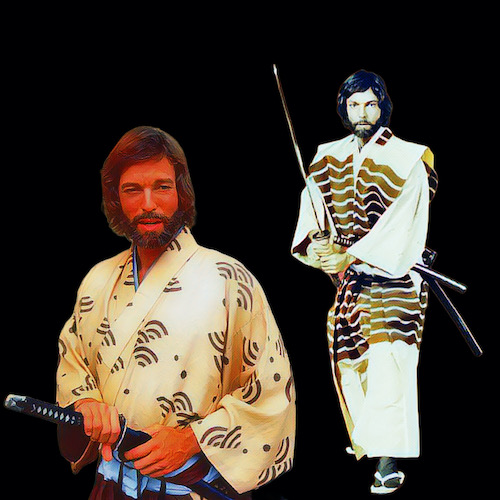
In the 1980 version, unlike the book, which gives space to Japanese characters in scenes where Blackthorne does not appear, everyone is secondary. In 2024, they take center stage when they lead the plot and speak in Japanese, without needing dubbing or speaking in English. It’s much more authentic.
The proposal to rescue the fascinating story, perfect for consumption on platforms, took 11 years, two different showrunners, and the conversion of platforms to be successful. There will be 10 episodes, in Latin America, a highlight for StarPlus.
Cast updated with current culture
With its world premiere on February 27, Shogun features faces known to the general public, such as Hiroyuki Sanada, who plays Toranaga and is a producer of the series (his name opens the credits). He is one of those dissatisfied with the 1980 adaptation, which, although recorded in Japan, was not concerned with historical accuracy. The 2024 version makes up for this shortcoming.

Cosmo Jarvis has another opportunity to achieve international stardom with the new John Blackthorne, and he has everything to be a “new” Travis Fimmell who made Ragnar Lothbrok even more legendary in Vikings. But it’s actress Anna Sawai who has the biggest challenge. She plays Toda Mariko, the wife of a samurai and interpreter of Blackthorne, a role that earned the recently deceased Yoko Shimada a Golden Globe for Best Actress, the first for an Asian actress in Hollywood History. And we haven’t even talked about costumes yet!
I’m excited and in Miscelana we will follow each episode. Don’t be scared by the character parades, we’re here to help!
Descubra mais sobre
Assine para receber nossas notícias mais recentes por e-mail.
 miscelana.com
1 comentário Adicione o seu