
In the opening week of Shogun, it would be impossible not to rescue the stories of the women in this saga that has enchanted the world for almost 50 years. The 1975 book arrived on TV in an award-winning series in 1980, but equally problematic.
Divided into six episodes and starring Richard Chamberlain, it was a worldwide sensation, bringing the exoticism of the East, adventure, and a historical basis to a fascinating drama of religious, political, and cultural conflicts. It wouldn’t be wrong to summarize the series as a mix of Japanese Game of Thrones and Vikings, without magical elements. Therefore, the remake 44 years later is nothing less than a great opportunity to revive a phenomenon.

The book by James Clavell, who was already renowned in Hollywood thanks to his scripts in films such as The Fly, The Great Escape, and To Sir, With Love, emerged from the most unlikely and commonplace situation. He was studying with his daughter, Michaela (producer of the 2024 series) when he saw a sentence in her book: “In 1600, an Englishman went to Japan and became a samurai”. He immediately set about developing this – true – and fascinating story. Thus was born Shogun, his most famous work.
Obviously, it was a story aimed at a male audience, especially because Japanese culture, especially in the 1600s, was not, how can we say, easy for women. Which doesn’t mean they were weak! In Shogun, we will see some of them interfering in the destiny of great lords and samurai. In fact, they are fighters themselves! And yes, you will get tired of Shogun’s references to the “Japanese Game of Thrones”, but they are inevitable. Even more so because, in some way, they “help” to decipher more quickly who is who within a culture as complex as Japan’s in feudal times.
In a male-suffocating universe, four women will stand out and I’m here to – avoid spoilers as much as possible – and help decipher the Shogun female world.

TODA MARIKO: Sansa and Arya Stark in one person
Of the trio of main roles in the series (including the two men here), it is actress Anna Sawai who has the biggest challenge of the entire cast. That’s because, in 1980, Toda Mariko’s incredible role earned actress Yoko Shimada the Golden Globe for Best Actress, the first for an Asian actress in the United States, in addition to being nominated for an Emmy.
If last year we had Michele Yeoh breaking the main barrier at the Oscars – the Best Actress Category – there is still a long way for other stars to establish themselves in Hollywood. Just to realize, the gap of over 40 years between Yoko’s victory and Michele’s is significant.
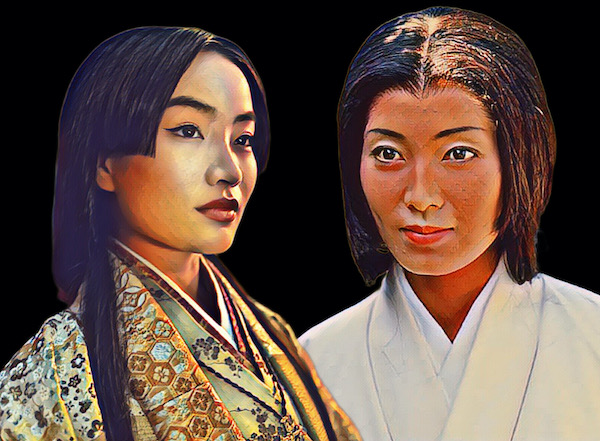

Furthermore, in the original Shogun, Yoko Shimada also gained prominence for being the only actress who spoke any English. His Golden Globe win brought great prestige abroad, but not so much in Japan, where the critical repercussion was negative due to the stereotypical view of the story. Just to imagine, although it is inspired by a real historical period in Japan, John Blackthorne (Richard Chamberlain in 1980, Cosmo Jarvis in 2024) led the plot.
Keeping an eye on the moment and correcting the past, the new version of Shogun gives the Japanese a leading role and Mariko herself will be even more active than the previous version showed. In other words, a great opportunity for Anna, who is a New Zealander by birth and raised in Japan. For those who are more attentive, it is worth remembering that she was in the cast of Fast and Furious 9, in 2021, in addition to participating in Monarch and Pachinko, series from Apple TV Plus. As “Mariko 2.4”, she will certainly gain more space in the American market.

The mysterious Mariko is, in fact, fascinating and cunning, as the initial episodes have already made clear and she is the main female character in the saga. When we meet her, she is already part of the faction that supports Toranaga Toshi (Hiroyuki Sanada), the main candidate for the position of Shogun. Even surrounded by great warriors, she is one of his most trusted people, we soon understand why.
The key to Mariko’s wit is the fact that for 14 years she has been considered the “daughter of a traitor” (did you understand the reference to the Starks sisters?) and in the culture of the time, not only he, but his entire family, had to commit seppuku (harakiri). Staying alive is the worst punishment because you have to live with the shame of your blood. Complex, but the rule applies to everyone without distinction of gender. And Mariko, as we know, did not die with her relatives.
To see if Shogun will go into greater detail about why his father, General Akechi Jinsai, murdered the dictator Goroda. Mariko was already married to Toda Buntaro (Shin’nosuke Abe), the son of Toranaga’s main general, Toda Hiromatsu (Tokuma Nishioka), a strong-willed, sexist and abusive samurai, but faithful to his Master. Modern women don’t buy what’s in the book, which says that Buntaro is in love with his wife, but he raped and beat Mariko because he could. Unsurprisingly she hates him. Seeing how abuse will be portrayed in 2024.
Returning to Mariko: when her family was punished, she was exiled for eight years to northern Japan, where she studied Latin, and Portuguese and converted to Catholicism. As a samurai, she is an excellent fighter and combines combat and strategy skills. In other words: our Lagherta (from Vikings).
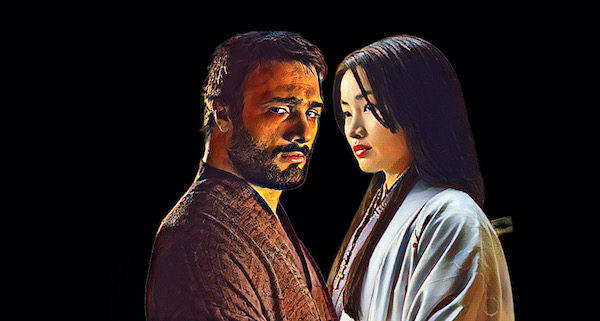
Throughout her story, her loyalty to Toranaga will be tested, as will her convictions when she and Blackthorne fall in love. Her participation is vital for the shogunate, and, unfortunately, I know I promised to avoid spoilers, but prepare yourselves: her trajectory is exciting. Her intelligence, altruism, and strength could easily place her in a stereotypical role, but Mariko always surprises us.
And one more detail: Mariko is inspired by a real woman, Hosokawa Gracia, a Japanese woman who converted to Christianity after her father murdered an enemy. The “real” Mariko never met the “real” John Blackthorne, the navigator William Adams, she died the same year he landed in Japan. But that’s what fiction is for, right?
OCHIBA NO KATA: a Cersei Lannister?
The character Ochiba No Kata (Fumi Nikaido) has more layers of gray and is in a position seemingly as oppressed as all women in feudal Japan. She is the mother of the heir, Yaemon, and former consort of Taiko, founder of the Council of Regents.
The book says that she has always been in love with Toranaga and so when the opportunity arises, she is given in marriage to him. Ochiba will do everything in her power to see her husband victorious, but her loyalty lies only with herself and her son, and she will do anything to keep him safe. Does Cersei Lannister come to mind? What a surprise…
But do you know what Ochiba’s main “problem” is? It’s just that Toranaga’s biggest rival, Ishido Kazunari (Takehiro Hira), is in love with her. This contributed to her envy and hatred of her fellow Council member and here is possibly her main motivation for trying to destroy Toragana. In a moment, Ochiba will have to make a choice and it will certainly determine Shogun‘s fate.
Like Mariko, Ochiba is inspired by a figure who existed in the period: Yodo-dono. A woman with a political interest who was crucial in the last resistance to her husband’s shogunate.
USAMI FUJI: An Important Ally
Actress Moeka Hoshi is also a Japanese dancer and is well-known in Japanese cinema and TV. In Shogun, she is Usami Fuji, Uragi’s widow, who in the first episode insults Kazunari and therefore commits seppuku and kills his son with her as well. Fuji, like Mariko, does not have the autonomy to choose who to marry and will be “given” by Toronaga to Blackthorne, as his consort.
She and Mariko, therefore, are in a love triangle with the foreign protagonist, and there is something extremely tragic in all of this. It’s complex for us modern Westerners, and Shogun explores this a lot, understanding honor in Harakiri. For Fuji, her life should be ended with her husband and son, so she asks, and it is accepted, that she can follow the procedure in six months. What will be an impossible moment for us, sorry for the spoiler.
To the mutual surprise of those involved, Fuji and Blackthorne live well together and she proves brave in battle. However, when friendship starts to possibly be love, that’s when she has to choose between honoring what she asked for or tarnishing her memory by staying alive. At least that’s how it is in the book, but we must prepare to see how the series will show it.
In general, Fuji plays the role of the “obedient and loyal wife”, virtues valued in feudal Japanese society, but it is with resilience and cunning that she not only survives but even thrives in a cruel environment.
KIKU: the geisha who awakens passions
Kiku (Yuka Kouri) is another important female character in Shogun. A beautiful and talented courtesan (a high-class artist specializing in traditional Japanese arts) is commercially and emotionally exploited by both men and women, representing the oppressed role of women in that period, especially if they were not nobles.
When one of Toranaga’s sons falls madly in love with her, he “buys” her to end his son’s “distraction.” However, he gives it up himself and presents it to Blackthorne. It is at this time, together with what he witnesses with the other characters, that the British navigator is introduced to the Art and social structure of the time. He will also be enchanted by Kiku, but their love will have insurmountable cultural barriers, since she is a courtesan and he is a foreigner, they cannot be together. For Yuka Kouri, who is in the cast of Tokyo Vice (Max) and Invasion (Apple TV+), it is another prominent role in the West.
Female representation
It’s complex these days to tell a story where women are used as commodities or political pieces, but, just like in Game of Thrones, this doesn’t mean they don’t have power or protagonism.
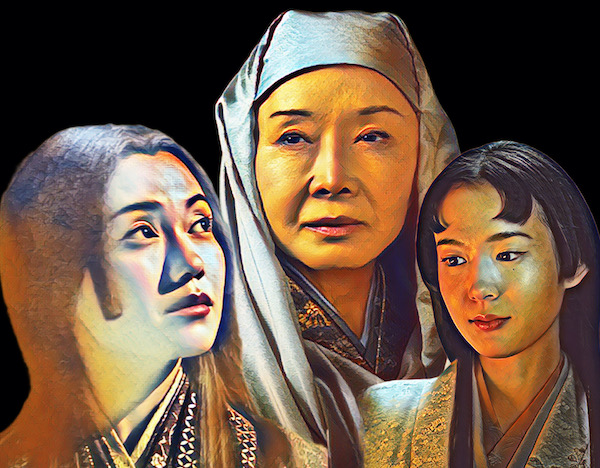
In a way, these four women represent something that has always deserved recognition. This is the fact that they are the ones who can tip the balance of power one way or the other, using intelligence and influence. Kiku, Mariko, Fuji, and Ochiba are therefore significant in the narrative, overcoming the social restrictions imposed on them. They are survivors in arid times for women. For the female audience, it can be an inspiration to understand and follow them breaking barriers in Shogun. I for one won’t miss an episode.
Descubra mais sobre
Assine para receber nossas notícias mais recentes por e-mail.
 miscelana.com