
No one will be able to surpass Walt Disney‘s record as the person who won the most Oscars in a lifetime. There were 26: four of them honorary and 22 wins out of 59 nominations (another record). However, among women, there is someone who surpasses Katherine Hepburn and who is a legend in Hollywood: costume designer Edith Head, who won no less than 8 Oscars in a unique career in the world of cinema. She would have had more because the Oscar for Costume Design was only created in 1948…
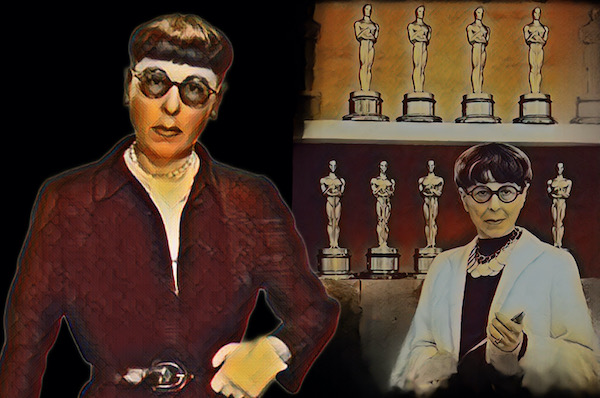
The first Oscar for the costume designer, who is responsible for countless classics on screen, was in 1949, for The Heiress, and the last was 51 years ago, in 1973, for The Sting. shortly before she died in 1981 In 5 decades and more than 400 films, Edith Head was nominated 35 times and her 8 wins place her as the biggest winner after Disney.
Short stature and high personality
In a world ruled by gigantic egos, the little woman who was barely one and a half meters tall was giant and respected. Edith pleased Greeks and Trojans, had an iron fist, and was the last costume designer to have an annual contract with a studio.
The costume designer’s versions of her youth and past were incomplete and varied, but the New York Times credited her origins as being born in California in 1897. Interestingly, she devoted herself to studying linguistics rather than fashion. She graduated with a degree in French from Berkeley in 1919 and a master’s degree in Romance languages from Stanford in 1920. She went on to teach French (or Spanish depending on the source) at private schools for women in California but quickly became bored and went to Hollywood.

Edith knew how to cut, pin, and drape, but she didn’t know how to sew on a machine – only by hand. Legend has it that she decided to risk a career in cinema when she saw an advertisement for a draftsman position at Paramount. Instead of bringing something of her own, in the interview, she “innocently” presented a portfolio of work “borrowed” from colleagues on the drawing course. The studio’s lead designer, Howard Greer, soon caught wind of the lie but still hired her. Maybe because of the boldness?
In 13 years she would replace him and over the years Edith would again be criticized for signing work by other designers, but she would stay at Paramount for 44 years. She might be small, but there was a creative monster
The unmistakable personal signature
Edith Head‘s career at Paramount was relatively quick. In 15 years she was the Head of the Department and if on the screen her looks were varied, in person she soon established her unmistakable signature: bangs, bun, two-piece suit (usually gray), and round tortoiseshell glasses with blue lenses (worn like that because back in the days of Black and White films, they helped understand how colors would be photographed). It became so iconic that it was the inspiration for several characters years later, such as Edna Mode from The Incredibles.

Described as having a “simple face and an affected, unchanging style”, she worked as a team for films still in the silent era, until, in 1933, she single-handedly designed the costumes for She Did Him Wrong, starring Mae West. The actress reportedly asked Edith if her dresses were “tight enough to show that I’m a woman, but loose enough to show that I’m a lady”, and from then on, even the public began to identify the costume designer’s name, so much so that she is credited with launching the sarong craze in the 1930s, when she designed the costumes for Dorothy Lamour in Jungle Princess, in 1936. In an attempt at humility, she claimed that her work was “almost accidental”, nothing so calculated. “I’m not creating styles or fashion,” she said in an interview.
Edith Head was not a couture designer and said that her work was “a cross between camouflage and reconstruction”. Her goal was to hide the flaws and highlight the beauty of the stars, and the precision of her work was precisely to ensure that the public would never see the details that were part of perfection. As she liked to remember, she had to cater to the tastes of producers, directors, and actors before her own.
Recognition and the 1st Oscar
Adored and feared by the stars, Edith Head‘s iron fist began to gain fame early on. The Oscar, created in 1927, only started to have a Costume Design category in 1948, and of course, she was among the first nominees, for The Emperor’s Waltz, but lost to Dorothy Jeakins and Karinska with Joan of Arc.
From 1949 onwards, however, Edith Head began her winning streak for her beautiful work in The Heiress, which also won the Oscar for Best Actress for Olivia de Havilland. What’s more: as the category was divided into Black and White and Color Films, she was nominated in more than one production on the same night, as in 1950, when she won for both All About Eve and Samson and Delilah.

The Grace Kelly and Audrey Hepburn connection
Edith Head was loved and hated by the stars, but she rarely spoke of them. It was later learned that she did not like working with Claudette Colbert, Hedy Lamarr, or Paulette Goddard, but, at the time, prohibited gossip in the workplace.
Two of the most iconic fashion references in cinema, Audrey Hepburn and Grace Kelly became famous on screen wearing Edith Head clothes, but with the future princess of Monaco the connection was stronger and it was with a blue dress created for the occasion that Grace received her Oscar for Best Actress in 1954. The ‘parade’ of dazzling costumes in Rear Window belongs to Edith who openly complained about having lost the Oscar for one of her favorite works with the actress, How to Catch A Thief.


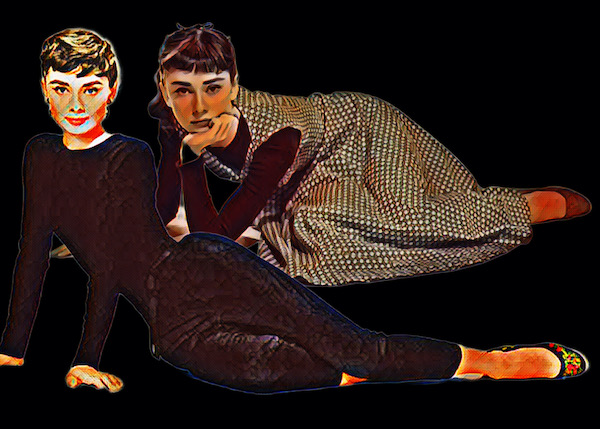
With Audrey, it was a little more complex. The two met in the film Roman Holiday, which won the actress an Oscar in 1953, and where Edith was “inspired” by Christian Dior models to create the film’s clothes. The European Audrey was more familiar with the world of haute couture and therefore much more demanding than her American colleagues. “Her trials are of the ten-hour variety, not ten minutes,” Edith would later write of the star. “She added some of her preferences to the sketches: simpler necklines, wider belts,” she commented.
But it was in Sabrina that conflict between them arose when Edith Head did not give up credits in the film, even though Audrey Hepburn’s dresses were by Hubert de Givenchy. To make matters worse, when she won the Oscar for Funny Face, the costume designer made no reference to his work, taking credit for the ensemble. After that, due to Audrey’s contractual requirement, the French designer began to be credited separately as responsible for the actress’s clothes.
For those who followed how she started her career, it comes as no surprise that Edith Head‘s ego was twice as tall as hers. She had already had problems with Oleg Cassini (who would later design Jacqueline Kennedy‘s wardrobe at the White House) when he began to make a name for himself at Paramount, where he was hired as an additional designer. As soon as possible, she convinced the studio that she could handle all the responsibilities without him.
One of the most amusing legends about Edith Head was the fact that she had a shelf built in her studio where she placed the eight Oscars in clear view, a way of making the stars think twice before considering themselves capable of making “suggestions” in their costumes, or as she preferred to say, served to “put difficult actresses and actors in a calmer atmosphere. It’s impossible (for them) to look at eight Oscars and say, ‘Now, look, Edith. . . .’ “she explained. Iconic!

As famous as the stars she wore
Without being an actress, director or screenwriter or even a producer, Edith Head was as recognized as her colleagues, a privilege enjoyed by few “behind the scenes” professionals. I have a particular passion for costumes for films and series inspired by her work during the heyday of cinema.
The costume designer broke another taboo when, at the age of 70, she moved from Paramount to Universal Pictures, and continued not only working – both for TV and Cinema – collecting awards. She received a star on the Hollywood Walk of Fame in 1974 and was active literally until her death in 1981.
Complex yet talented, Edith Head is rightfully legendary. She advocated simplicity above all else. She wrote books, gave lectures. Phrases like “You can have anything in the world if you wear the right dress” fuel her fame.
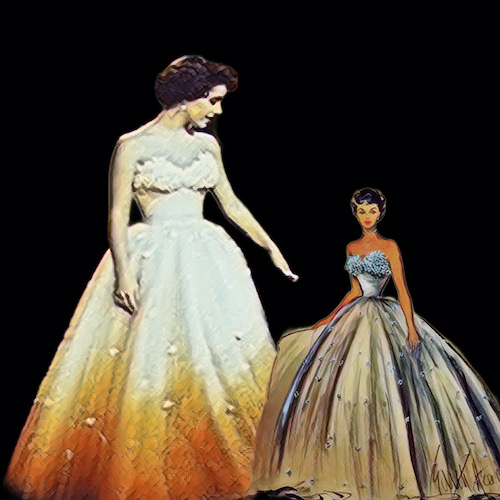
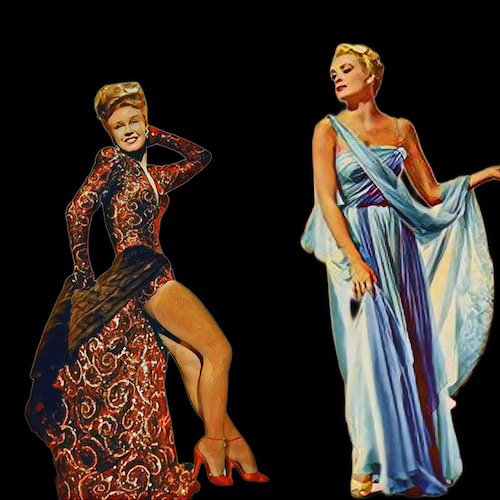
Among her most famous pieces are the mink skirt, lined with ruby and gold sequins, by Ginger Rogers in Lady in the Dark, in 1944, and Elizabeth Taylor‘s green and white dress in A Place in the Sun, in 1951. Of course, it has all the aforementioned Grace Kelly dresses, but Natalie Wood‘s 17 costume changes in The Last Married Couple in America, in 1980, which included nightclub outfits , American football and running were cited as an example of how even a year before her death, in one of her last works, Edith still proved to be in tune. Her last Oscar, however, was in 1973, for The Sting.
She was married for 40 years to Wiard B. Ihnen, the 1945 Oscar-winning art director for Blood About the Sun, who died two years before her. She passed away just days before her 80th birthday from myeloid myelobibrosis, a rare bone marrow disease. Even more than 40 years later, the small woman with a strong personality maintains her record of victories, one that demands respect and confirms the greatness of her Art.
Descubra mais sobre
Assine para receber nossas notícias mais recentes por e-mail.
 miscelana.com
1 comentário Adicione o seu