
The novel The Count of Monte Cristo, by Alexandre Dumas, turns 180 years old in 2024 and is to this day the source of inspiration for countless works of fiction, from the soap opera Avenida Brasil to the TV series Revenge, to name just two successes from recent decades. There are more than 15 film versions from 1912 to 2024, with the most recent adaptation of the story of a deceived man who returns to get his revenge.
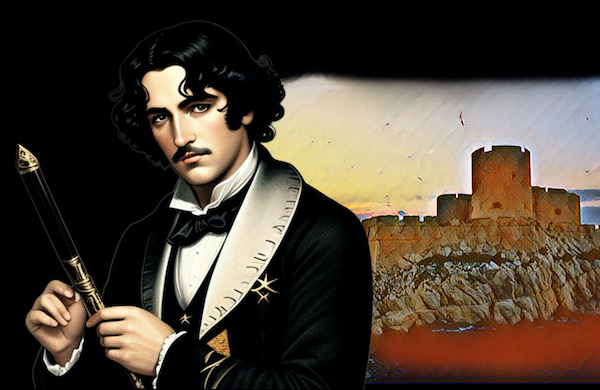
What brings timelessness to the work?
The combination of five basic elements contributes to making Dumas’ work so beloved and adaptable even more than two centuries later. Of course, he talks about very human feelings, but he uses them intelligently to create an intricate plot, with subplots and connected characters each one with their own motivations and secrets, making everything more unexpected.
The theme of revenge speaks to everyone who once felt wronged and is rooting for the hero, but no one is so flat: everyone is transformed, including Edmond Dantes who starts out naive and simple but transforms into the sophisticated and cunning Count of Monte Cristo, because It’s not just a physical change, but also a psychological one.
Another characteristic present in the writer’s books is having a remarkable historical moment as their setting. This is 19th-century France, during the historical period of the Bourbon Restoration and the July Monarchy, which locates us in time and gives us a fascinating insight into the political and social climate of the time. It adds adventure that brings rhythm and more emotion, always leaving us anxious (how Dantes manages to escape from prison, find the treasure are some of the classic and unexpected passages that have so many obstacles that generate tension and anxiety).
Without a doubt, having a novel in which the reader hopes to see a happy ending, in this case, the connection between Edmond Dantes and Mercedes.
In other words: complex characters, exciting plot, historical setting, and themes of revenge, transformation, and love. That’s why it’s always the basis of any serial!
The inspiration for the book: did the Count Exist? Yes!
We know that Alexandre Dumas loved to mix fictional characters with real ones, and almost all successful books were inspired by a real story, The Count of Monte Cristo is no different. Some historians suggest that the story is inspired by a real event in the life of Dumas’s father, Thomas-Alexandre Dumas, who was a general in Napoleon‘s army and who was unjustly imprisoned for a crime he did not commit.
But not quite. In fact, the experience at home already had the seed in him of wanting a revenge story, but it was when he learned of a real story, written by a Paris police archivist, in 1838, that Dumas found his “hero”. In the episode of Le Diamant et la Vengeance, by Jacques Peuchet, the writer saw the fascinating account of the story of Pierre Picaud, the “real” Count of Monte Cristo.
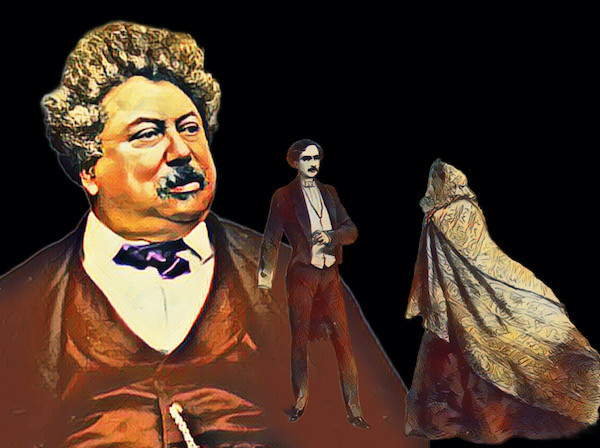
François Pierre Picaud was a shoemaker who lived in Nîmes in 1807, engaged to a rich woman, but who was falsely accused of being an English spy (France and England were at war). The accusers were three “friends” – Loupian, Solari, and Chaubart – jealous of what seemed like Picaud’s ideal life. There was a fourth, Allut, who knew about the coup but refrained from participating.
The shoemaker was locked up in Fort Fenestrelle for a long seven years, even though he was innocent. Only in his second year did he discover the (false) accusations against him and during his imprisonment, he opened a small passage to a neighboring cell and befriended a wealthy Italian priest called Father Torri, who was also being held in the fortress. The Italian cleric became so fond of Pinaud that he left him a treasure he had hidden in Milan as an inheritance. At that time, the French imperial government fell, Picaud was released in 1814 and soon took possession of the treasure that remained for him.
Now rich, Picaud returned to Paris but waited 10 years planning in detail his revenge against those responsible for his injustice.
The first to receive the return was Chaubart, whom Picaud ordered to stab with a dagger on which the words “Number One” were printed. Solari was the second, dying of poison.
Loupian suffered even more. Two years after Picaud’s arrest, he married his fiancee and fathered two children with her. So Picaud did this: first, he tricked his daughter into marrying a criminal, who he arrested. She was driven into prostitution and died soon after. Then, Picaud set fire to Loupian’s restaurant, causing him to go bankrupt. Still not satisfied, he manipulated Loupian’s son into stealing some gold jewelry and framed him for committing the crime, after which he was arrested. It was only at that point that Picaud stabbed Loupian to death.
And Allut? At this point, he identified Picaud and knew what was happening. Before it was his turn, he kidnapped him and seriously injured him in captivity. Picaud ended up being found by
French police and that was when he confessed to everything that happened – leaving an official statement – and died from his injuries. What a story, right?
There are other suggestions as inspiration, but generally, it is Picaud’s fascinating story that is accepted as the basis of The Count of Monte Cristo.
A literary classic, perfect for cinema and TV
The story of Edmond Dantès is seen as a cautionary tale about the dangers of seeking revenge, as his life becomes consumed by revenge and he loses sight of who he once was.
In the case of Dumas’s plot, Edmond loses everything when he is wrongly accused of being a Bonapartist traitor. The men who would profit from his “estrangement” are Danglars, who covets Edmond’s position as captain, Fernand Mondego, who desires his fiancée, Mercedes, and Villefort, the royalist prosecutor who wants to protect his political ambitions. To hurt even more, Edmond is arrested on his wedding day, without trial, and is sentenced to life in prison on the island of Château d’If. Instead of seven, he was imprisoned for fourteen years and befriends a fellow prisoner, Abbé Faria, who educates him in various subjects and reveals the location of a vast treasure on the island of Monte Cristo. When Faria dies, Edmond escapes, taking the place of his friend’s body in the burial bag, and is thrown into the sea. He finds the treasure, assumes a new identity – as Count of Monte Cristo – and returns to Paris to take revenge. He meticulously ruins Danglars, Fernand, and Villefort by exposing the truth.

Along the way, Edmond rewards those who were kind to him and ends with an open ending, with the Count heading to an unknown destination.
The first film, in 1908, still in the silent film period, had Hobart Bosworth as Edmond. In 1922, John Gilbert played the Count, then Robert Donat, and over the years it gained new life with Jean Marais (in 1954) and Louis Jordan (1961). The most recent was in 2002, with Jim Caviezel, and now, in 2024, comes the super French production with Pierre Niney in the title role. The film will hit theaters in June 2024. In other words, in 180 years, the story still hasn’t gotten tired. Will it be successful?
Descubra mais sobre
Assine para receber nossas notícias mais recentes por e-mail.
 miscelana.com