
AS PUBLISHED IN CLAUDIA
On an Easter weekend, I would usually rescue something faith-based or curious from the religious universe, but in 2024 I am more impacted by science fiction that is precisely opposed to Faith, but that demands something more difficult, which is maintaining hope. That’s why I’m here thinking that I haven’t read the book The 3-Body Problem yet, but I suspect I won’t be able to put it off. After devouring the first season of the series on Netflix, I was left with some questions that friends who read the original “complain” about the adaptation made by Dan Weiss and David Benioff, the duo known in the universe of series like “D&D”, but strangely connected to the work that made them famous too.
I follow the “D&D” brand with great curiosity because the two, due to the Game of Thrones fever, were called “geniuses” to “incompetents” at the speed of light, being the target of relentless cyber persecution even today (it makes it seem like pressure from Princess Catherine a joke). The two are survivors and intelligent and know how to perfectly adapt George R. R. Martin‘s complex work. They only had problems when the source of the books ran out (before the end of the series) and that’s why I trust what they’re doing with Liu Cixin‘s book today.
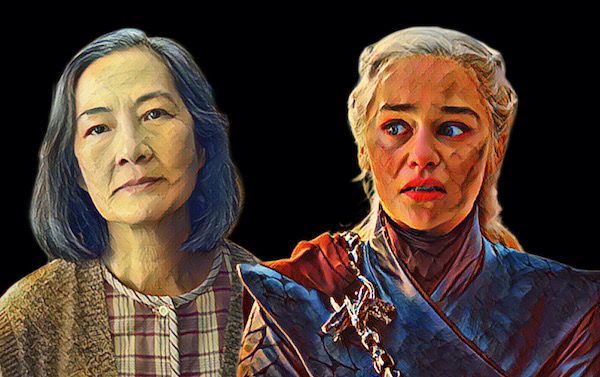
Yes, there is the curious decision to change important factors in a story that deals with the precision of science and the imagined world of extraterrestrials (for me, in the same camp as dragons, but, for many, something possible), like that of turning a single character into five, but it’s not problematic if it works for a larger narrative. D&D are good storytellers, by bringing in five characters they expand the possibility of connecting with the series, they are not rewriting the book. However, what reconnected me with GOT, besides having the same technical team (from the soundtrack to the Casting director), and even some actors, is that once again a woman’s revolt determines the future of a planet. God, D&D likes to tease the female audience with the short stick!
Only if you’re an E.T. haven’t you heard of Daenerys Targaryen (Emilia Clarke), the main character of Game of Thrones who spent seven seasons freeing slaves and promising a better and fairer world for everyone, only to have an outburst of “nah, screw it” and burn everything and everyone to get the Crown. It’s the ultimate and exaggerated simplification of what happened, but close to what fans consider problematic (I’m not in that group).
In The 3-Body Problem, in a non-linear way, we meet young Ye Wenjie (Rosalind Chao) whose decision to make contact with the aliens who will destroy the Earth is similar to Daenerys burning King’s Landing.
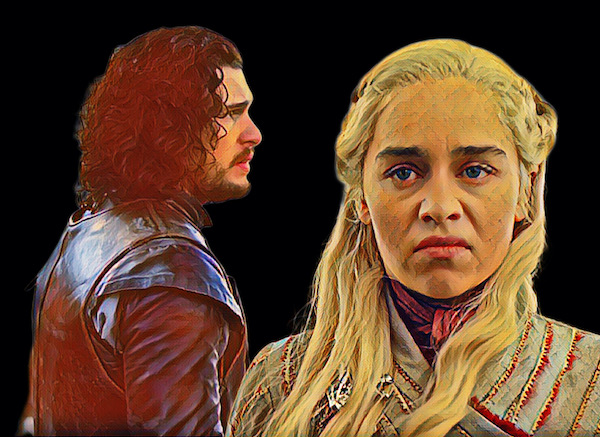
There are many interesting female characters in the Netflix series, but Wenjie is in the book and on TV and is the main plot point. She is a complex character with a rich history that shapes her actions throughout the novel and series.
As a young woman, the astrophysicist is forced to witness her father’s public execution during China’s Cultural Revolution, where she already has a strong disillusionment with humanity. To make matters worse, after her father’s death, Ye Wenjie is sent to a labor camp and from there is recruited to work on a top-secret military project known as the Red Coast Base, where she becomes the first human to make contact with a alien civilization, the Trisolarans.
Even surviving the great pain, she goes through more betrayals and as a result, her worldview is shaped as a reaction to these traumas, freezing her heart and expecting less and less from society and men. There is, paradoxically, despair and hope. By “inviting” the Trisolarans to come to Earth, she is betting that they will bring about a new and better world order. The problem is defining what is “best” when it suggests the clear annihilation of Men. She is a deeply conflicted character, willing to risk the future of humanity because nothing she has witnessed could help her think differently.

Maintaining faith in people and the future is not a female responsibility, but this is the second time that fiction places the responsibility of making the right decision on women’s shoulders. Calm down, although Wenjie has already planted the seed of salvation and there is another female character working to save everyone, the irony of the moment remains: Wenjie in her scientific “dracarys” puts us in an uncomfortable position of understanding her, but not having any opposition. enough arguments to convince you that there is hope. Daenerys, on top of her Dragon, seeing a population rejecting her and choosing a tyrant in her place was also a controversial moment.
So this week I found myself reflecting on the metaphors of stories so different, so real and so distant. Although Ye Wenjie does not explicitly want aliens to kill humans, she is willing to accept this as a potential result of her actions. How many of us can’t identify this moment in our lives? Unlike Daenerys, who did not repent and was murdered, as I said, Wenjie has already planted the seed to save humans. I’ll save the spoilers for another time, I just want to leave the door open for anyone watching future seasons. In an Easter as “normal” as the pre-pandemic years, the literal problem is still keeping Hope in people. I sincerely hope you can do it because it’s worth it. We are worth it. Happy Easter!
Descubra mais sobre
Assine para receber nossas notícias mais recentes por e-mail.
 miscelana.com