
Daenerys Targaryen, also known as Daenerys Stormborn of House Targaryen, the First of Her Name, Queen of the Andals and the First Men, Protector of the Seven Kingdoms, the Mother of Dragons, the Khaleesi of the Great Grass Sea, the Unburnt, the Breaker of Chains and the Queen of the Ashes, we must remember, is one of the most beloved fictional characters of the 21st century, with passionate worshipers and defenders of her legacy who are ready to maintain her name daily as one of the most popular on Google Trends.
78 days before the premiere of the second season of House of the Dragon, the last Targaryen Queen is still minimally controversial. Her story’s conclusion divides fans: she reversed her arc from savior to destroyer, from popular to power-hungry, and was murdered after destroying King’s Landing. I’ve already evaluated her arc a few times, but as Rhaenyra Targaryen is often compared to Dany, it’s worth reviewing. Its complexity does not generate easy or definitive answers, even though it is worth trying.

Born in the Storm, turbulent like her birth
Daenerys Targaryen is a prominent character in George R. R. Martin‘s A Song of Ice and Fire saga, as well as the television adaptation Game of Thrones. Also known as Dany, she is initially portrayed as a shy and submissive character, the youngest daughter of the deposed King Aerys II Targaryen, known as the Mad King, she begins the series in exile from the Free Cities, in Pentos, far from her ancestral home. , Dragonstone, in Westeros. Daenerys and Viserys fled when they were very young – in this case, she was nothing more than a baby in their arms – because in Robert Baratheon’s Rebellion not only was their father killed but they wanted to eliminate all Targaryens from the face of the earth. Not yet 20 years old, she is under the control of her abusive older brother, Viserys, who grew up obsessed with reclaiming his family’s throne and crown.
For Viserys, who calls himself “the last dragon”, Dany is just another piece on the board and, to have an army and return to Westeros to recover what was taken from his family, he sells Daenerys into a forced marriage with Khal Drogo, a powerful Dothraki warlord. As a supporter of Viserys, Dany learns to assert herself and begins to embrace her Khaleesi identity. However, after the deaths of Viserys and Drogo, Daenerys emerges as a strong and independent leader, determined to regain the Iron Throne, even more so because she deciphered how to hatch her three dragon eggs, now having weapons that had been missing for centuries. Like nuclear bombs that make people tremble.
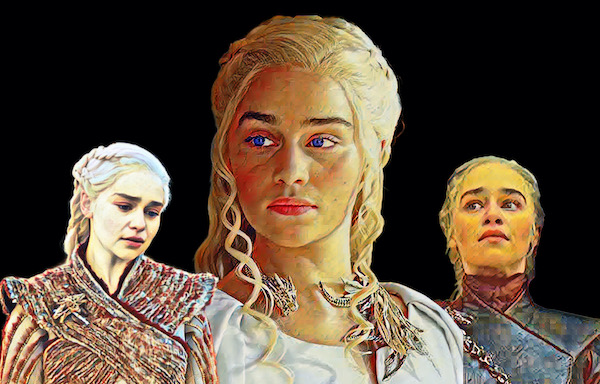
The long road to the throne
Popular among the underprivileged, Daenerys is identified by a strong sense of justice and dreams of being a benevolent ruler. Among her priorities is ending slavery and protecting the vulnerable and oppressed, no matter the cost. From the beginning there are conflicts of interest as she still wants to be “Queen”, and her idealism and determination often lead her to make impulsive decisions, which can have dire consequences, and are never 100% aligned with the Monarchy.
Paradox often crosses her path and the burden of leadership, as well as the complexities of exercising power, are often heavy. She has to balance noble intentions with pragmatic decisions, not always achieving a balance. The journey raises important questions about the nature of power, the ethics of leadership, and the potential dangers of unbridled ambition.

As a woman, the opposite of her father and brother
Daenerys never met her older brother, Rhaegar, who was murdered by Robert Baratheon, but she grew up hearing idealized stories of him. She knows about her father, Aerys, about his bad reputation, but personally believes that it is propaganda from his enemies. For her, the Targaryens had been betrayed and the throne had been usurped, nothing more than that.
One day they will return “home,” she dreams, with Viserys taking his father’s throne.

With no other relatives or friends, Daenerys grew up in fear of Viserys, who is abusive and cruel, often treating her only as a tool. Her brother doesn’t even hide that he has little regard for her well-being or feelings, which fuels resentment towards him.
Once married, Daenerys grows in power and confidence, and soon she begins to see her brother as he really is: a weak and desperate man, clinging to a dream of power and glory that he can never achieve. As a result, she begins to feel a mixture of pity and contempt for Viserys.
As the story progresses, all of Viserys’s flaws, particularly his cruelty, entitlement, and lack of leadership skills become increasingly obvious. At the same time, Dany begins to gain followers and realizes that she can be a better ruler than Viserys.
The marriage with Drogo evolves quickly and surprisingly into genuine love, especially after she becomes pregnant. And it’s when Viserys threatens her life and the life of her unborn child that Daenerys changes. Drogo sentences her brother-in-law to death and she watches calmly as her husband executes him by pouring molten gold over her head. It is the first sign of the complete emotional detachment that Dany may have, but, above all, it is when she “accepts her destiny” of being the last Targaryen and the one who will regain the throne for her family.

From that moment on, there is a great risk that seems harmless. As she gains Fame and Victories, Daenerys falls into Viserys’s trap of reinforcing the legend and losing the sense of where the boundary between imagination and reality lies. In both the A Song of Ice and Fire books and the Game of Thrones series, Daenerys Targaryen’s arc becomes her belief that she is the rightful queen of the Seven Kingdoms. She needs to return to Westeros, conquer her subjects, and avenge the Targaryens.
The conqueror and the breaker of chains
In season 1, Daenerys has no control over her own life, which is why the alliances she builds are so relevant to her. With each one, she reinforces her convictions about her right to rule the Seven Kingdoms, but, more dangerously, her ability to create a better world. Daenerys becomes a conqueror, liberating cities and acquiring armies. Everyone follows her willingly, so she doesn’t realize that gratitude can be expressed without joining her cause.
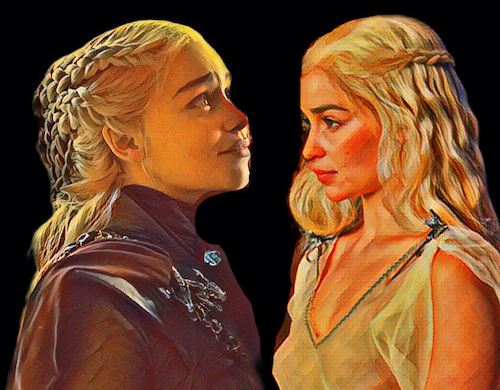
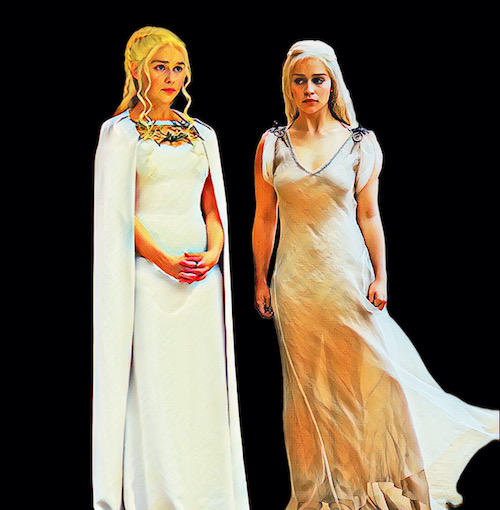
Little by little, for good observers, we see that despite her intentions of maintaining impartiality and justice, she eliminates those who oppose her. That is, his desire for absolute power seems to grow rather than diminish. On more than one occasion, Daenerys is confronted with her hypocrisy and often forces her hand to prove her point.
From being sweet and shy, she becomes smart and determined. as well as relentless. Which doesn’t stop her from having a traitor among her closest circle. As it is “war”, she also has losses on her side, which takes away important advisors just when she needs them most. When she finally returns to Westeros she has three great dragons, an army of thousands, and a few houses supporting her. Daenerys expected resistance from the Nobles, but for once, the People did not fall in love with her immediately. The Queen’s unprotected ego was not ready for this blow.
Loves and entourage of admirers contributed to the myth
Throughout the story, we follow Daenerys from being a girl to becoming a woman with several romantic interests.
Khal Drogo was the first significant relationship. The Dothraki warlord “bought” her, and the initial difficulties, both cultural and lack of affection, are overcome. They admire and love each other, but they are betrayed. Daenerys loses the baby and with Drogo catatonic, she is forced to kill him.
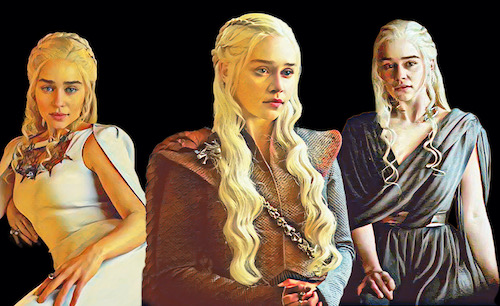
Jorah Mormont loves her, but she doesn’t return his feelings. With Daario Naharis, a Tyroshi mercenary in the service of the Second Sons, there is a more transparent relationship. Daenerys is attracted to Daario’s boldness, and he becomes her lover and confidant, but it is never in her plans to have him as a partner or husband. When Tyrion – another one in love with her – suggests breaking up, it’s easy to decide. Daenerys leaves Daario in Meereen when he embarks on Westeros, knowing that their relationship has no future. Little did she know what awaited her.
In the book, it hasn’t happened yet, but in the Game of Thrones series, Daenerys meets and falls in love with Jon Snow, the King in the North. He is the first man close to his age, position, and, even more so, idealism. The two become involved as they try to unite their forces against the threat of the White Walkers.

There are problems right away, how could there not be? The North is finally independent, Daenerys’ return as Queen – at her demand – would once again subject the territory to the Power of the Targaryens, something that none of Jon’s supporters would accept. Still, they decide to try.
What makes everything worse, and complicates their future is when it is revealed that Jon Snow is actually Aegon Targaryen, the legitimate son of Daenerys’ older brother Rhaegar, making him the rightful heir to the Iron Throne and her nephew.

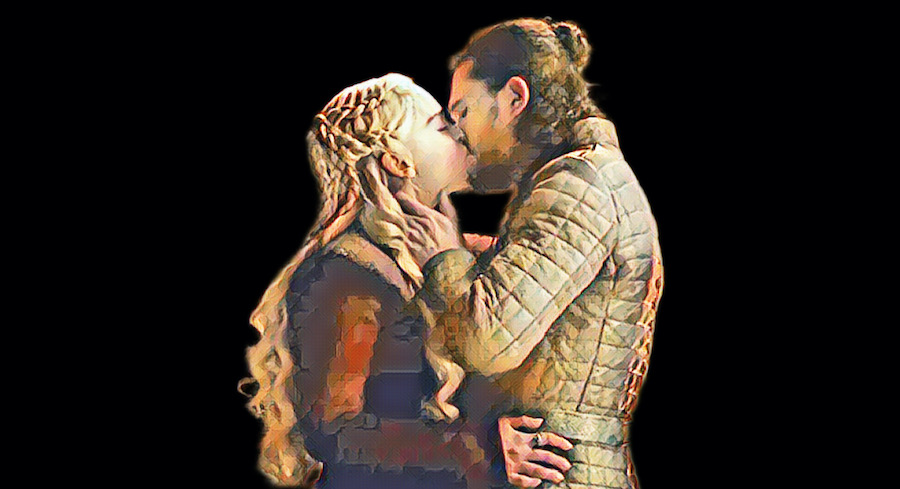
Incest wouldn’t be a problem for Daenerys, although it would be for Jon, who didn’t grow up as a Targaryen. He doesn’t want the Crown, but what he wants has less weight in what is beginning to be a downfall for the Mother of Dragons.
The Iron Throne: an obsession
In the last season, Daenerys starts to live – relatively – the role of Viserys in the opening of the series. Jon’s popularity and the naturalness of his leadership increasingly disturb the jealous and insecure queen.
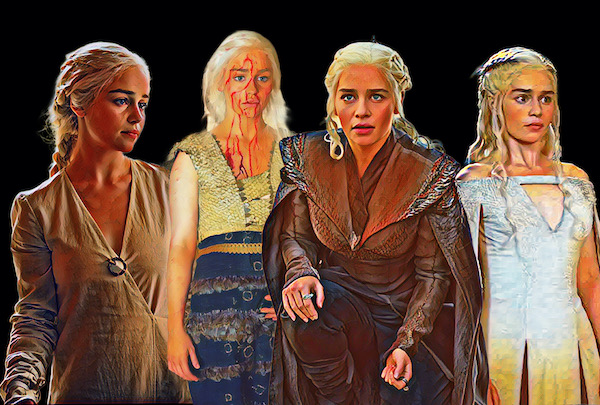
Daenerys Targaryen’s feelings regarding the Iron Throne evolve throughout the narrative. Initially, he represents his birthright and a symbol of the power and respect that was taken from his family when his father was deposed during Robert’s Rebellion. This perspective is shaped by the stories his brother Viserys told him about their family’s former glory and the wrongs done to them.
However, as the series progresses and Daenerys experiences leadership firsthand, her perspective evolves. Less an object of personal power, the Iron Throne is a means of bringing about change and justice and becomes a symbol of his desire to break the “wheel” of power that crushes those at the bottom, while also benefiting those at the top.
Daenerys’ nobility will be tested, as will her desire for the throne. To get there, she is driven to take morally questionable actions, showing her increasing cruelty and a dangerous side to her ambition. She gives up dialogue for threats and attacks with her dragons, helping Cersei Lannister’s counter campaigns and Sansa Stark’s mistrust. However, it should be noted that the mistakes of her strategist, Tyrion Lannister, did not help Daenerys when she needed him most.
Tyrion: Sagacity, yes, but strategic inability
Daenerys Targaryen chose Tyrion Lannister as her hand when Jorah Mormont was away and took important reasons into consideration.

1- Political acumen: Unlike Dany, who grew up in Essos, Tyrion was known for his keen understanding of politics and power dynamics in Westeros, including its key players and their motivations. After all, he was a Lannister and knew better than all the current occupants of the throne.
2-Strategic Mind: Tyrion has always been regarded as a skilled strategist, as he proved at the Battle of Blackwater, where he successfully defended King’s Landing against the forces of Stannis Baratheon. Her ability to think quickly is a valuable asset to Daenerys.
3- Experience: Even if briefly, he was the Hand of the King during the absence of his father, Tywin Lannister, managing to keep the city running and defend it from attacks, despite the antagonism with his sister.
4- Honesty and Loyalty: Daenerys values Tyrion’s honesty and his promise of loyalty to her. Unlike many others in Westeros, Tyrion did not want power for himself, but rather to use his skills and knowledge to serve a ruler he respected. Because he was open when he disagreed with Daenerys, she came to trust him.
5- Shared Vision: Lastly, Tyrion and Daenerys share the same vision for a better, more just world, wanting to break the cycle of tyranny and create a more equitable society. This vision is what cements his alliance with Tyrion.
And what went wrong if they were in tune? Was it jealousy? Was it betrayal?
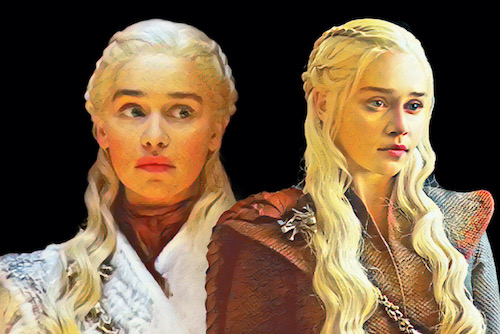
One of the qualities of Game of Thrones is that heroes are not infallible. Although he is a Lannister, Tyrion is the most empathetic and balanced character in the entire drama, defending himself against his enemies, but never being unfair or cruel, not even towards his captors, like the Starks. He has a perspective on all events and really wants a peaceful scenario.
However, Tyrion’s empathy proves to be a weak point in the strategy of dominating Westeros. He, who has always been underestimated and marginalized due to his physical stature as a dwarf, without being taken seriously by many, including his own family, does not inspire the necessary respect in negotiations.
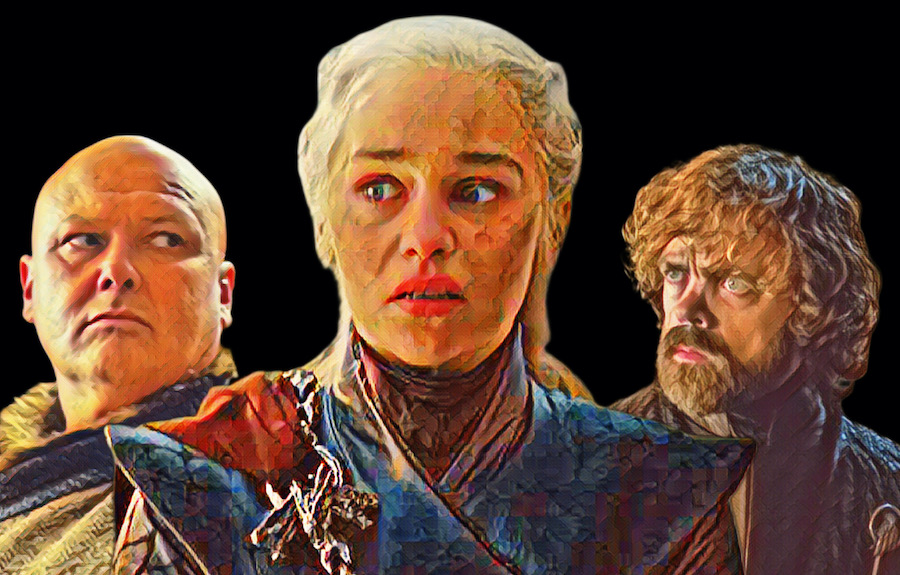
His plans are based on the rationality and predictability of his opponents, but the unpredictability of War, as he has never been a soldier, proved to be beyond his talents. The logically solid and strategically astute plans did not consider whims and emotions, causing errors. I know some credit him with Myrcella’s death, but when she sent her to Dorne, Cersei had not yet provoked the wrath of the Dornishmen. In theory, the princess would be fine.
Tyrion also suffered betrayal and deception, as we saw when Shae helped to have him sentenced to death. The political machinations of those around him often surpassed him and were more cruel. He insisted on a slow, strategic take, but it cost Daenerys everything, including her mental health.
Among the miscalculations was the advice to form alliances and make political compromises to obtain the support of the people and nobility. The resistance was greater than expected, thanks to Cersei’s campaign. The attempt at alliances, even in Essos, had already ended when the slave masters attacked Daenerys in Meereen. As Jon participated in the peaceful campaign, the Targaryen queen lost invaluable partners and strength, leaving her more vulnerable than anticipated.

Misaligned, when Tyrion favored diplomacy and strategic planning, Daenerys often chose to act on impulse, guided by her strong sense of justice and her belief in her destiny to rule. For example, burning the Tarlys alive when they refused to bend their knees undermined the plans and the future, as Sam Tarly was Jon Snow’s main ally and never forgave Daenerys for eliminating her house without wasting time.
Daenerys’s flight also lost timing when she went to help the North in the fight against the White Walkers, without having won the sympathy or thanks of the Northern Houses, giving Cersei time to strike back.
Everything contributed to Daenerys’ loss of trust in Tyrion, believing that his loyalty was divided between her and the Lannisters. In fact, “no one” believed in Daenerys other than herself; her allies were conveniently the Houses that wanted revenge on the Lannisters, and this hindered her and Tyrion. To make matters worse, information about Jon Snow’s inheritance law completed the disastrous scenario for Daenerys.
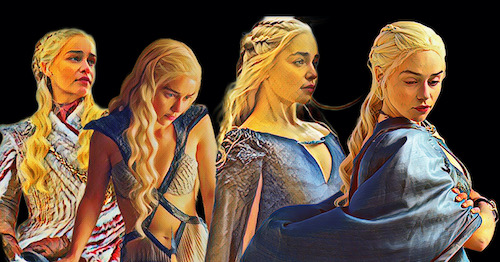
“Be a Dragon”
Olenna Tyrell – who disliked anyone but her family and hated all Lannisters – contributed to a fatal disconnect in the story. Tyrion tried to tame Daenerys so that she would not show the worst distrust against the Targaryens because, in addition to conquering, she would have to reign, and destruction would make her the Queen of Ashes.
Therefore, when Lady Olenna advises Daenerys to “be a dragon,” she is not asking Daenerys to literally transform into a mythical creature or destroy everything, but is trying to encourage her to be assertive. Having seen many rulers and their styles, she recognizes that Daenerys’ kindness and desire to rule justly may be perceived as weakness by her enemies, but she needs to be even more ruthless when necessary. Yes, she also believed that the quickest thing would be to use violence and that Dany would not be afraid to intimidate. The problem was, when she followed this advice, Daenerys lost more than she gained. Even worse, when she chose extreme violence and destruction, she killed innocents and tarnished her reputation, which led to her downfall.

The hesitation between admitting her thirst for Power in place of the idealized campaign for Justice was not clear to all fans; it was a transition they refused to see, even if it had been there since she arrived in Westeros. This wasn’t Tyrion’s fault, but just that of a person transformed by dreams and mythology.
Even though she was pragmatic and wanted Cersei dead, it is unlikely that she would support Daenerys’ final decision to destroy King’s Landing. Lady Olenna probably saw it as an unnecessary and harmful act, which it was, and which united the people, commoners and nobles, against Daenerys.
The Problem with Sansa Stark
Daenerys has always won over men for her beauty and women for her sisterhood. She had hoped that their common hatred of the Lannisters would be an advantage, but, unprepared, she did not anticipate that she would need to be diplomatic to win the Crown. In particular, she never expected the little, traumatized Sansa Stark to be an intelligent, lively, and perceptive woman when she arrived in the North. She never stood a chance with the Lady of Winterfell.

Like Dany, Sansa began the story as a girl and was subjected to humiliation, torture, and threats, learning the hard way how to survive. When she returns to the North, she fights to reclaim Winterfell and wants the North to remain independent, something that gets in the way of Daenerys’ dream of ruling all of the Seven Kingdoms. This fundamental disagreement is one of the sources of her conflict, as are Sansa’s experiences that have taught her to be wary of strangers, especially those who seek power.
Sansa Stark distrusts Daenerys Targaryen, despite Jon Snow’s insistence that they need her and her dragons to win the war against the Night King. Sansa’s concern comes from a political point of view – she worries about the North’s independence under Daenerys’ rule, and nothing can change her mind.

There is another problem between the two: Jon Snow. They both care deeply about him, but for Sansa, there is the question of safety and judgment after he surrenders his crown to Daenerys without negotiating independence. For Daenerys, who sees Jon as a crucial ally and the love of her life, Sansa’s influence and distrust directly threaten her.
There is no way to alleviate the fact that the North is racist and xenophobic, so not even Daenerys coming to help them in the war against the Night King helped to change local arrogance. Sansa makes no effort to ease the tension. At this point, she doesn’t trust anyone, not even Jon. Sansa doesn’t expect Jon to be cruel, but she knows he is manipulative because he is essentially a good person. Maintaining skepticism about Daenerys’ Right, she becomes an even greater leader than Jon, so effectively, Daenerys does not have the support of the North for her cause; she is there helping for nothing.

As Sansa was a pragmatic leader, with a keen sense of political acumen and caution, Daenerys opened the door to frustration and irritation with Sansa’s resistance to her rule and the loyalty that Sansa demanded from the Norse. Daenerys, who fought hard for her power and believes strongly in her right to rule the Seven Kingdoms, finds herself in a challenging position with Sansa. To worsen,
Jon is popular, and Sansa is an admired woman; that is, the Starks were what Daenerys wanted for herself.
The familial bond between them was another point for which Daenerys had no reference: raised far from home, without love or friends, she didn’t understand that she couldn’t separate them, especially with secrets like Jon’s true origin as a Targaryen. The strong moral compass of the Starks, especially Sansa and Jon, was an unbreakable connection. This is because Jon’s impulsiveness got in the way of politics, but Sansa covered the space with skill.

As the series progresses, Daenerys’ actions begin to justify Sansa’s caution, especially when she asks Jon to hide the fact that he is a Targaryen and destroys King’s Landing, even after the city’s surrender. This confirms Sansa’s fears about Daenerys’ suitability as a ruler.
However, it is important to note that this is a complex issue. Some may argue that Sansa was right based on Daenerys’ later actions, while others may argue that Daenerys’ actions were influenced by several factors, including betrayal, loss, and isolation, which drove her to despair.
In the end, it’s up to individual interpretation whether Sansa was right about Daenerys. In literature, as in life, our understanding of characters and their motivations can be deeply subjective, influenced by our own experiences and perspectives.

Cersei’s insight
Another woman on Daenerys’ path was Cersei, who people underestimated because they thought she didn’t achieve the Crown out of merit, but because she was the “wife” and “mother” of the rulers. Unfair to our antagonist, who, like all women, was humiliated, tortured, and abused, but managed to turn the tide. After all, give in to Daenerys and the dragons? Just dead.
As an administrator, Cersei deserves respect: she eliminated her enemies, balanced the kingdom’s accounts, and managed to reduce the armed disadvantage against Daenerys using cunning and courage. She ran an excellent propaganda campaign against the Targaryens and forced Daenerys’ hand to prove her right. She isolated the mother of dragons, already vulnerable to Sansa, and acted. Cersei was perfect.
All victories achieved by Cersei came with severe losses, such as the death of her children. She eventually succumbs to Daenerys’ military might, but not before pushing the mother of dragons to the limit. However, when she dies, buried in the Red Keep under Daenerys’ attack, there is a paradoxical victory in the air. She had her proof that Daenerys didn’t come to just conquer; she came to destroy.

Cersei Lannister, the penultimate Queen of the Seven Kingdoms, has always seen Daenerys Targaryen as a significant threat to the throne. Perhaps because she could only imagine someone eating herself, or because she knew that you have to want a lot to get the Crown, from the beginning, Cersei mentioned the Targaryen Queen’s ruthless and power-hungry side, even when they said she was ‘good’.
This obviously angered Daenerys as she saw herself and presented herself as a liberator, someone who wanted to end oppression and rule justly. In fact, that was what outraged her about Sansa, too. Somehow, even though they were adversaries, Sansa and Cersei planted the seed of destruction as well. We won’t know.
The Queen of the Ashes
What fans refuse to accept is the logic behind King’s Landing’s act of violence and destruction. Until then, even with missteps along the way, Daenerys Targaryen was generally portrayed as a liberator and a just ruler, but she single-handedly made the decision to burn the city even after her forces had surrendered, killing countless innocent civilians in the process. process. This was a significant and controversial plot point and marked a dramatic change in her character, and was seen by many as a descent into madness. After all, what would have led Dany to do what she did?

There are four points to support the arguments behind the motivation: a combination of fear, anger, isolation, and the desire to establish her power.
1- Isolation and Betrayal: At this point in the series, Daenerys had lost many of her closest advisors and allies, including Jorah Mormont and Missandei. She felt isolated and increasingly paranoid, especially after learning about Jon Snow’s true parentage and potential claim to the Iron Throne.
2- Revenge and Fear: Daenerys wanted to avenge the deaths of her dragon Rhaegal and her friend Missandei, both killed by Cersei’s forces. She also feared that the people of Westeros would never love or accept her as queen, especially when they have someone like Jon Snow who is much loved and has a legitimate claim to the throne.
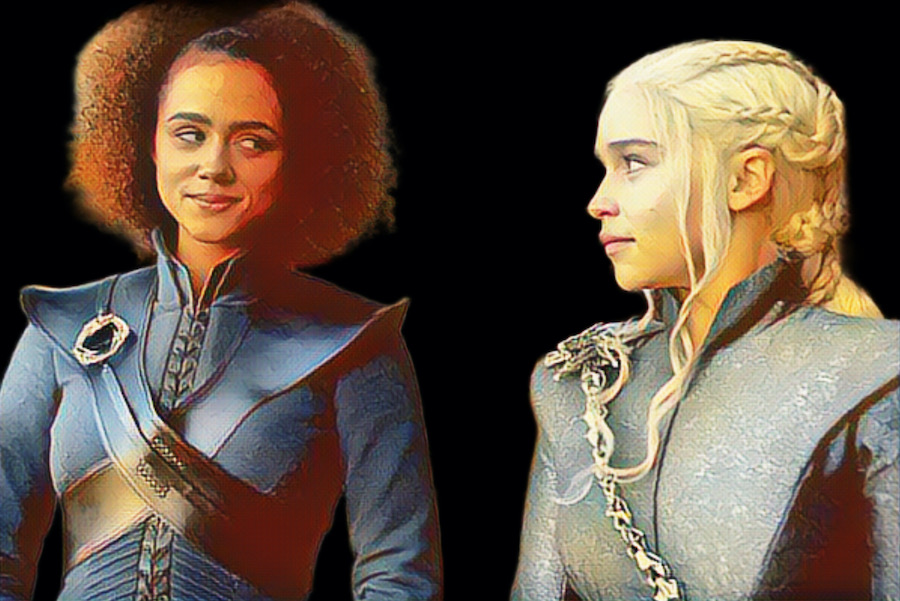
3- The Targaryen Legacy: Daenerys is the last of the Targaryen line, a family with a history of madness and a propensity for using their dragons to burn their enemies. Her father, known as the Mad King, was famous for using fire to burn those who opposed him. Daenerys’ decision to burn King’s Landing can be seen as a tragic fulfillment of that legacy.
4- Making a statement: Daenerys also wanted to send a message to anyone who might oppose her rule in the future. By burning King’s Landing, she demonstrated the full extent of her power and cruelty, hoping to instill fear in anyone who thought of rebelling.
How Jon Snow Was Convinced to Kill Daenerys
The reaction of his family, including Arya, who did not trust Daenerys, as well as Sam Tarly’s resentment, contributed to a certain estrangement between Jon and Daenerys, which only worsened when she reacted badly to the information that he was Aegon Targaryen and she would have priority in the succession. Jon, who was not ambitious, was surprised by the queen’s immediate envy and insecurity, which quickly became paranoid. So when she destroys the capital by killing innocents, Jon is more than ready to return to the North and leave everything behind.

Tyrion, equally disappointed in her, betrays Daenerys by freeing Jaime and is executed. Jon, instead of first going to talk to the new Queen of Westeros, goes to visit him to say goodbye to the only person who understands how he fell in love with Daenerys. Arya had already warned that Jon would have to choose because Sansa would be at risk, but it is Tyrion who puts him against the wall.
Tyrion knows this is his last opportunity to convince Jon that it is necessary to stop Daenerys, now beyond a shadow of a doubt, a tyrant. To persuade him ,he knows he needs to:
1- Appeal to morality: Tyrion reminds Jon of his sense of duty, emphasizing that Daenerys killed thousands of innocent people in her quest for power. He asks Jon to consider whether her actions are justifiable and align with his own moral compass, something Sam has already done.
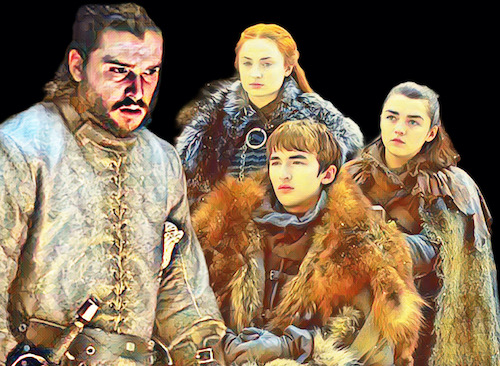
2- Appeal to fear: Tyrion suggests that Daenerys will continue her path of destruction and that she will not stop until she “frees” the entire world. He implies that anyone who stands in her way, including Jon and his sisters, will be in danger.
3- Remember Jon’s lineage: Tyrion reminds Jon of his true identity as Aegon Targaryen, the rightful heir to the Iron Throne. He suggests that Jon has a duty to the kingdom to take his rightful place as king.
4- Appeal to the future: Tyrion asks Jon to consider the future of the Seven Kingdoms under Daenerys’ rule. He asks him to think about the world he wants to leave for future generations.

All arguments have weight, but it is Daenerys herself who unwittingly seals her own fate. When Jon finally comes to talk to her, still moved by what he saw, Daenerys is already happy, thinking about the Throne and her reign. Not even confronted by the death of children does she seem to back down. And when asked about the concept of choice, Jon realizes there is no other option.
When Daenerys says, “They can’t choose,” she could be referring either to the people of Westeros or more specifically to Sansa, Arya, Bran, and Sam, who don’t like her. Her position is that, as queen, it is her job to make difficult decisions for the general good, even if people disagree with her. Jon, who believes that leadership means making sacrifices, is disappointed with what he hears. He who always valued the honor and well-being of everyone knew that Daenerys had to die. He has to betray someone he loves for the greater good.
Why didn’t the Targaryens unite?
The more peaceful alternative to the story would have been for Daenerys and Jon to rule together, but this was never considered (by anyone other than Tyrion). Everyone saw that Danny wanted the Crown alone.
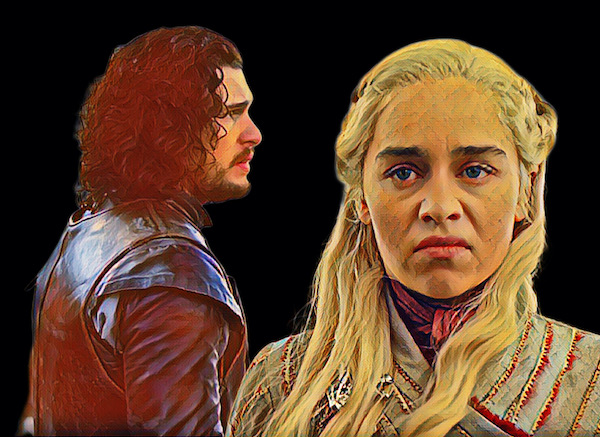
From the moment she was informed of Jon’s rightful claim to the throne, Daenerys changed as a person and leader. At this point, she had spent much of her life believing she was the last Targaryen and the rightful queen; her path was Destiny. When faced with another reality, she would be reduced to an ambitious person, not predestined. Jealousy of Jon’s position and popularity didn’t help. For her, ruling is not just a matter of power, but also of restoring the honor and legacy of her family, the Targaryens, who were brutally removed from the throne. And how can you prove that Jon is a Targaryen?
But what makes everything worse is the fact that Daenerys is in love with Jon Snow. She could share the throne with him, but she also knew that when they discovered his legitimacy, Daenerys’ authority would be undermined immediately, as it was being done by Sansa even before the truth came to light. And it didn’t matter at all that Jon had no interest in the Crown. In fact, his refusal made her look even worse for wanting him. Even “helping”, he hindered her.
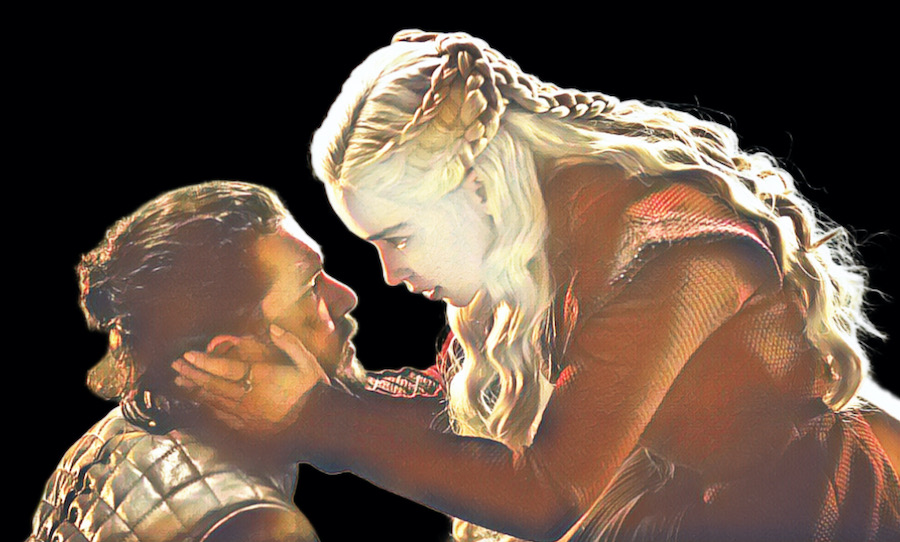
On the other hand, Jon Snow’s sacrifice is immense: he kills Daenerys, is exiled, and will never be able to return to King’s Landing. During the council held by the main surviving characters, it becomes clear that Jon has supporters, especially
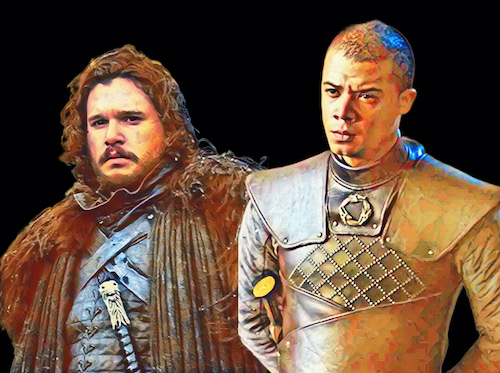
in your family. However, Gray Worm and the Unsullied demand justice. The compromise they reach is to send Jon back to the Night’s Watch, effectively exiling him to pacify Daenerys’ remaining followers and preserve his life.
While there is a sense of abandonment in Jon’s ending, it is also marked by a return to a place where he found acceptance and friendship. The final scenes suggest that he may even find freedom and peace beyond the Wall, living with the Free People.
Daenerys’ legacy.
Daenerys Targaryen will always be remembered as the revolutionary figure who freed countless enslaved people and fought against injustice. What now has two currents is her decision to attack King’s Landing.
The pro-Daenerys current saw the attack as part of a very harsh but necessary step to break the cycle of power and corruption in Westeros. Therefore, by killing her, Jon may have eliminated the only chance for real change in the Seven Kingdoms, even if the decision was personally tragic for Jon, who loved Daenerys and was committed to her, being exiled at a high personal cost for his decision.

The opposing current, on the other hand, sees in Daenerys the typical story of a well-intentioned person, with a beautiful trajectory, but tarnished by the corruption of Power, which took the focus off her actions and put the lives of millions at risk. In this version, Jon only did what he needed to do since he allowed her to go so far.
In any case, Daenerys is one of the most significant Targaryens in the entire family saga. A popular Queen, even if from the ashes.
Descubra mais sobre
Assine para receber nossas notícias mais recentes por e-mail.
 miscelana.com