
In the 20th century, after Anna Pavlova, the dancer who most popularized dance in the world was Alicia Markova. The dancer and choreographer who circulated among geniuses such as Diaghilev, Balanchine, Chagall, Matisse, and many others was a pioneer, celebrity, daring and legendary from an early age – and started new – extending a brilliant career until the age of 52, spending another almost four decades teaching.

A muse of choreographers, actors, musicians, and painters, Alicia passed away in London on December 2, 2004, at 94, leaving a legendary and inspiring career for many generations. Thanks to her, dance reached television, traveled the world, and strengthened the English school.
Considered one of the best Giselles of all time, Alicia deserved to have a film about her or a series. Few lived as intensely as she did, after all, she was the first solid prima ballerina born in England, the first Jew, the first to appear on television (in 1932), the first prima ballerina without a fixed contract with a company, and the first to appear on stage. just in a leotard without a tutu, a huge scandal in 1925! Alicia Markova is a legend and the most famous of her generation.
The Russian name for “disguising” “Marks”
Daughter of a Jewish family, Lilian Alicia Marks was born in London on December 1, 1910, the eldest of a family of four daughters. Her thinness, so recognized as an adult, came from birth, she was so delicate that she began dancing on medical advice to strengthen her fragile legs.
The dance had an effect, but her ballet teacher quickly identified that little Lilian had exceptional gifts, was quick to learn, was technically confident, and was committed. At just 10 years old, she made her debut, being nicknamed “the child Pavlova”.
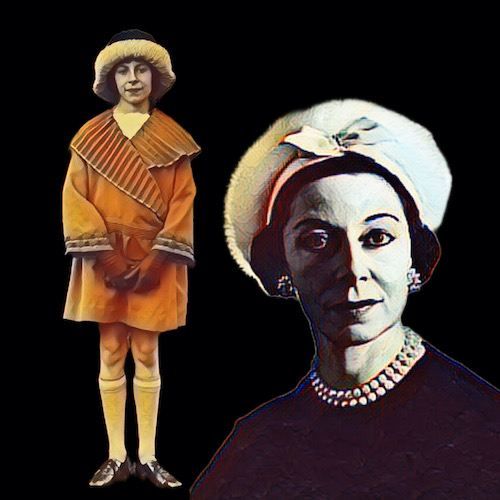
Faced with the strong response, her parents enrolled her in a school run by one of the dancers from the Ballets Russes, Sergei Diaghilev‘s ballet company, where she met her future partner, Anton Dolin, actually and at the time still just Patrick Kay.
Before becoming “Alicia”, little Lily Marks was gaining prominence, but the tragedy would shake her life when she lost her father in 1924, leaving the Marks women with financial difficulties and friends who helped the ballerina continue studying.
It was lucky because soon after, her teacher called Diaghilev to see her students, already warning him to watch Alicia. The Russian businessman had a talent for talent and loved the girl, inviting her to watch all the Ballets Russes performances in London and hiring her immediately, even though she was still only 14 years old. Known for knowing marketing like few others, Diaghilev considered the name “Marks” boring, changing it to “Markova” precisely to sound more Russian. “Who would pay to see Alicia Marks?” he reportedly asked. In any case, with him, another unique dance star was born.
The baby ballerina
In 1925, accompanied by a governess to protect her, Alicia Markova joined the Ballets Russes and went to live in Monte Carlo, where she was placed in the care of Ninette de Valois, with whom she would work many years later to establish British ballet. A very thin and fragile-looking young woman, she quickly stood out and became Diaghlev’s personal project (his last).
She was so small that she couldn’t even dance in the corps de ballet, so she had small solos where it was possible to fit her in. But the most important thing is that at the Ballets Russes, Alicia lived with legends such as Pablo Picasso, Henri Matisse, Igor Stravinsky, Sergei Prokofiev, Léonide Massine, George Balanchine, Bronislava Nijinska and Alexandra Danilova.
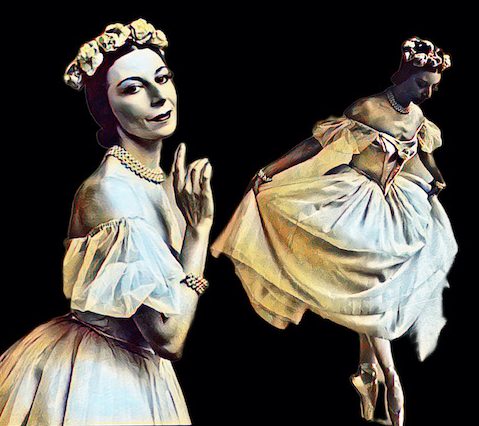
Balanchine, who was already beginning to choreograph at the time, was the one who auditioned for Alicia to join the company and began to train her personally, which is why many consider her the first of the baby dancers who would later become known. It was for Alicia that he created the title role in Stravinsky’s Le Rossignol, making the young ballerina a sensation.
The solos became more frequent, she also danced the title role in La Chatte, by Balanchine, and solos such as Princess Florine in the Blue Bird pas de deux in Sleeping Beauty. Diaghilev was excited about her, announcing that he would cast her in the lead role of Giselle, but her death in August 1929 seemed to be the end of a beautiful dream for Alicia. In fact, she was only in the prologue.
In England, stardom came
With the end of the Ballets Russes, Alicia Markova, Anton Dolin, Marie Rambert, and Ninette de Valois returned to England and when Rambert and Ashley Dukes founded the Ballet Club, Mercury Theater in Notting Hill, Alicia became its star. She earned little, but she was always dancing and gaining experience. Her lightness helped her to make almost no sound even in her highest jumps, a standard required for all ballerinas since.

The partnership she established with Frederick Ashton made her his muse and he created several ballets for her. Soon, she began working with De Valois at the Vic-Wells Ballet (now the Royal), becoming a prima ballerina in 1933, aged just 23. It was on the Old Vic stage that she finally made her debut in Giselle, a ballet that would become her signature.
After Alicia’s triumph as the tragic peasant girl, came the challenge of Odette-Odile, with an overproduction of Swan Lake created especially to make her shine, alongside Robert Helpmann, the company’s biggest star at the time. Not just one of the greatest in the world, Alicia Markova was the great British dance star, the most famous of all until then, inspiring many girls to follow in her footsteps.

The boldness of starting her own company at the age of 25
Alicia Markova would be the first in much more than one company. In 1935, alongside her partner, Anton Dolin, they formed a company and began to travel throughout the country, popularizing ballet in the United Kingdom.
In two years, Ballet Markova-Dolin has maintained a repertoire of classics mixed with modern pieces, winning praise wherever they go. When Leonide Massine took over the Ballet Russes de Monte Carlo, in 1938, Alicia left entrepreneurship in the background and resumed the project she had designed with Diaghilev, reuniting with her best friend, Alexandra Danilova, with whom she began to alternate the main roles in the company.
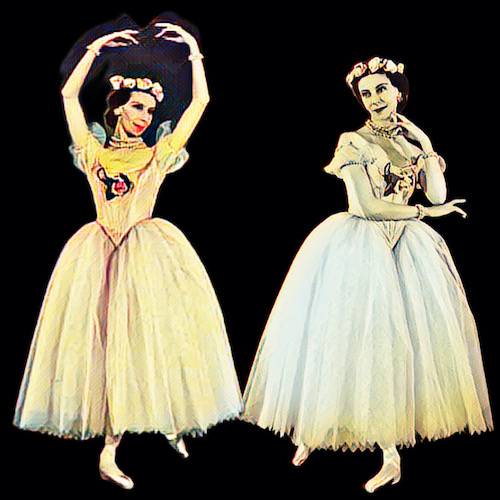
It was with the Ballet Russe de Monte Carlo that Markova performed in New York for the first time, and, with the Second World War dominating Europe, she spent the next few years traveling around the United States, appearing in films in Hollywood and traveling to America do Sul, where he also performed in Rio de Janeiro.
Unfortunately, the passage through Rio was marked by pain
During the trip, about just ten days after the start, Markova’s leg began to swell a lot, so much so that on medical advice she had to remain immobile with her leg elevated, trying to deal with the inflammation without success. “I had a wooden left leg. It was like a piano leg,” she wrote in a letter at the time.
When they arrived in Rio de Janeiro, their stiff legs and the heat of the tropics caused them to faint and become very tired. With just one day of rehearsal and class, Alicia prepared to star in a section of Swan Lake, straining her inflamed leg. “[The] heat was agony,” she later recalled, “I suffered for a few days after we got there with that leg.”

Years later, biographers going through her correspondence discovered a letter written 20 years later, where the dancer still mentioned her time in Rio with memories of pain.
“Since Rio, I have sometimes suffered pain so constant that it was almost unbearable. No one will ever know how much I suffered mentally and physically. Only due to my faith and the feeling that I must try and accomplish as much as possible to help people and make them happy (since time is limited for me) kept me going,” she wrote in March 1958.
Retirement at age 52
When she returned to London, in 1948, Alicia danced as a guest of the Sadler’s Wells Ballet in the production of The Sleeping Beauty, alongside Anton Dolin, the first time they danced it in its entirety (at the Ballets Russes they only danced the 3rd act). The duo then founded another company of their own, now called Festival Ballet, now the English National Ballet.
As her personal mission was to spread the Art of Dance, the dancer returned to travel the world, appearing on TV, radio, and in several countries, until she retired in 1963, at the age of 52. In the same year, she, who had already been appointed CBE in 1958, became DBE in 1963, and in the same year, she received the Queen Elizabeth II Coronation Award from the Royal Academy of Dancing.

Retirement only meant leaving the stage, Alicia continued working with dance, maintaining an active role in the dance and theater industry as a teacher, director, and choreographer. Loved and deified wherever she went.
Refusal of plastic surgery
Adoration for Alicia did not protect her from anti-Semitism in those days, as she was not considered “pretty” enough because of her nose. She however ignored critics and remained focused on Dance.

Alicia was proud of her religion and became the world’s first openly Jewish prima ballerina, refusing to give in to suggestions of plastic surgery because of her “prominent” nose. Markova vehemently refused.
Inspiring artists until their death
There are several photographic records, films, and essays with Alicia Markova, as well as paintings and sculptures. One of the most famous is La Mort de Cygne, from 1949, by Vladimir Tretchikoff, where he portrays her in yet another role that is associated with her. The painting closes a cycle for a girl who was compared to Anna Pavlova, who also originated solo.

Tretchikoff recounted in his 1973 autobiography, Pigeon’s Luck, that he saw Alicia for the first time on tour in South Africa, dancing precisely this solo that, in the painting, places the dancer intertwined with the swan.
20 years ago, in 2004, Alicia suffered a stroke, just weeks before her 94th birthday. She left an incomparable legacy, with fans daydreaming of her dance.
Here is a tribute to the Diva and the Legend of classical dance: the great Alicia Markova.
Descubra mais sobre
Assine para receber nossas notícias mais recentes por e-mail.
 miscelana.com