
April 23, 2024, marks the 460th anniversary of the birth of William Shakespeare, the greatest English playwright of all time and one of the most influential in the world. It is virtually impossible even in the 21st century not to have been impacted by some of his works and the power of the timelessness of his text is unique.
Shakespeare’s genius is such that to this day people question his authorship, doubting that an actor of simple origin could have the power of writing, and even more so, such an accurate psychological analysis of human nature, crediting the authorship of his plays to other men of origin. noble or more intellectually recognized. I don’t go into this merit, regardless of “who” William Shakespeare was, his words have an exciting power and poetry even if translated. This Taurus man whose birthday is close to mine is one of my idols.

Your biography lacks information
Born and raised in Stratford-upon-Avon, William Shakespeare came to prominence in his acting and author career when he was around 21 years old when he also appeared as co-owner of the theater company Lord Chamberlain’s Men, later known as the King’s Men after that James VI of Scotland succeeded Elizabeth I on the English throne.
The first of his most famous works was written when he was just 25 years old, and he retired at 49 (and died at 52, on his birthday). The lack of historical records about his life off-stage contributes to speculation that questions his genius, physical appearance, sexuality, religion, and even authorship. His first successes were comedies and then he entered his dramatic phase, with plays including Hamlet, Romeo and Juliet, Othello, Macbeth, King Lear, and The Tempest.
A genius and his works
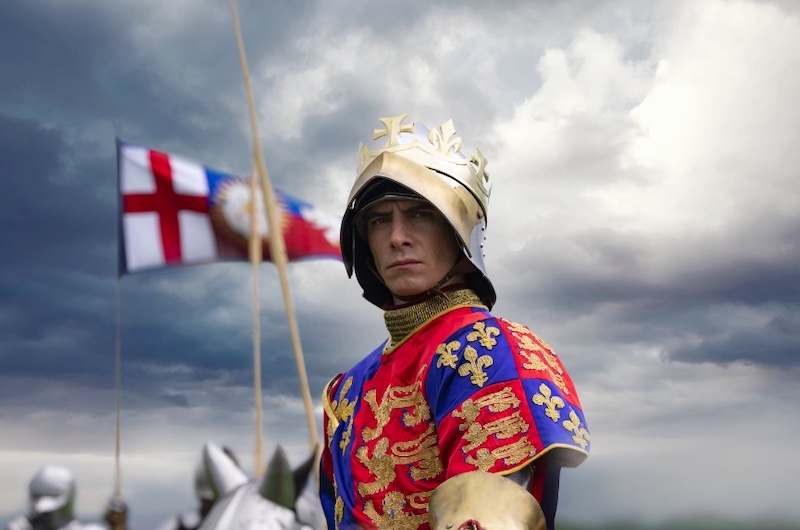
Many of his plays are recognized as historical dramas, dramatizing personalities such as Kings and Queens, but, obviously, based on the culture of his time. For example, Ricardians question his villainous view of Richard III which influences the biography of the last king of the Yorks to this day. It is easy to imply that Shakespeare would never cast the man defeated by the grandfather of Queen Elizabeth I, his patron, as a worthy nobleman as this would reignite the wrath of those who considered the Tudors usurpers of the Crown. Likewise, the tale of the Danish Prince featured dramatic adjustments. Where do Art and History meet and diverge? Shakespeare certainly left this area grayer.
Mixing popular tales and historical figures, Shakespeare’s text evolved from the lightness of comedies to the heaviest dramas, where his understanding of human nature proved to be above any other. The study of Othello‘s jealousy, Hamlet‘s existential doubts, the consequences of a King who gives up his power in King Lear, or MacBeth‘s violent ambition, Shakespeare’s texts are still being studied in 2024 because their precision (and poetry) translated feelings with incredible precision.
Obviously, there are problematic pieces in modern times. In The Two Gentlemen of Verona, the text seems to approve rape, in Merchant of Venice the words against the antagonist Shylock reveal anti-Semitism, Othello includes feminicide and The Taming of the Shrew is a story of repression and “domestication” of a strong and independent woman. Well, you can’t be perfect, but how can you not have problems 400 years later?

The elaborate language of Shakespeare’s plays reflects the conventional style of the time, with complex metaphors and language that aimed at actors declaiming rather than speaking. He adapted his style little by little, becoming looser and combining the two.
There is a meter for reading Shakespeare, which is iambic pentameter, where of the ten syllables per line, every second syllable is spoken with emphasis, which is why it is so difficult to interpret him and there are actors who do it better than others. There are texts where the author varies the flow, but in general, it requires a lot of technique to highlight the beauty of the reasoning and words.
Shakespeare’s main skill was also to combine poetry and drama, with an ability to understand what the public would like that no algorithm can still reproduce today. In a nutshell: he knew how to dominate pop. His plays have a structure where several subplots form the main one thus providing the audience with multiple sides of the same narrative. According to experts, this is one of the secrets of its timelessness because no matter the translation or editing, the central drama remains intact. Furthermore, he knew how to present his characters with transparency and objectivity: we know their motivations and reactions, we just follow the developments and consequences of their actions.

His work, written primarily for the theater (there are sonnets and poems published, but it is the plays that make him even more famous) influenced actors, directors, writers, poets, musicians, dancers, painters, politicians, psychologists, and even scientists since then. Furthermore, he inspires “ordinary people”.
With the precision of his text, Shakespeare also defined the English language: whether in pronunciation or grammar. He created expressions that are used in other languages as well, such as “with bated breath” (Merchant of Venice) and “a foregone conclusion” (Othello). Yes, we quote Shakespeare without even realizing it.
The most popular
In cinema, the top 5 of William Shakespeare’s plays turned into films are:
1- Hamlet
2- Romeo and Juliet
3- Macbeth
4- Othello
5- A Midsummer Night’s Dream


Shakespeare by numbers
– 37 plays (10 tragedies, 10 histories, 17 comedies)
– 154 sonnets
– 884,647 words in total,
– 1,700 words in the English language are attributed to his authorship
– More than 410 works adapted for TV or Cinema (until 2024)
– 1,800 films, including those in production, about his works.
– 525 films give Shakespeare some type of authorial credit, including 294 complete adaptations of his plays.
– 64 violent deaths in his plays:
33 stabbings
7 poisonings
5 beheadings
2 broken hearts
2 hangings
2 baked in one pie
1 drowning
1 suffocation per pillow
1 lack of sleep
1 sudden death
1 snake bite
1 tearing by the crowd
1 for eating hot coals
1 “disappearance”
1 thrown into the fire
1 indigestion
1 buried up to his neck and starving
1 cut into pieces
1 plays
1 eaten by a bear
Descubra mais sobre
Assine para receber nossas notícias mais recentes por e-mail.
 miscelana.com
Good research and analysis. Well written too👌
CurtirCurtido por 1 pessoa