
Dancing Swan Lake is a challenge that divides dancers from ballerinas. This is not only because there are four acts, dense, physically and emotionally difficult, but it allows the star to dance two roles with opposing personalities – Odette, the romantic and suffering princess, and Odile, the seductive antagonist – therefore it is also the opportunity for interpretation in a single night.

The duality of roles has been a classic among classics for over 100 years and anyone who has ever worn flats, or not, is fascinated by it. She has a catch. Deep down, we are all in love with Odile. Her charm enchants us as much as Siegfried!
Who is Odile?
Originally, Odile was not a lookalike of Odette, but that changed very early on. We know little about Odile, so we need to look at her father, the wizard Von Rothbart, who curses Odette and turns her into a swan.
The wizard’s motivation for putting his daughter in the middle of the plot has to do with both Odette and Siegfried. His magic does not surpass true love and with great ease, he manages to expose the prince who does not keep his oath to Odette and destroy any hope of her one day returning to human form. Interestingly, Von Rothbart is only seen in human form in the 3rd act, in the other two he appears as a giant owl. Hence the mystery about his daughter is even more curious.

We see her when she accompanies her father to Siegfried’s ball. This is because, to keep Odette trapped by the curse, Rothbart transforms Odile into the image of the princess. Siegfried is therefore unable to tell the difference, so he “makes a mistake” and swears his love to Odile and asks her to marry him. Thus, when we last see Odile, she is celebrating her victory over her lover’s innocence. Evil prevails.
It wasn’t always like this.
Not always wearing black
In the original production, Swan Lake was a ballet that provided the opportunity for two soloists in a single night, something typical of many productions. But already in 1877, Pelageya Karpakova was Odette and Odile on the same night. The tradition of dual roles instead of duels was born.
Still, Odile was not the ‘black swan’ nor did she win because of magic alone. With brightly colored clothes, Rothbart’s daughter effectively seduced the prince, making the story even sadder. According to historians, it was only in the 1930s that the tradition of Odile being more than “similar” to Odette emerged: she would be a mirror of her in the opposite color.
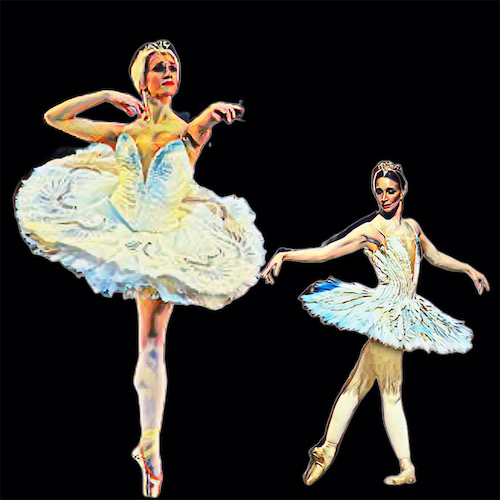
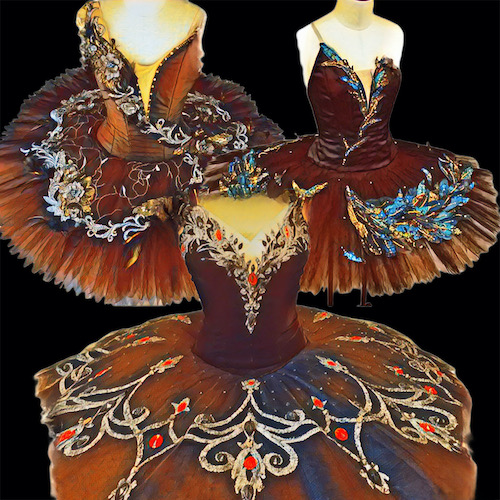
It makes a lot of difference in understanding Odile to try to know why Rothbart is obsessed with making Odette suffer. He makes the other girls swans too, why does he want so much to keep Odette in the form of a swan?
Be that as it may, Odile’s seduction is powerful: deep down, every dancer loves to dance with her and almost prefers her to Odette. Odile is lively, she is manipulative and yes, she brought the famous 32 fouetées to the world of dance, there is no way to enter the stage and leave without a shower of applause. The magic is undeniable.
“My” theory about Odile
I have a very personal version of Odile, which I will share for the first time. First, I always found it problematic that his existence in the story is to feed the negative feminine belief of competitiveness, seduction, and evil, leaving the flighty Siegfried completely “innocent” for having sworn something and just hours later breaking his promise. This narrative gives Odile charm but takes away the depth of the main male role.
Apart from that, it always left me in doubt where Odile came from and where she was going before and after the 3rd act. After all, in the 2nd act we only see white swans, but in the 4th, some black ones. Why – if she was part of the game – didn’t she come to her father’s aid when the couple reconciled and broke the curse?

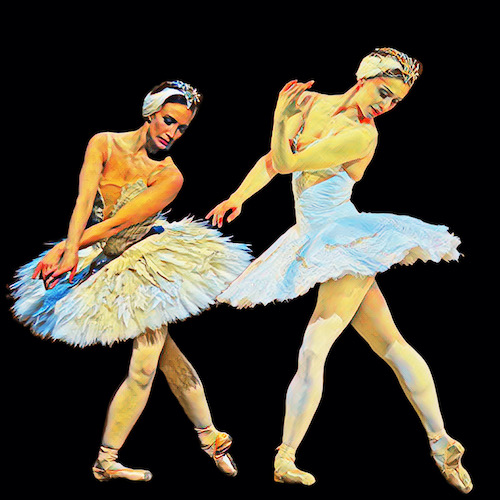
Lots of questions, I know. The first is about what the wizard wants for Odette. Rothbart is like the patriarchal society that reduces women to an object. He is the evil that wants hope not just to lose, but to fight while losing. By cursing Odette, transforming her into a swan by day and a woman by night, he ensures that she will never truly be seen as she is. And, one day, she would succumb to Rothbart’s evil, symbolized by the dark color of his feathers.
It seems to me that, if he wanted this for Odette it’s because he had already done it before, so, for me, Odile today can be presented as the wizard’s “daughter”, but one day she might have been his his victim too. Without Siegfried in her life, meaning, a potential savior, Odile has lost her empathy and humanity and submits to Rothbart, thus being transformed into the image of another swan/woman because, yes, she also wants to ruin men who did not save her and at the same time make another soul suffer as she did. Not a good soul, right?
Odette, who is the symbol of sisterhood (she defends the lives of other swans with her own), who always believes in love, forgives Siegfried’s weakness and sacrifices herself not out of love for the prince, but for her heroism in saving other women from the same curse.
What do you think of this version?

But in truth, I confess that faced with the information that one day Odile won Siegfried on his own merit, I always hoped to see that again on stage. It would indeed be a duel, but nowadays it would require both of them to be able to defeat the wizard. They could even forgive Siegfried and live a third, who cares? We just wouldn’t have, once again, two women destroying each other through the manipulation of men. I think I invented a new ballet!
Descubra mais sobre
Assine para receber nossas notícias mais recentes por e-mail.
 miscelana.com
1 comentário Adicione o seu