
Milady is considered by some to be Alexandre Dumas‘ best literary creation. Behind her aggressiveness and cunning, what makes her stand out both inside and outside of the novel The Three Musketeers is that she is a richly mysterious character. Obviously, in cinema, she is a perfect role for beautiful actresses who like to play at being the antagonist.
In the book, she is a character who grows and gains prominence, becoming the main antagonist – and female character – of a male plot. Of course, if men are heroes, she has to be the villain, but if we read between the lines, her story of survival is tragic and defiant of an oppressive system.

Who is Milady?
In the films, we don’t delve into Milady’s childhood or youth, usually varying between her sincerity and falsehood, even, conclusion, but in the book, we meet her and say goodbye without ever being sure what is really honest about her, even, your name.
In Dumas’s pages there are several doubts: is she the murdered wife of Athos? If so, how did she survive the hanging? She claims to be English but speaks perfect French. Where is she from? What did she do to earn that fleur de lis? What is her connection to Madame Bonacieux’s kidnapping and the Cardinal’s schemes in general?
The questions that the author brilliantly poses in the first part of the story he tries to answer in the second, which is why there are, normally, two films to close the plot, the second being, as we know, dedicated to Milady. Some men complain that by placing her as the protagonist, the work “loses” because they think that what matters is men. What a mistake, right? Milady is infinitely more interesting and yes, the secret to the timelessness of Alexandre Dumas‘ work.
Apparently, her real name is Anne de Breuil, which is what Athos thinks is hers, but, deep down, we’re not even sure of that. What they tell us – let’s remember that they are male narrators – Anne, just 16 years old, was in a convent preparing to become a nun, but she had “seduced” a priest and fled with him, and from then on they would apply scams to survive.

When discovered, it was “she” who “convinced” him to steal the sacred vessels from the church to finance a new life far away, but they were quickly arrested and arrested. Then, Anne would have seduced the jailer’s son and escaped, leaving behind her first lover who was marked for robbery.
Dumas, the Alpha novelist, inserted an important twist: the executioner who had to mark the priest was precisely her brother, so he blames Milady for “leading her brother astray” and therefore swears revenge. He alone locates her and places her on her shoulder with the same fleur de lis symbol, the symbol of a convicted criminal. The problem is that the ex-priest still loves her, and runs away with her to a small town, where they pretend to be a parish priest and his sister.
It is there that Anne meets Athos, the heir to the lands where they are, and he falls in love with her. Even with the opposition of his family who know nothing about the bride’s past, he marries her and thus Anne becomes the Countess de la Fère.
The union was apparently happy until one day when she was hunting with her husband in the forest, Milady fell from her horse and fainted. So that she could breathe, he cut off her clothes, and just like that – strange, right? – He sees the mark on her shoulder. Desperate, but “with a sense of doing what is right”, Athos then immediately hangs her from a tree. The priest escapes before responding to the blow.
From then on, Athos becomes a closed and suffering man, as he loved Anne, but assumes that his treacherous wife is dead by his own hands, without knowing that she survived the hanging and that she and Milady are the same person, which is the big turning point in history. And there is the quid pro quo: as he leaves the title of Count de la Fère to become Musketeer, Anne makes the same mistake by assuming that her first husband is dead. Their reunion is epic.
The mystery of survival and the power to reinvent yourself
Dumas never clarifies how Anne managed to survive her hanging or how she came to be recruited by Richelieu, but from the moment “Anne died” she reappears in England as Charlotte Backson, the Lady de Winter. No less scammer or cruel, even more so.
Mastering accentless English, Anne passes herself off perfectly as British and at some point meets and “seduces” Baron Sheffield, the younger brother of Lord de Winter. She quickly becomes a widow, within hours of her marriage, when her husband dies violently and mysteriously, leaving her a young son, who is Lord de Winter’s only heir. Obviously, the brother is suspicious and swears revenge.
It is like Milady de Winter that Anne/Charlotte crosses paths with D’Artagnan, becoming an obsession for the swordsman. There are many twists and turns of seduction and lies between the two, but at a certain point, she makes him the object of her wrath and vows to kill him because he discovers that Milady is Athos’s wife after seeing the fleur de lis mark on her shoulder. With this, she is clearly responsible for the kidnapping of his beloved, Constance, and without a shadow of a doubt is the author of her murder.

It is precisely the decision to kill D’ Artagnan that leads to Milady’s downfall and her death. She makes a deal with Richelieu to kill the Duke of Buckingham in exchange for a pardon for her entire past and the musketeer’s execution. Athos confronts her but is unable to kill her.
Mixing truth with fiction, Dumas places the real John Felton as Milady’s jailer when she is arrested in England. Under its influence, he kills the Duke (a real historical event) but is abandoned by Milady and hanged alone for the crime. Eventually, Milady is tracked down and captured by the Musketeers. She challenges them to the death if she has any proof of their crimes, but in a long and complex twist, the jailer who marked her is present and can testify that like Anne, Milady has been stealing, lying, and murdering for years. Her death sentence is immediate and she is beheaded in front of the men she hated so much.
Fascinating, even if cruel
Milady is considered the driving force of the story due to the power she wields over all the male characters. Without her, it would be a dull story of arrogant and quarrelsome men. With each new revelation about her past, we realize that she is a woman different from the others, with unparalleled powers of persuasion.
In general, romantics like to put in films that she actually loved Athos, even if briefly. There is no such suggestion in the book. On the contrary, to highlight the virtues of D’Artagnan and the Musketeers, she is everything bad in one person, especially a woman. After all, the swordsman is ambitious in a moral universe of high ideals, and his “failures” are justified in some way. He seduces and harasses women, but he is a young man who does it out of nationalist ideals.
The fact that they are ready to die for each other or for their king reinforces the thought that they prefer “death before dishonor”, which never includes respecting women. It’s part of the machismo of the time, of course, but it makes Milady a bold female representative who challenges the hypocrisy of society at the time.
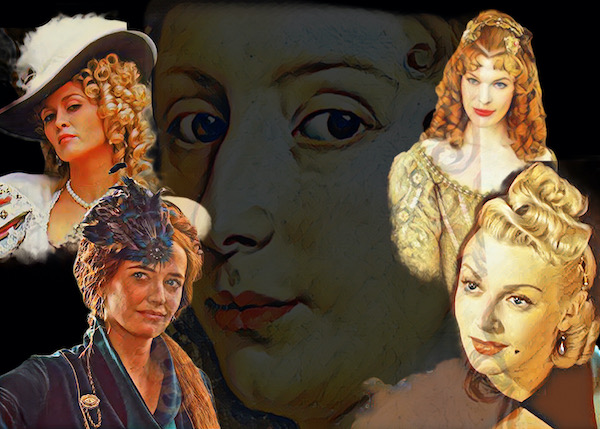
Inspired by two real women and the secret to success
It has long been speculated that Alexandre Dumas modeled himself on two real women to create this iconic character. Due to the theft of Queen Anne of France’s diamond earrings, it is accepted that the English noblewoman, Lucy Hay, the Countess of Carlisle is the basis for Milady’s story. Although the source was the version told by Marie de Rohan, Duchess of Luynes, who appears in the book The Three Musketeers as Aramis’s lover, it can be considered that she also inspired the writer.


The fact is that 180 years later (the book is from 1844), The Three Musketeers is still popular and so is Milady. It is an agile and fun work, it represents an important development in historical and popular fiction, an immediate bestseller that combines historical romance and romance in a single story, creating the genre of “Historical Fiction”, still in vogue in 2024.
Alexandre Dumas revolutionized the “historical novel”, until then always marked by a slow pace, precise historicity, and archaic prose, by deliberately writing in modern and colloquial prose. The fictional plot was more important than the story that surrounded it, with its characters taking us through real history just as a backdrop. It gives us a sense of time and place, but we only notice it when it matters. He never gets in the way, providing fascinating escapism.
For post-Revolution French people, one of the charms is having ordinary people leading the adventure, creating an identification with them. For experts, the greatest achievement of The Three Musketeers is not the perfect recreation of the history, customs, or climate of the period it intends to study, but precisely that of an extraordinarily satisfying and comforting make-believe world.
Milady at the cinema
Several important actresses gave life to Milady in film and TV, with Eva Green being the most recent and closest to what is in the book, in some way (she is bilingual, the daughter of English and French parents, so she navigates as Anne, with ease in the languages).
Before her, Rebecca DeMornay and Mila Jojovich had good performances, but the most famous are the divas Lana Turner and Faye Dunaway.

Lana states in her biography that Milady was her most fun and beloved role, with a praised performance and an unforgettable look (almost always using green tones reminiscent of Lucy Hay’s painting. She’s my favorite of all.
Faye Dunaway, hilarious in Richard Lester‘s iconic version from the 1970s, portrays a Milady who is almost always in white, in contrast to the darkness of her soul. How to choose the best?

In current times, it would be fascinating to know more about Anne de Breiul’s motivations and how her commitment to independence and autonomy in a sexist society placed her on the criminal side. Will we one day actually have it revealed?
Dumas killed Milady in 1844, but in the story’s sequel, published in 1845, called Twenty Years Later, it is Milady’s son by Lord de Winter, Mordaunt, now 23, who takes on the role of one of the main antagonists. He is described as “as wicked and deceitful as his mother”, and wants to avenge her death. He manages to effectively kill some of those involved becomes involved in the English Civil War and commits regicide, executing King Charles I, despite the efforts of D’Artagnan and the three former musketeers to prevent the crime.
In yet another series of twists, Mordaunt is eventually caught by the heroes. Athos, still in love with Anne, hesitates to kill him, but when he is tricked by him, he effectively ends his life. Poor Anne, not even her heirs were well regarded in literature. It’s worth rescuing!
Descubra mais sobre
Assine para receber nossas notícias mais recentes por e-mail.
 miscelana.com