
In 1975, an article by writer Truman Capote transformed his life even more than his masterpiece, In Cold Blood, or his great success, Breakfast at Tiffany’s. In both works, he had already dealt with real facts, but with Answered Prayers the author did not anticipate that everything that made him adored would be his downfall and the second season of Feud focuses precisely on this story.

49 years ago, the term “cancellation” did not exist, but that is what Capote faced when he used the intimate secrets of his millionaire friends as material for his book, which he did not even make an effort to disguise, causing humiliation (and even suicide) among the women. victims, which led to social isolation that hurt him deeply. In the FX series, which was shown in the United States in March, but only arrived on the Starplus platform in May 2024, there is an Emmy written in every episode. It’s about time!
Contextualizing the series
Scripted by showrunner Ryan Murphy and directed by Gus Van Sant, Capote Versus The Swans features a great female cast – Diana Lane, Naomi Watts, Demi Moore, Jessica Lange, Calista Flockhart, and Chloë Sevigny – it is Treat Williams‘ latest work and clearly could earn a Best Actor Drama Emmy for Tom Hollander as a pitch-perfect Truman Capote. In eight episodes, we navigate the futility of American high society as well as the writer’s moral and health decline. It is an intense and very exciting journey.
Famous for his books, films, and fierce tongue, Truman was a popular figure at the dinners and parties of wealthy New Yorkers, a world that is not far from what was seen in the years of The Gilded Age, where social connections and luxury extremes were exceedingly fascinating to the writer. He called his rich friends, who took him to parties and expensive lunches, “Swans,” and they dictated everything New York should be. Babe Paley, Slim Keith, Lee Radziwill, and C.Z. Guest, were always on the most elegant lists, they were copied and respected by fashion magazines, targets of gossip, and celebrities who were much more refined and mysterious than movie stars. To get to know them better, read half a post about the Swans.
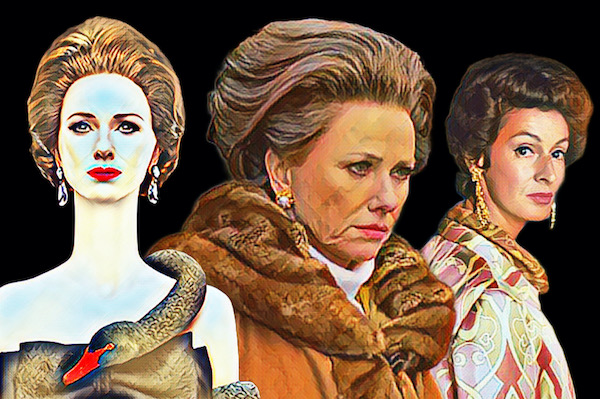
In a non-linear narrative, it is necessary to have more information researched BEFORE starting to watch because the script does not consider the “uninitiated” and, in this circle, it is necessary to know that the Swan Queen was the legendary socialite Babe Paley, a great role for Naomi Watts, but many well-known names will appear on the screen.
How did the disagreement start?
After In Cold Blood, Truman Capote went through a period of what he considered creative block and, under pressure, he did not anticipate that he was stirring a hornet’s nest when he decided to chronicle the world in which he was circulating: a facade of perfection, beauty, and money that hid betrayals, sex, murder and a lot of unhappiness.

“All literature is gossip,” he said in an interview. “What is Anna Karenina, or War and Peace, or Madame Bovary, if not gossip?” he teased. The problem is that his most influential readers quickly identified all the inspirations for the book, even more so because Capote made no attempt to disguise anyone. Not only did he ridicule people who thought he was their friend, but he also revealed intimate secrets that became more than an invasion of privacy: it was a pure, malicious betrayal.
Great performances, current themes, and an attempt to analyze what happened
It is impossible not to praise everyone’s performance effusively, especially Hollander as Capote. The author lived in films, talk shows, and magazines, he was a celebrity known around the world for his strange drawl, with a thin voice and very exaggerated gestures and he has been played by great actors, having won an Oscar for Philip Seymour Hoffmann, in 2006.

Mordant in precise and direct texts, Truman effectively made a “mistake” by being careless with his inspirations, especially in the most controversial chapter, La Côte Basque, which was the hottest restaurant at the time and the scene of all the drama he witnessed, and begat with his book.
Of course, the big question in the series is precisely about this mistake, which he refused to admit and which is actually complex and double standard, after all, he told the truth and people were not saints. He betrayed the trust of his friends, who did not forgive him, but when they betrayed each other they were not so harsh on each other. Truman Capote’s refusal to apologize or justify only worsened the situation and as it unfolded, after ‘cancellation’, he started drinking even more and using a medication, a combination that would shorten his life.
Throughout eight episodes, Capote Versus The Swans ponders the hypocrisy and snobbery of the people he accurately portrayed in Answered Prayers. Ryan Murphy makes a point of not protecting anyone: both the Swans and Capote are futile, cynical, cruel, and stubborn, without admitting that although he made public confidences that would never have been discovered otherwise, morally, no one was ready to cast the first stone.
The fact that Truman was never forgiven in life and that he only showed that he regretted losing Babe Paley’s friendship and trust is somehow too “stretched”, especially when Ryan Murphy reveals his childhood trauma to us. which justifies the writer’s fascination and even betrayal, without giving the same space to each of the women who are not as three-dimensional as he is. There is a hint of racism and homophobia, but in these moments he flirts with misogyny as well. It doesn’t get in the way, but it weighs a little in the hand.

The fact is that, without the same explanation for each of the swans with the necessary depth, in general, we can think that the series kind of inverts the story, where Truman Capote is ALWAYS considered the aggressor and traitor, as if because they were rich, famous and empty, “deserved” to be exposed and ridiculed. No, the series does not conclude anything in this sense, but it is not far from a moral critique either.
The fact is that even though the Swans are now outdated and far from any reference to women’s youth, they were victims of machismo and misogyny (still present today) and this is not highlighted. Capote was fascinated by them and his description, even if poisonous, is accurate. There is no way to say that he was right, after all, what he cited in the book were not public facts, but personal secrets from private lives, and he never asked for permission to use them as material for his work.
Deep hurts like those caused have consequences and when we talk about feelings there is a subjectivity that cannot be ignored. Some forget in five minutes as well as those who never trust or forgive again. Therefore, the only one to blame for the pain was Truman Capote. Almost 50 years later, and 40 years after his death, it seems easy to reconcile, but, again, it is harmful to accuse the women exposed as deserving of judgment and ridicule.

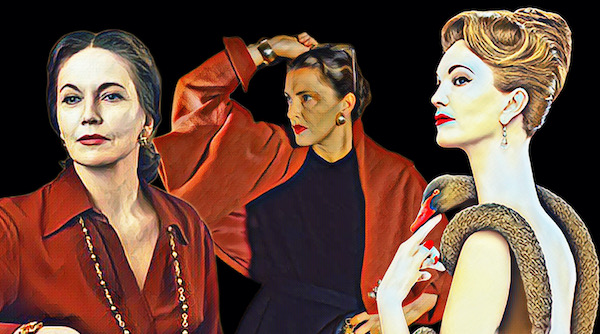
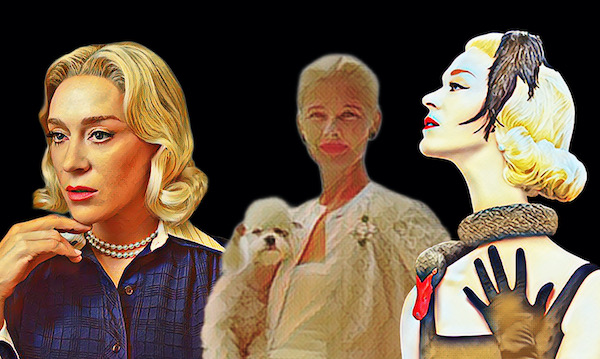
One of the most exciting elements of Capote Versus The Swans is precisely the topicality of ‘this’ discussion, much more out of control and intensified with social media and reality shows. It’s worth checking out every minute. And it’s already clear what the next feud will be that Murphy will remember. This one, more than Bette Davis and Joan Crawford, is sad, tragic and so, so difficult to support. A sadness that bothers us, but also makes us reflect.
Descubra mais sobre
Assine para receber nossas notícias mais recentes por e-mail.
 miscelana.com