
“Do you accept me as your queen and ruler?”
The question from an anguished Rhaenyra (Emma D’Arcy), without an immediate answer from her husband/uncle Daemon Targaryen (Matt Smith), once again fueled all the doubts that many have about the iconic character.
After an entire season of putting the prince’s intentions in doubt on more than one occasion, Rhaenyra’s question is simple and direct; there would be no room for a pause. Therefore, people like Otto Hightower (Rhys Iphans) are sure that Daemon’s goal has always been one: the Iron Throne. But is it really? What does Daemon Targaryen really want?

A man that not even his family can “read”
In the book Fire and Blood, Daemon Targaryen is portrayed as a man of considerable ambition and a skilled warrior, known for his boldness and aggressiveness. The heir apparent for many years, Daemon was not a man who enjoyed the restricted life of the Court, preferring the company of soldiers and nights out in King’s Landing, but he is extremely loyal to his family and believes in the superiority of the Targaryens.
Daemon is about two years younger than his brother Viserys (Paddy Considine), and even though the age difference isn’t great, it contributes to the dynamics of their relationship, with Daemon often positioned as the more impulsive and daring one, contrasting with Viserys’s more measured and sometimes indecisive temperament, as well as marking a mixture of rivalry and loyalty between them. Something that Otto Hightower explores.

Despite differences in temperament, there was a bond of brotherhood and mutual respect, rooted in their shared Targaryen heritage and the responsibilities that came with it. As Viserys himself came to the throne by taking away the natural heir, Rhaenys (Eve Best), just because Westeros did not want to be ruled by a woman, there was a certain paranoia in the King regarding his younger brother’s ambitions. In many moments, even though he refused to listen to conspiracies and gossip, deep down, he feared that Daemon would one day overthrow him for the Crown.
Naturally ambitious and stubborn, Daemon often took actions that damaged his relationship with the King because he considered him unrecognized, in addition to, of course, conflicting with Viserys’ decisions and policies as king.

In this complex relationship, Daemon wanted his brother to honor him with the most trusted position – that of Hand of the King – and to officially confirm that he was the successor, but Viserys never did either of those things. The King initially believed he supported Daemon by granting other titles and responsibilities, including the position of Commander of the City Watch of King’s Landing, but even that was not enough.
To make matters worse, Daemon’s recklessness and his involvement in several scandals only alienated the two brothers, who loved each other deeply despite the problems between them.
The Succession of Viserys: Otto Hightower Planted the Seed of Civil War Long Before It Was Realized
Otto Hightower’s ambitions were always clearer to Daemon than to Viserys, but the advisor’s ability to gain the King’s trust and ear hindered the rebellious prince. The rivalry between Otto and Daemon was declared without fear by both sides.
Officially, as the Hand of the King, Otto is fundamentally concerned with the stability and prosperity of the kingdom, something Daemon’s impulsiveness causes him to be classified as dangerous and a poor option for governing the seven kingdoms. As succession in a monarchical system is delicate, the risk is even greater. For Otto, a Daemon reign would be marked by tyranny, which would divide Westeros and create potential conflicts between the Houses.

That’s why Otto, while planting Alicent to seduce Viserys, convinces the king to name Rhaenyra as his heir, to remove Daemon from the kingdom, which effectively happens. It was supposed to be temporary, and when Viserys had sons, everything would be “normal”. However, Viserys refused to change, even with the birth of his sons with Alicent.
Ensuring that their grandchildren are in succession is part of the Hightowers’ broader strategy to maintain their family’s power and influence, growing Daemon’s hatred for the Greens.
Even though he adored his niece, Daemon was furious when Viserys passed him over for Rhaenyra, creating an almost foolish situation when he occupied Dragonstone and wanted to marry Mysarua (Sonoya Mizuno), his lover and also a double agent, informing Otto about everything with Daemon.
After winning battles, Daemon entered politics via marriage
Daemon’s marriage to Laena Velaryon and later to Rhaenyra Targaryen further intertwined the prince’s personal and political lives. At that time, the brothers were far apart because Viserys, the brother, initiated the princess sexually (he even started, but didn’t finish), and that’s why he broke up with Daemon.
Daemon, Viserys, and Rhaenyra meet again at Daemon’s wife’s funeral, this time permanently. Because she has three clearly bastard children and a gay husband, the princess is vulnerable at Court and establishes a partnership with her uncle (with benefits) to gain political prominence and weight, which she achieves. Daemon defends Rhaenyra and the two have two children together, in addition to Daemon adopting his stepchildren as his own.
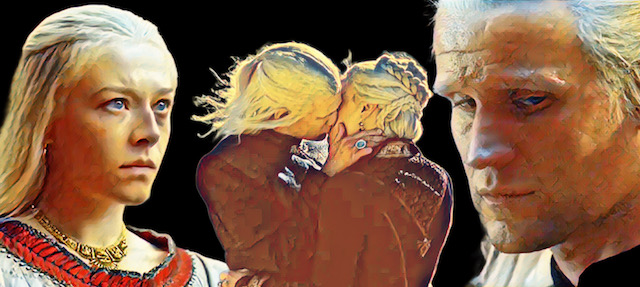
The niece and uncle alliance takes effect under Otto, who accelerates political coordination in secret to ensure that Aegon II (Tom Glynn-Carney) ascends the throne. In the book, Viserys’ death is suspicious; in the series, it is almost a relief for her suffering. And right away, Daemon and Rhaenyra fall out of tune when the Greens usurp their crown. She wants to negotiate, and Daemon wants to attack. It’s a repeat of her drama with her brother, something that’s not good for her marriage.
And what does Daemon want, anyway?
If you follow the book, Daemon doesn’t exactly want to “be King”, but he wants power, influence, and recognition, so his ambition is not so simple or explicit. Being a husband consort positions him close to absolute power, potentially satisfying his ambitions, but to do so, he needs Rhaenyra’s “obedience” as a wife, and she has too much personality for that.
Maybe because he knew her since she was a baby, or just out of machismo, but Daemon doesn’t see in his wife, as he didn’t see in his brother, any of the pulse or leadership that the Crown demands. She sees her as a symbol of the strong Targaryen bloodline and as a potentially powerful ruler, distinct from her view of other claimants to the throne.
When he hesitated when responding to the blow, he made him angry, not helping by making him jealous and resentful when he discovered that Viserys never considered him as a successor, as he never explained to him about Aegon I’s dream and the prophecy of Ice and Fire. This intimate confrontation between the two will be crucial to the eventual distance that the Civil War will bring between them.
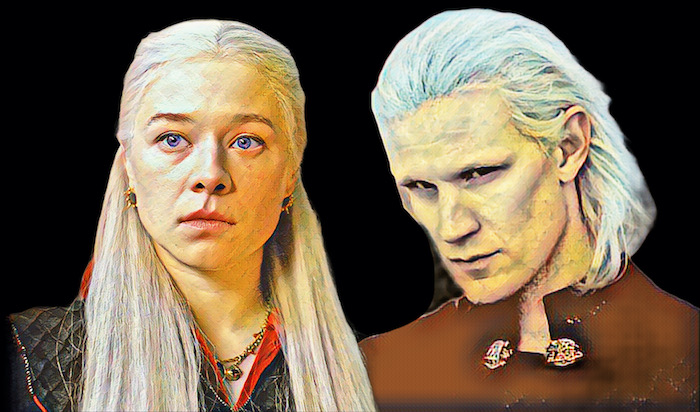
But still, Rhaenyra was the love of Daemon’s life
Daemon was married three times in House of the Dragon, with Rhaenyra being his third and last, but with all the evidence of having been Daemon’s greatest passion.
In the book, he experienced a great passion with Mysaria, who lost her son, but in the series, even though the relationship between them is intimate and personal, they grow apart thanks to the Court’s policies. The marriage with Laena was happy, but she died giving birth to her third child, and with that, after all the incomplete seduction and a very compromising conversation at Rhaenyra’s wedding ceremony with Laenor, when Daemon marries his niece, it’s politics, passion, and love in the same alliance. Even though Daemon expresses few feelings about any person or situation.
Mysaria’s influence, as we will soon see in the second season, will not remain in the past and even though she was a double agent for the Greens in the first part of the story, she will continue to be a significant figure in Daemon’s life. She will no longer be just a lover and will be a political agent, showing her intelligence and strategic acumen, without ceasing to be treacherous.
And so? Will Daemon accept Rhaenyra as Queen and her superior?
The answer is yes, even with increasing reservations throughout the tragic journey.
Daemon and Rhaenyra’s relationship is marked by genuine respect for his wife’s capabilities and intellect, and he treats her as an equal. At times, he trains her in matters of state and war, and his bond with her is not just political, but deeply personal.
More than a protector and advisor, Daemon positions himself as Rhaenyra’s co-ruler, with the autonomy to take measures that he considers necessary to safeguard the position of both, so the answer to his wife’s question has a catch. What she cannot lose is her husband’s necessary military prowess and ruthlessness when dealing with enemies, something Rhaenyra leans on heavily during her reign.

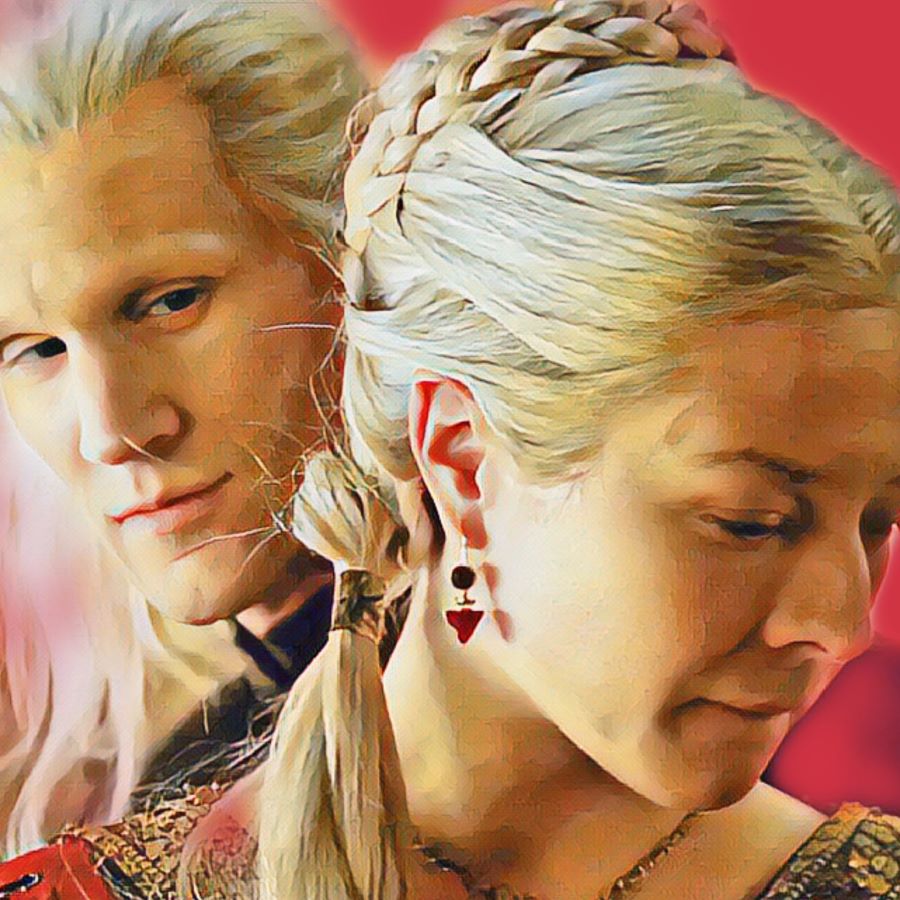
Therefore, Daemon views Rhaenyra as a legitimate and capable queen, whose rule not only continues the Targaryen legacy but also enhances her own status within the Court.
The couple’s tumultuous relationship will be put to the test several times, but if House of the Dragon keeps Needles, I will have to revise my claim about Rhaenyra being the love of Daemon’s life. But without a doubt, this love story, intertwined with political intrigue and family duties, adds a rich layer to the saga of the Targaryen dynasty. One that always makes us reevaluate what we know.
Descubra mais sobre
Assine para receber nossas notícias mais recentes por e-mail.
 miscelana.com